<?xml version="1.0" encoding="utf-8" ?>
<rdf:RDF xmlns:rdf="http://www.w3.org/1999/02/22-rdf-syntax-ns#" xmlns:dc="http://purl.org/dc/elements/1.1/" xmlns:syn="http://purl.org/rss/1.0/modules/syndication/" xmlns="http://purl.org/rss/1.0/">


<channel rdf:about="http://lta.iwlearn.org/search_rss">
  <title>Lake Tanganyika</title>
  <link>http://lta.iwlearn.org</link>

  <description>
    
            These are the search results for the query, showing results 1 to 15.
        
  </description>


  <image rdf:resource="http://lta.iwlearn.org/logo.png"/>

  <items>
    <rdf:Seq>
      
        <rdf:li rdf:resource="http://lta.iwlearn.org/vids/the-dangers-of-using-illegal-fishing-gear-1"/>
      
      
        <rdf:li rdf:resource="http://lta.iwlearn.org/IMG_0114.JPG"/>
      
      
        <rdf:li rdf:resource="http://lta.iwlearn.org/consultative-forum-on-the-strategic-action-programme-at-bujumbura"/>
      
      
        <rdf:li rdf:resource="http://lta.iwlearn.org/IMG_0668.JPG"/>
      
      
        <rdf:li rdf:resource="http://lta.iwlearn.org/UnidoLogo.jpg"/>
      
      
        <rdf:li rdf:resource="http://lta.iwlearn.org/unhabitatlogo260px1.jpg"/>
      
      
        <rdf:li rdf:resource="http://lta.iwlearn.org/copy_of_LTALogo_JPEGFormat.jpg"/>
      
      
        <rdf:li rdf:resource="http://lta.iwlearn.org/awareness-workshop-on-sustainable-management-of-fisheries-for-fishing-communities-in-burundi"/>
      
      
        <rdf:li rdf:resource="http://lta.iwlearn.org/terms-of-references-to-design-work-of-database-management-system-of-lake-tanganyika-monitoring"/>
      
      
        <rdf:li rdf:resource="http://lta.iwlearn.org/FishermenracingontheLakeTanganyikaDay2011edition.JPG"/>
      
      
        <rdf:li rdf:resource="http://lta.iwlearn.org/documents/terms-of-references-to-design-work-of-database-management-system-of-lake-tanganyika-monitoring"/>
      
      
        <rdf:li rdf:resource="http://lta.iwlearn.org/attending-the-design-work-of-database-management-system-of-lake-tanganyika-monitoring"/>
      
      
        <rdf:li rdf:resource="http://lta.iwlearn.org/news/unece-water-convention-could-offer-solutions-to-african-countries-for-shared-water-resource-management"/>
      
      
        <rdf:li rdf:resource="http://lta.iwlearn.org/news/the-niglas-hosted-a-training-workshop-on-water-quality-monitoring-and-lake-basin-ecosystem-management"/>
      
      
        <rdf:li rdf:resource="http://lta.iwlearn.org/TripatThreeGorgesDam.JPG"/>
      
    </rdf:Seq>
  </items>

</channel>


  <item rdf:about="http://lta.iwlearn.org/vids/the-dangers-of-using-illegal-fishing-gear-1">
    <title>The dangers of using illegal fishing gear </title>
    <link>http://lta.iwlearn.org/vids/the-dangers-of-using-illegal-fishing-gear-1</link>
    <description></description>
    
    <dc:publisher>No publisher</dc:publisher>
    <dc:creator>Alain Gashaka</dc:creator>
    <dc:rights></dc:rights>
    <dc:date>2014-09-09T12:20:00Z</dc:date>
    <dc:type>Link</dc:type>
  </item>


  <item rdf:about="http://lta.iwlearn.org/IMG_0114.JPG">
    <title>Ir JM Nibirantije</title>
    <link>http://lta.iwlearn.org/IMG_0114.JPG</link>
    <description></description>
    
    <dc:publisher>No publisher</dc:publisher>
    <dc:creator>Alain Gashaka</dc:creator>
    <dc:rights></dc:rights>
    <dc:date>2014-05-05T15:34:58Z</dc:date>
    <dc:type>Image</dc:type>
  </item>


  <item rdf:about="http://lta.iwlearn.org/consultative-forum-on-the-strategic-action-programme-at-bujumbura">
    <title>Consultative Forum on the Strategic Action Programme at Bujumbura</title>
    <link>http://lta.iwlearn.org/consultative-forum-on-the-strategic-action-programme-at-bujumbura</link>
    <description></description>
    <content:encoded xmlns:content="http://purl.org/rss/1.0/modules/content/"><![CDATA[<p><img src="http://lta.iwlearn.org/copy_of_LTALogo_JPEGFormat.jpg/@@images/f49bd1e9-c0da-41f1-9dbf-03cad2e53c15.jpeg" title="Logo LTA" height="134" width="130" alt="Logo LTA" class="image-inline" /><img src="http://lta.iwlearn.org/unhabitatlogo260px1.jpg/@@images/9da7ccc4-f3f3-46e3-97e3-01300ac3d276.jpeg" alt="Logo UNHabitat" class="image-inline" title="Logo UNHabitat" /><img src="http://lta.iwlearn.org/UnidoLogo.jpg/@@images/f4c663c3-f7b7-41d3-8ae9-9494099b8fa5.jpeg" title="Logo UNIDO" height="156" width="154" alt="Logo UNIDO" class="image-inline" /></p>
<p>The Lake Tanganyika Authority (LTA) in collaboration with the UN- Habitat, the United Nations Industrial Development Organization (UNIDO) and the Common Market for Eastern and Southern Africa (COMESA), are organising on 30<sup>th</sup>, April 2014, a one-day Consultative Forum on the Strategic Action Programme for the Protection of Biodiversity and Sustainable Management of Natural Resources in Lake Tanganyika and its Basin, and the Lake Tanganyika Water Supply, Sanitation, Environmental and Sustainable Economic Development Programme (LT-WATSAN).</p>
<p>The Forum will take place at “Hotel Club du Lac Tanganyika” in Bujumbura, Republic of Burundi and we would like to invite the Development Partners to participate in order to discuss with authorities from the Lake Tanganyika riparian countries and representatives from the above mentioned organisations on ways and means necessary to consider a successful cooperation to sustainably improve the livelihood for urban and suburban communities in Lake Tanganyika basin.</p>
<p><span style="text-decoration: underline;">Contact persons </span></p>
<p><b>Ir. Jean Marie NIBIRANTIJE, </b>LTA, Executive Director, Bujumbura, Burundi, Tel.: +257 22273580 (Office), + 257 79327527 (Mobile), E-mail : <a href="mailto:jeanmarie.nibirantije@lta-alt.org">jeanmarie.nibirantije@lta-alt.org</a></p>
<p><b>Mr. Robert Goodwin, </b>UN-Habitat, Nairobi, Kenya, Tel : + 254 207624910 (Office), +254 720920103 (Mobile), E-mail : <a href="mailto:robert.goodwin@unhabitat.org">robert.goodwin@unhabitat.org</a></p>
<p><strong>M. Jean Bakole Bagambanya, </strong>UNIDO, Regional Director, Addis ABEBBA, Tel: +251 115514245, E-mail: <a href="mailto:J.bakole@unido.org">J.bakole@unido.org</a></p>
<p><b>Dr Gervais Nkanagu, </b>COMESA Brussels Liaison Office, Ambassador, Phone : +3233438410, E-mail : <a href="mailto:GNkanagu@comesa.int">GNkanagu@comesa.int</a></p>]]></content:encoded>
    <dc:publisher>No publisher</dc:publisher>
    <dc:creator>Alain Gashaka</dc:creator>
    <dc:rights></dc:rights>
    <dc:date>2014-04-16T09:45:00Z</dc:date>
    <dc:type>News Item</dc:type>
  </item>


  <item rdf:about="http://lta.iwlearn.org/IMG_0668.JPG">
    <title>LTA SmartFish Video</title>
    <link>http://lta.iwlearn.org/IMG_0668.JPG</link>
    <description></description>
    
    <dc:publisher>No publisher</dc:publisher>
    <dc:creator>Alain Gashaka</dc:creator>
    <dc:rights></dc:rights>
    <dc:date>2014-04-16T09:16:58Z</dc:date>
    <dc:type>Image</dc:type>
  </item>


  <item rdf:about="http://lta.iwlearn.org/UnidoLogo.jpg">
    <title>Logo UNIDO</title>
    <link>http://lta.iwlearn.org/UnidoLogo.jpg</link>
    <description></description>
    
    <dc:publisher>No publisher</dc:publisher>
    <dc:creator>Alain Gashaka</dc:creator>
    <dc:rights></dc:rights>
    <dc:date>2014-04-16T09:16:34Z</dc:date>
    <dc:type>Image</dc:type>
  </item>


  <item rdf:about="http://lta.iwlearn.org/unhabitatlogo260px1.jpg">
    <title>Logo UNHabitat</title>
    <link>http://lta.iwlearn.org/unhabitatlogo260px1.jpg</link>
    <description></description>
    
    <dc:publisher>No publisher</dc:publisher>
    <dc:creator>Alain Gashaka</dc:creator>
    <dc:rights></dc:rights>
    <dc:date>2014-04-16T09:16:13Z</dc:date>
    <dc:type>Image</dc:type>
  </item>


  <item rdf:about="http://lta.iwlearn.org/copy_of_LTALogo_JPEGFormat.jpg">
    <title>Logo LTA</title>
    <link>http://lta.iwlearn.org/copy_of_LTALogo_JPEGFormat.jpg</link>
    <description></description>
    
    <dc:publisher>No publisher</dc:publisher>
    <dc:creator>Alain Gashaka</dc:creator>
    <dc:rights></dc:rights>
    <dc:date>2014-04-16T09:15:49Z</dc:date>
    <dc:type>Image</dc:type>
  </item>


  <item rdf:about="http://lta.iwlearn.org/awareness-workshop-on-sustainable-management-of-fisheries-for-fishing-communities-in-burundi">
    <title>AWARENESS WORKSHOP ON SUSTAINABLE MANAGEMENT OF FISHERIES FOR FISHING COMMUNITIES IN BURUNDI </title>
    <link>http://lta.iwlearn.org/awareness-workshop-on-sustainable-management-of-fisheries-for-fishing-communities-in-burundi</link>
    <description>The objectives of the workshop are to initiate awareness among fishing communities on the issues of sustainable use of living and non-living resources of Lake Tanganyika, and refine the analysis of the impact of the fishing business management of these resources.

The other objective is to produce videos of short stories in four languages on key issues related to the management and conservation of Lake Tanganyika. The videos will be used to educate people about the dangers of unsustainable practices and promote the use of best practices.
</description>
    <content:encoded xmlns:content="http://purl.org/rss/1.0/modules/content/"><![CDATA[<p><b>AWARENESS WORKSHOP ON SUSTAINABLE MANAGEMENT OF FISHERIES FOR FISHING COMMUNITIES IN BURUNDI – RUMONGE: FEBRUARY 13, 2014</b></p>
<p><b>Brief overview</b></p>
<p>Lake Tanganyika is shared by four riparian countries such as Burundi, Democratic Republic of Congo, Tanzania and Zambia. The Lake, noted for its wide variety of wildlife, home to at least 1,500 plant and animal species, of which more than 600 are found nowhere else in the world. The lake is a source of freshwater, fish and serves as a transport, and directly or indirectly provides a source of livelihood for about 10 million people living in the lake basin.</p>
<p>The Lake Tanganyika Authority (LTA), based in Bujumbura, is the regional organization representing the four riparian countries. The ALT was created to support the implementation of the Convention on the Sustainable Management of Lake Tanganyika (see Article 23 of the Convention). During ongoing discussions that took place recently with partners, stakeholders and beneficiaries ensuring coherence and coordination of assistance based on the needs and efforts of national and regional institutions in Africa, it was agreed to strengthen the ability of the Lake Tanganyika Authority to assist in the updating and implementation of the plan of Management Structure Fisheries of Lake Tanganyika.</p>
<p>Currently,  LTA has an agreement with the UN Food and Agriculture Organization ("FAO") under the implementation of a regional strategy for the ESA project - IO (GCP / RAF / 466/EC), which focuses on "<b>The participation of fishing communities in the sustainable use of living and non-living resources of Lake Tanganyika</b>." One of the main objectives of the agreement is to encourage communities to engage in sustainable resource management through awareness of best practices.</p>
<p><b>Workshop objectives</b></p>
<p class="Default">The objectives of the workshop are to initiate awareness among fishing communities on the issues of <b>sustainable use of living and non-living resources of Lake Tanganyika</b>, and refine the analysis of the impact of the fishing business management of these resources. <span>The other objective is to produce videos of short stories in four languages ​​on key issues related to the management and conservation of Lake Tanganyika. The videos will be used to educate people about the dangers of unsustainable practices and promote the use of best practices.</span></p>
<p class="Default"><span>The videos will be used in the activities of the community by LTA and its partners. In additional, the videos will also be available on the LTA website and social media for other potential users. The four key themes for the videos are:</span></p>
<p class="Default"><span>- </span><b>Dangers of using illegal fishing instrument</b></p>
<p class="Default"><b> </b><b>- Co - Management of Resources</b></p>
<p class="Default"><b> </b><b>- Hygiene on fish landing and beaches</b></p>
<p class="Default"><b> </b><b>- Alternative activities generating income for fishing communities</b></p>
<p class="Default"><span>The primary targeted public will be mainly fishing communities of Lake Tanganyika and related stakeholders such as traders and input suppliers. Other beneficiaries and end users of the videos are: local and national leaders (Burundi, DRC, Tanzania and Zambia) involved in fishing, Federation of Fishermen in Burundi and similar organizations in the DRC, Tanzania and Zambia, and partners of LTA like research institutes and NGOs, donors and their projects.</span></p>
<p class="Default"><span> </span><b>Organization and participation</b></p>
<p class="Default"><b> </b><span>The workshop is supported by the FAO / SMARTFISH and is organized by the Lake Tanganyika Authority.It will be held on 13</span><sup>th</sup><span> February 2014, in Lake Tanganyika Lodge in Rumonge, Bururi, Southern Burundi. </span><span>Participation in the workshop will include the representatives of fishermen's associations, women traders, local authorities/leaders, maritime authorities/leaders, agencies respectively of country fisheries and environment.</span></p>
<p><span>Participants will be selected by their agencies in close collaboration with the organizers. Representatives of FAO, SmartFish and Lake Tanganyika Authority will also participate in the workshop.</span></p>
<p><b>Agenda</b></p>
<p><b> </b></p>
<p>The opening of the workshop will be officially made ​​by His Excellency the Executive Director of LTA. Before the official opening, there will be two declarations, the Representatives of FAO and the Federation of Fishermen and Fish Suppliers in Burundi (“FPFPB”).  After the official opening, there will be a number of presentations:</p>
<p><b>i) </b><b>Dangers of the use of illegal fishing instruments,</b></p>
<p><b>ii) </b><b>Co - management of resources,</b></p>
<p><b>iii) </b><b>Hygiene on fish landing and beaches,</b></p>
<p><b>iv) </b><b>Alternative activities generating income for fishing communities.</b></p>
<p><b> </b></p>
<p>After the presentations and projections of mini movie of 10 minutes each, participants will be divided into working groups where they will discuss the four thematic answering the following <span>questions (which situation? What is being done now? What should be done by the fishing communities?  What contributions of institutions - FPFPB, LTA, Min Fishing, FAO / SmartFish), etc.</span></p>
<p>The workshop will be followed by a press conference.</p>
<p><b> </b></p>
<p><b>Detail of the Provisional Agenda - Thursday, 13<sup>th</sup> February 2014</b></p>
<p>8:30 / 9:00: Arrival and registration of guests</p>
<p>9:00 / 9:10: Speech by the Representative of  Commune of Rumonge</p>
<p>9:10 / 9:20: Speech by the Representative of Federation of Fishermen</p>
<p>9:20 / 9:30: Speech by FAO Representative (Burundi) / SmartFish</p>
<p>9:30 / 9:50: Official opening by His Excellency Jean Marie NIBIRANTIJE, Executive Director of LTA</p>
<p>9:50 / 10:00: Presentation of participants</p>
<p>10:00 /10:20: <b>Theme 1: Presentation on Dangers of using illegal fishing instruments</b></p>
<p>10:20 / 10:30: Projection of the 1<sup>st</sup> Video</p>
<p>10:30 / 11:00: Discussion - Debate on the theme</p>
<p>11:00 / 11:20: <b>((Coffee / tea break))</b></p>
<p>11:20 / 11:40: <b>Theme 2: Presentation on Co - Management of resources</b><b> </b></p>
<p>11:40 / 11:50: Projection of the 2<sup>nd</sup> Video</p>
<p>11:50 / 12:20: Discussion - Debate on the theme</p>
<p>12:20 / 12:40: <b>Theme 3: Presentation on Hygiene on the fish landing and beaches</b></p>
<p>12:50 / 1:20 p.m.: Discussion - Debate on the theme</p>
<p>1:20 p.m. / 1:30 p.m.: Logistic instructions</p>
<p>1:30 p.m. / 2:30 p.m.: <b>(( Lunch)) </b></p>
<p>2:30 p.m. / 2:50 p.m: <b>Theme 4: Alternative activities generating income for fishing communities</b></p>
<p><span>2:50 p.m. / 3:00 p.m.: Projection of the 4</span><sup>th</sup><span> Video</span></p>
<p>4:00 p.m. / 4:20 p.m.: Discussion</p>
<p>4:20 p.m. / 5:00: Group work</p>
<p>5:00 p.m. / 5:30 p.m.: Plenary group work</p>
<p>5:30 End of the session.</p>
<p><b>Expected results</b></p>
<p>The workshop is to encourage communities to engage in sustainable management of resources through awareness of best practices, and will provide a series of actions that can be implemented by communities to mitigate any negative impacts, but also establish the basis for future activities at local level.</p>
<p><b> </b></p>
<p>FAO and SmartFish hope to support the development of mitigation and adaptation in fishing communities around the Lake Tanganyika Basin in order to maintain current levels of fish production, support in daily life and food security at regional level.</p>
<p><b> </b></p>
<p><b>Languages </b></p>
<p>The languages ​​used in the workshop are respectively French and Kirundi.</p>
<p><b> </b></p>
<p><b>Registration and participation fees </b></p>
<p>Travel expenses and per diem during the workshop will be covered for participants.</p>]]></content:encoded>
    <dc:publisher>No publisher</dc:publisher>
    <dc:creator>Alain Gashaka</dc:creator>
    <dc:rights></dc:rights>
    
      <dc:subject>Awareness</dc:subject>
    
    
      <dc:subject>FAO</dc:subject>
    
    
      <dc:subject>LTA</dc:subject>
    
    
      <dc:subject>People</dc:subject>
    
    
      <dc:subject>SmartFish</dc:subject>
    
    
      <dc:subject>Tanganyika</dc:subject>
    
    
      <dc:subject>Workshop</dc:subject>
    
    <dc:date>2014-02-01T00:00:00Z</dc:date>
    <dc:type>News Item</dc:type>
  </item>


  <item rdf:about="http://lta.iwlearn.org/terms-of-references-to-design-work-of-database-management-system-of-lake-tanganyika-monitoring">
    <title>ToRs </title>
    <link>http://lta.iwlearn.org/terms-of-references-to-design-work-of-database-management-system-of-lake-tanganyika-monitoring</link>
    <description>The Nanjing Institute of Geography and Limnology of Chinese Academy of Sciences (NIGLAS) is calling for applications of visiting scholars from the Lake Tanganyika ripaian countries to attend a program on database management system which will be held at Nanjing, PR China in September, 2013.  

More details are find below: </description>
    
    <dc:publisher>No publisher</dc:publisher>
    <dc:creator>Pacifique Ndoricimpa</dc:creator>
    <dc:rights></dc:rights>
    <dc:date>2013-06-10T14:01:39Z</dc:date>
    <dc:type>File</dc:type>
  </item>


  <item rdf:about="http://lta.iwlearn.org/FishermenracingontheLakeTanganyikaDay2011edition.JPG">
    <title>Fishermen competition on the Lake Tanganyika Day</title>
    <link>http://lta.iwlearn.org/FishermenracingontheLakeTanganyikaDay2011edition.JPG</link>
    <description>Fishermen competition on the closing ceremony of the Lake Tanganyika Day 2011 edition</description>
    
    <dc:publisher>No publisher</dc:publisher>
    <dc:creator>Pacifique Ndoricimpa</dc:creator>
    <dc:rights></dc:rights>
    <dc:date>2013-06-10T13:43:12Z</dc:date>
    <dc:type>Image</dc:type>
  </item>


  <item rdf:about="http://lta.iwlearn.org/documents/terms-of-references-to-design-work-of-database-management-system-of-lake-tanganyika-monitoring">
    <title>Terms of References to design work of database management system of Lake Tanganyika Monitoring</title>
    <link>http://lta.iwlearn.org/documents/terms-of-references-to-design-work-of-database-management-system-of-lake-tanganyika-monitoring</link>
    <description>Visiting Scholar Program for MOST-UNEP Joint Project of
Water Quality and Ecosystem Monitoring and Demonstration of New
Waste Water Treatment

1. The attribute data refers to social and economic data, hydrological data,
meteorological data and water quality data. Tasks
Working under the supervision and guidance of the Project manager and NIGLAS, the visiting
scholars will be expected to:
Search for relevant data and archive documents of the four riparian countries (Burundi,
DR Congo, Tanzania, Zambia) according to the Primary Data List (Annex I，obtained
by sending email to the contact person).</description>
    
    <dc:publisher>No publisher</dc:publisher>
    <dc:creator>Pacifique Ndoricimpa</dc:creator>
    <dc:rights></dc:rights>
    <dc:date>2013-06-10T13:40:39Z</dc:date>
    <dc:type>File</dc:type>
  </item>


  <item rdf:about="http://lta.iwlearn.org/attending-the-design-work-of-database-management-system-of-lake-tanganyika-monitoring">
    <title>Attending the design work of database management system of Lake Tanganyika Monitoring</title>
    <link>http://lta.iwlearn.org/attending-the-design-work-of-database-management-system-of-lake-tanganyika-monitoring</link>
    <description>Visiting Scholar Program for MOST-UNEP Joint Project of Water Quality and Ecosystem Monitoring and Demonstration of New Waste Water Treatment
</description>
    <content:encoded xmlns:content="http://purl.org/rss/1.0/modules/content/"><![CDATA[<h2 style="text-align: center; "><b>Terms of references</b></h2>
<p align="center"><b>Visiting Scholar Program for MOST-UNEP Joint Project of</b></p>
<p align="center"><b>Water Quality and Ecosystem Monitoring </b><b>and Demonstration of New Waste Water Treatment</b></p>
<p> </p>
<ol>
<li>Details</li>
</ol>
<p>Activity: <b>Attending the design work of database management system of Lake Tanganyika Monitoring</b></p>
<p>Agency: NIGLAS</p>
<p>Duty Station: Nanjing, China</p>
<p>Duration: 3 weeks in September of 2013</p>
<p> </p>
<ol>
<li><b>Background</b></li>
</ol>
<p>In 2011 the Ministry of Science and Technology (MOST) of the People’s Republic of China and United Nations Environment Program (UNEP) launched 6 projects as Phase II cooperation program in Africa under the framework of Memorandum of Understanding between the United Nations Environment Program and the Ministry of Science and Technology of the People’s Republic of China. The 6 joint projects will tackle sustainable use of water resources, water environment protection, drought early warning system, watersaving agriculture, desertification combating, focusing on the Nile River, Lake Tanganyika and the desert area in the Sahara. Among them the Project 3 - Water quality and ecosystem monitoring and demonstration of new waste water treatments is directly related to the Lake Tanganyika. Nanjing Institute of Geography and Limnology of Chinese Academy of Sciences (NIGLAS), as the state institute unique for lake science, is experienced for undertaking the Phase I: MOST-UNEP cooperation projects on capacity building of monitoring shared water of the Lake Tanganyika. In the Phase II programme, NIGLAS has been entrusted as leading implementing agency for Project 3.</p>
<p> </p>
<p>In 2012 NIGLAS and Lake Tanganyika Authority (LTA) signed a <i>MoU on Water Environment Protection and Resources Management in the Lake Tanganyika Basin</i>. The areas of cooperation including:</p>
<ul>
<li>Sustainable use of water resources. </li>
<li>Water quality monitoring and management. </li>
<li>Waste water treatment</li>
</ul>
<p>The Parties have agreed to organize the cooperation on the following:</p>
<ul>
<li>Organizing and implementing training courses for the riparian countries’ participants in China as well as in Africa;</li>
<li>Pilot projects in selected riparian countries with the support of Chinese experts; </li>
<li>Joint research among the Chinese and African scientists on agreed areas;</li>
<li>Exchange of information and data.</li>
</ul>
<p>The priority matters and activities pursuant to MoU including:</p>
<ul>
<li>Joint research on the status quo of water quality and its evolution induced by human factors in the Lake Tanganyika Basin. </li>
<li>A pilot of long-term water quality monitoring of the Lake Tanganyika. </li>
<li>A demonstration system of database management and technical support to system design.</li>
</ul>
<p> </p>
<ol>
<li><b>Objectives of the Assignment</b></li>
</ol>
<p>The outcomes of this visiting scholar program are expected to include a framework of database management system and the preliminary database of primary spatial and attribute data in the riparian countries. The spatial data refers to basic geographic information, land use maps, etc. The attribute data refers to social and economic data, hydrological data, meteorological data and water quality data. The visiting scholars are expected to provide an integrated datasheet and a report of the data sources and accuracies. The visiting scholars are also expected to provide recommendations on additional partnerships as well as sources to fulfill the real database.</p>
<p> </p>
<ol>
<li><b>Tasks</b></li>
</ol>
<p>Working under the supervision and guidance of the Project manager and NIGLAS, the visiting scholars will be expected to:</p>
<ul>
<li>Search for relevant data and archive      documents of the four riparian countries (Burundi, DR Congo, Tanzania,      Zambia) according to the Primary Data List (Annex I，obtained      by sending email to the contact person). Each visiting scholar is      responsible for two countries.</li>
<li>Analyze the data sources and select data      from the documents.</li>
<li>Prepare the integrated datasheets on      request. </li>
<li>Prepare a report to the data sources and      accuracy. </li>
</ul>
<ul>
<li>Prepare recommendations on additional partnerships as well as sources to fulfill the real database.</li>
</ul>
<p> </p>
<ol>
<li><b>Timeframe and Deliverables</b></li>
</ol>
<p>The program will span three weeks. It is planned to start on 1 September and should be finalized by 21 September 2013.</p>
<p> </p>
<p>The visiting scholar will be expected to deliver an Excel document with datasheets, a comprehensive report in line with the objectives outlined above, and relevant documents (references) from which the data come.</p>
<p> </p>
<ol>
<li><b>Candidate Qualifications</b></li>
</ol>
<p align="left">Education:</p>
<ul>
<li>Advanced university      degree in natural resource      management or related areas.</li>
</ul>
<p align="left"> </p>
<p align="left">Experience:</p>
<ul>
<li>At least three years      of experience on water resources or ecosystem protection of Lake Tanganyika      and its catchment is an asset.</li>
<li>Demonstrated      experience in areas related to natural resource management, geography or database management. </li>
<li>Experience in working      with/developing environmental monitoring procedures and indicators for      aquatic as well as terrestrial systems. </li>
</ul>
<ul>
<li>Experience working      with governmental institutions an asset. </li>
<li>Advanced information      technology skills, including Geographical Information System.</li>
<li>Demonstrated skills in      writing and revising report documents. </li>
</ul>
<p align="left"> </p>
<p align="left">Language Skills:</p>
<ul>
<li>Oral and written      fluency in English<b>.</b></li>
</ul>
<p> </p>
<ol>
<li><b>Sponsorship</b></li>
</ol>
<p align="left">The visiting scholars will be granted round-trip international air tickets (economy class), subsidies for accommodation and food during the period in China (about USD 100 per day). Only after at least 75% required information is collected and the preliminary draft is prepared, submitted to and accepted by NIGLAS, the selected experts will travel to China and continue the work.</p>
<p align="left"> </p>
<ol>
<li><b>Submission of Applications</b></li>
</ol>
<p>Qualified candidates may submit a <b>letter of application</b>, up to date <b>Curriculum Vitae</b>, and <b>Application Form </b>before <b>15 July, 2013. </b>Electronic applications should be sent to schens@niglas.ac.cn  or  gabriel.hakizimana@lta-alt.org</p>]]></content:encoded>
    <dc:publisher>No publisher</dc:publisher>
    <dc:creator>Pacifique Ndoricimpa</dc:creator>
    <dc:rights></dc:rights>
    <dc:date>2013-06-10T09:45:00Z</dc:date>
    <dc:type>Event</dc:type>
  </item>


  <item rdf:about="http://lta.iwlearn.org/news/unece-water-convention-could-offer-solutions-to-african-countries-for-shared-water-resource-management">
    <title>UNECE Water Convention could offer solutions to African countries for shared water resource management </title>
    <link>http://lta.iwlearn.org/news/unece-water-convention-could-offer-solutions-to-african-countries-for-shared-water-resource-management</link>
    <description>UNECE Water Convention could offer solutions to African countries for shared water resource management </description>
    <content:encoded xmlns:content="http://purl.org/rss/1.0/modules/content/"><![CDATA[<p>Increasing awareness and understanding of the Water Convention and its  work in Africa was the objective of the second Africa-Targeted Workshop  for Global Environment Facility International Waters Projects, which  took place from 12 to 14 November 2012 at the United Nations Convention  Centre in Addis Ababa.</p>
<p> </p>
<p>For more:<a class="external-link" href="http://iwlearn.net/news/unece-water-convention-could-offer-solutions-to-african-countries-for-shared-water-resource-management"> http://iwlearn.net/news/unece-water-convention-could-offer-solutions-to-african-countries-for-shared-water-resource-management</a></p>]]></content:encoded>
    <dc:publisher>No publisher</dc:publisher>
    <dc:creator>Pacifique Ndoricimpa</dc:creator>
    <dc:rights></dc:rights>
    <dc:date>2012-11-28T08:55:00Z</dc:date>
    <dc:type>News Item</dc:type>
  </item>


  <item rdf:about="http://lta.iwlearn.org/news/the-niglas-hosted-a-training-workshop-on-water-quality-monitoring-and-lake-basin-ecosystem-management">
    <title>The NIGLAS Hosted a Training Workshop on Water Quality Monitoring and Lake Basin Ecosystem Management </title>
    <link>http://lta.iwlearn.org/news/the-niglas-hosted-a-training-workshop-on-water-quality-monitoring-and-lake-basin-ecosystem-management</link>
    <description>.
</description>
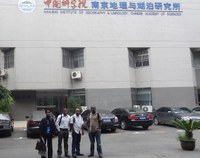
    <content:encoded xmlns:content="http://purl.org/rss/1.0/modules/content/"><![CDATA[<p><img src="http://lta.iwlearn.org/copy_of_NIGLASBuilding.JPG/@@images/4137dbf7-8be4-4e85-90e0-6f9c494c2968.jpeg" alt="NIGLAS Building" class="image-left" title="NIGLAS Building" />From 10 to 25 September, 2012, the Nanjing Institute of Geography and Limnology, Chinese Academy of Science (NIGLAS) organized a training workshop on <b><i>Water Quality Monitoring and Lake-basin Ecosystem Management</i></b>. The workshop falls in the framework of the project of <b>Technical Cooperation on Protection of Water Resources and Ecosystem intended to fight against environment threats, conserve and improve the health of ecosystem resources</b>. This project is being implemented in partnership with the Lake Tanganyika Authority (LTA) and national research teams of participating African countries, riparian to Lake Tanganyika basin, Lake Victoria basin and Nile basin.</p>
<p>Scientists, University Lectures and Decisions Makers of the following countries were represented: Burundi, D.R Congo, Egypt, Ethiopia, Kenya, Malawi, Rwanda, Tanzania, Uganda and Zambia.</p>
<p>Courses coupled with field trips focused on policy, standard and technology used in water monitoring, hydrological monitoring and modeling, lakes remote sensing, climate changes and risks, integrated Lake Basin management, aquaculture, watershed management, environmental challenges due to urban growth and their implication to lake basin sustainable development, principles, methods and technology of biological monitoring and many other topics. Participants on their turn shared experiences on the African environmental situation in their respective lake basins.</p>
<p>The courses were lectured by Professors, Associate Professors and Natural Resources Management Specialists from the NIGLAS and other Institution partners and Universities like the World Bank.</p>
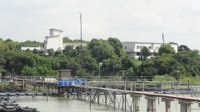
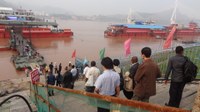
<p><img src="http://lta.iwlearn.org/LakeTaihuResarchSation.JPG/@@images/05692622-8c87-4ff4-a597-b3ab5b865eee.jpeg" alt="" class="image-left" title="" />Participants then visited the Taihu Lake Ecosystem Research Station in Wuxi City, Jiangsu Province The Station belongs to the Chinese Ecosystem Research Network (CERN). After a brief introduction of the water quality data monitoring and warning system for algal bloom in the lake, another field visit on the restoration project was held. A final field trip was held on the Three Gorges Dam located on Yangtze River, which is believed to be the world’s powerful dam which serves both as a hydropower generator and flood controller in China.<img src="http://lta.iwlearn.org/ParticipantsheadingforYangtzeRiver.JPG/@@images/4197dbc5-d13e-413e-923d-98bb902b0f01.jpeg" style="float: right; " title="" class="image-inline" alt="" /></p>
<p>After the training, participants were awarded certificates of participation preceded by exchanging documents of the Memorandum of Understanding between the NIGLAS and Tanzania Fisheries Research Institute (TAFIRI).</p>]]></content:encoded>
    <dc:publisher>No publisher</dc:publisher>
    <dc:creator>Pacifique Ndoricimpa</dc:creator>
    <dc:rights></dc:rights>
    <dc:date>2012-10-23T17:05:00Z</dc:date>
    <dc:type>News Item</dc:type>
  </item>


  <item rdf:about="http://lta.iwlearn.org/TripatThreeGorgesDam.JPG">
    <title>TripatThreeGorgesDam.JPG</title>
    <link>http://lta.iwlearn.org/TripatThreeGorgesDam.JPG</link>
    <description></description>
    
    <dc:publisher>No publisher</dc:publisher>
    <dc:creator>Pacifique Ndoricimpa</dc:creator>
    <dc:rights></dc:rights>
    <dc:date>2012-10-23T17:02:11Z</dc:date>
    <dc:type>Image</dc:type>
  </item>


</rdf:RDF>