<?xml version="1.0" encoding="utf-8" ?>
<rdf:RDF xmlns:rdf="http://www.w3.org/1999/02/22-rdf-syntax-ns#" xmlns:dc="http://purl.org/dc/elements/1.1/" xmlns:syn="http://purl.org/rss/1.0/modules/syndication/" xmlns="http://purl.org/rss/1.0/">


<channel rdf:about="http://lta.iwlearn.org/search_rss">
  <title>Lake Tanganyika</title>
  <link>http://lta.iwlearn.org</link>

  <description>
    
            These are the search results for the query, showing results 11 to 14.
        
  </description>


  <image rdf:resource="http://lta.iwlearn.org/logo.png"/>

  <items>
    <rdf:Seq>
      
        <rdf:li rdf:resource="http://lta.iwlearn.org/come-invest-in-lake-tanganyika-basin"/>
      
      
        <rdf:li rdf:resource="http://lta.iwlearn.org/celebration-of-lake-tanganyika-national-day-2012-edition"/>
      
      
        <rdf:li rdf:resource="http://lta.iwlearn.org/burundi-industrialists-called-to-contribute-to-protecting-water-resources"/>
      
      
        <rdf:li rdf:resource="http://lta.iwlearn.org/awareness-workshop-on-sustainable-management-of-fisheries-for-fishing-communities-in-burundi"/>
      
    </rdf:Seq>
  </items>

</channel>


  <item rdf:about="http://lta.iwlearn.org/come-invest-in-lake-tanganyika-basin">
    <title>Come Invest in Lake Tanganyika Basin - HE President Nkurunziza</title>
    <link>http://lta.iwlearn.org/come-invest-in-lake-tanganyika-basin</link>
    <description>EAC Summit Chairperson urges investors to take advantage of basin’s vast potential as 1st Lake Tanganyika Basin Development Conference opens 

</description>
    <content:encoded xmlns:content="http://purl.org/rss/1.0/modules/content/"><![CDATA[<p>The EAC Summit Chairperson and President of the Republic of Burundi HE Pierre Nkurunziza opened the first-ever Lake Tanganyika Basin Development Conference in Bujumbura, Burundi by extending an invitation to investors to come and invest in the Lake Tanganyika Basin. “I would like to make a pressing appeal to potential investors, those of EAC, COMESA, SADC, The United States of America, China, Japan, Europe, India and elsewhere to come and invest in the Lake Tanganyika Basin,” HE Nkurunziza said.<br /><br />The EAC-organized conference themed Unlocking the Overflowing Trade and Investment Opportunities in the Basin, is taking place at the Hotel Source du Nil and Roca Golf Hotel from 28-29 November 2011. <br /><br />The two-day event is meant to harness the potential for trade, investment and socio-economic development in the Basin, and the President was quick to assure investors that the region was ready for investment.<br />“They can count on us for guarantees and facilities for their investments,” the EAC Summit Chair declared in his keynote address. The Head of State went on enumerate the vast opportunities that exist in the tourism, transport, agriculture and mining sectors, among others.<br /><br />“It (Lake Tanganyika Basin) is inhabited by a population of over twenty million. It has a huge potential in water, including Lake Tanganyika and its basin, that we could operate effectively and efficiently to produce electrical energy needed to ensure industrial development in the region,” President Nkurunziza affirmed.<br />“The Basin is also an area of high agricultural potential, producing palm oil, sugar, fruits and vegetables of high quality, to name but a few,” he added.<br /><br />The Burundian President also noted that the creation and improvement of port infrastructure in the Basin to boost transport would  open up the region and accelerate integration, especially as the Basin is shared by the three regional blocs of EAC, COMESA and SADC, which have already formed a Tripartite framework to foster cooperation.<br /><br />Burundi’s Minister for EAC Affairs Hon. Hafsa Mossi on her part described the Lake Tanganyika basin as well as that of Lake Victoria as potential food baskets for the EAC region and observed that on account of their trans-boundary nature, lakes Tanganyika and Victoria call for cooperation among their riparian countries in the rational utilization of their resources, including conservation and protection of their delicate ecosystems.<br /><br />The Secretary General of the East African Community Amb. Richard Sezibera similarly highlighted the lake’s potential as an important tourism and transport hub of the EAC region, saying it could be useful for linking goods transported by rail from Dar es Salaam through Kigoma, the DRC through Kalemie, and from the SADC region through Mpulungu in Zambia.<br /><br />“This capacity can not be overstates because the lake Tanganyika basin is rich in minerals, and has very fertile soils,” Amb. Sezibera asserted.<br /><br />Among the subjects being discussed at the conference include the sustainable exploitation of the natural resource base within the Lake Tanganyika Basin; state of play and role of public private partnerships (PPP) in infrastructural development in the region; and the role of ports and inland waterways in regional integration. <br /><br />The forum will also focus on revitalization of the rail network in the region; enhancing Information Communication Technologies for service economy; oil and gas exploration activities on Lake Tanganyika; as well as energy alternatives for productive use to improve income generation in Lake Tanganyika basin.<br />. <br />EAC Heads of State HE Mwai Kibaki of Kenya; Paul Kagame of Rwanda; Jakaya Kikwete of the United Republic of Tanzania; Yoweri Museveni of Uganda; as well as HE Joseph Kabila of the Democratic Republic of Congo and HE Michael Sata of Zambia are scheduled to take part in an interactive Heads of State session of the Lake Tanganyika Basin Development Conference on Tuesday afternoon, to be moderated by Mr. Jeff Koinange. DR Congo and Zambia are the other countries that share Lake Tanganyika with Burundi and Tanzania.<br /><br />The EAC Secretariat in collaboration with the Republic of Burundi as the host country and Lake Victoria Basin Commission (LVBC) are organizing the conference with the support of the EAC Partner States, Lake Tanganyika Authority (LTA), Trade Mark East Africa, United Nations Development Programme (UNDP) and East African Business Council (EABC).<br /><br />The Lake Tanganyika Basin Development Conference is being relayed live via the EAC website: www.eac.int. <br /><br /></p>]]></content:encoded>
    <dc:publisher>No publisher</dc:publisher>
    <dc:creator>Alain Gashaka</dc:creator>
    <dc:rights></dc:rights>
    
      <dc:subject>Basin</dc:subject>
    
    
      <dc:subject>Conference</dc:subject>
    
    
      <dc:subject>Investment</dc:subject>
    
    
      <dc:subject>Tanganyika</dc:subject>
    
    
      <dc:subject>Trade</dc:subject>
    
    <dc:date>2011-11-28T06:00:00Z</dc:date>
    <dc:type>News Item</dc:type>
  </item>


  <item rdf:about="http://lta.iwlearn.org/celebration-of-lake-tanganyika-national-day-2012-edition">
    <title>Celebration of Lake Tanganyika National Day, 2012 edition</title>
    <link>http://lta.iwlearn.org/celebration-of-lake-tanganyika-national-day-2012-edition</link>
    <description>"If we do not take care, many human activities pose a threat to Lake Tanganyika," noted Mr. Gabriel Toyi, representing the second Vice-President of the Republic of Burundi, in the ceremonies of Lake Tanganyika National Day, July 22 nd  each year.  
Dr. Henry Mwima, the Executive Director of Lake Tanganyika Authority (LTA) has recognized the efforts made by Burundi in protecting the lake and appealed to other Lake Tanganyika riparian countries (DRC, Tanzania and Zambia) to emulate the example set by the Government of the Republic of Burundi by setting aside one day to celebrate the unique and shared heritage: Lake Tanganyika.</description>
    <content:encoded xmlns:content="http://purl.org/rss/1.0/modules/content/"><![CDATA[<p class="yiv490790344msonormal"><img src="http://lta.iwlearn.org/LTDay2012webDanse.jpg/@@images/3c6ba887-444b-467c-9156-a351be178e21.jpeg" style="float: left; " title="L T Day 2012 Danse" class="image-inline" alt="L T Day 2012 Danse" />"If we do not take care, many human activities pose a threat to Lake Tanganyika," noted Mr. Gabriel Toyi, representing the second Vice-President of the Republic of Burundi, in the ceremonies of Lake Tanganyika National Day, July 22<sup>nd</sup> each year. <img src="http://lta.iwlearn.org/ToyiPic.jpg/@@images/77e6506a-6cf0-4cdb-b589-d71a5d5d5779.jpeg" style="float: right; " title="LT Day 2012 Toyi" class="image-inline" alt="LT Day 2012 Toyi" /></p>
<p class="yiv490790344msonormal">For him, if nothing is done in terms of protection, Lake Tanganyika can become an unusable pond. He called on all Burundians to act for the protection of this important aquatic ecosystem. Mr. Toyi also mentioned that the Burundi Government is committed to protecting the lake by promulgating the Water Code and the National Strategy for Sustainable Tourism Development in Burundi. He recalled that people should avoid throwing waste of any kind in this lake, which, after all, is not a public dumping ground, and instead, promote rational fisheries.</p>
<p class="yiv490790344msonormal"><img src="http://lta.iwlearn.org/MwimaPic.jpg/@@images/2c81d173-1a2d-45af-a6d3-1920580d09e2.jpeg" style="float: left; " title="LT Day 2012 ED" class="image-inline" alt="LT Day 2012 ED" />Dr. Henry Mwima, the Executive Director of Lake Tanganyika Authority (LTA) has recognized the efforts made by Burundi in protecting the lake and appealed to other Lake Tanganyika riparian countries (DRC, Tanzania and Zambia) to emulate the example set by the Government of the Republic of Burundi by setting aside one day to celebrate the unique and shared heritage: <b>Lake Tanganyika</b>. Mr. Mwima however informed that the problems to be solved for the protection of this lake include climate change, invasive species, sedimentation, overexploitation of natural resources, habitat destruction and pollution.</p>
<p class="yiv490790344msonormal"> In addition, Mr. Albert Mbonerane, the Legal Representative of ACVE (Green Belt Action for Environment), noted that Burundi was the first Lake Tanganyika riparian country to ratify in 2004, the Convention on Sustainable Management of Lake Tanganyika and to organise in 2005, the celebration of the national day dedicated to this lake. He took this opportunity to recommend a better implementation of the Water Code by users and investors in the sector of water.</p>
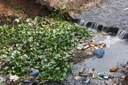
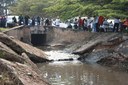
<p class="yiv490790344msonormal"><img src="http://lta.iwlearn.org/LTDay2012webKumase.jpg/@@images/e8fb7e3d-7f45-4dfc-8326-e6bb9b0a6543.jpeg" style="float: right; " title="LT Day 2012 Ku mase" class="image-inline" alt="LT Day 2012 Ku mase" />However, it was noted that the shoreline of Lake Tanganyika is seriously threatened by pollution from riparian cities, particularly in Bujumbura, at the place called "Ku mase". During a visit along the Lake Tanganyika shore, held on Friday 20<sup>th</sup> July, people were forced to hold their noses to avoid unpleasant odours caused by domestic wastewater flowing to the lake, and blackening the water and the silver sand on the beach.</p>
<p class="yiv490790344msonormal"><img src="http://lta.iwlearn.org/LTDay2012webPalmOil.jpg/@@images/3b543d2a-0492-4ab5-ac1b-afe34a544589.jpeg" style="float: left; " title="LT Day 2012 Palm Oil" class="image-inline" alt="LT Day 2012 Palm Oil" />Participants to this visit organised as part of the celebration of the day, also remarked that in some places along the lake, as in Gitaza, Bujumbura Rural province (in the west) and Magara, in Bururi province (in southwest), uncontrolled constructions threaten the protection zone of 150 meters from the lake as stated in the Water Code and some palm oil processing units visited in Rumonge, Bururi province, do not pre-treat their liquid waste before discharging them into the lake. However, some hotels located near the lake as "Blue Bay" in Rumonge, took into account the environmental aspect and comply with the standards in relation to beach management. For this, many tourists are coming to rest on the picturesque beach and enjoy swimming in the clean waters of Lake Tanganyika.</p>
<p class="yiv490790344msonormal"><img src="http://lta.iwlearn.org/LTDay2012webDiscussion.jpg/@@images/99c64879-155a-4fe8-b3c9-4711cf35f528.jpeg" style="float: right; " title="LT Day 2012 Discussion" class="image-inline" alt="LT Day 2012 Discussion" />The Minister of Water, Environment, Land and Urban Planning, Mr. Jean Marie Nibirantije took this opportunity to mention that Burundi Government has implemented strategies to protect the lake through the Water Code. He indicated that severe penalties are provided for polluters, and that the water code requires observing a protection area of 150 meters from the shore, the destruction of illegally implemented building in this area, and the environmental impact assessment prior to implementing any project near the lake.</p>
<p class="yiv490790344msonormal">Mr. Gabriel Hakizimana, LTA Director of Environment, as he is concerned, stressed that pollution of the lake, considered as a freshwater reserve with a volume of 19,000 km³, is mainly caused by wastewater from the lake riparian cities, including Bujumbura. However, he moderated, analysis of waters in this lake of ​​32,900 km², conducted by the NGO "GIZ" confirm that the bacteriological quality of water from Lake Tanganyika is not proper for human consumption but, however, the chemical aspect of this water is not worrisome.</p>
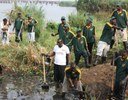
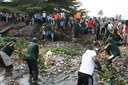
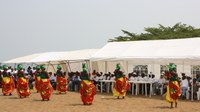
<p class="yiv490790344msonormal">It is worth to mention that the celebration of this day was marked by cleaning the beach near Bujumbura Port, the destruction of illegal fishing gears and giving awards to students who had presented the best poems and best sketches about the theme: "Lake Tanganyika is a treasure to protect".</p>
<p class="yiv490790344msonormal"><img src="http://lta.iwlearn.org/IMG_0861.JPG/@@images/51776eb0-4919-486c-b312-c4630f2eac99.jpeg" title="LT Day 2012 Déchets" height="78" width="121" alt="LT Day 2012 Déchets" class="image-inline" /> <img src="http://lta.iwlearn.org/IMG_0853.JPG/@@images/0ff0f260-3df6-44ab-846a-00ec81bce0f8.jpeg" title="LT Day Propre 2" height="79" width="107" alt="LT Day Propre 2" class="image-inline" /> <img src="http://lta.iwlearn.org/IMG_0952.JPG/@@images/4c14adbb-b496-4d61-bb1b-b9ae91d93797.jpeg" title="LT Day 2012 Propre 3" height="79" width="121" alt="LT Day 2012 Propre 3" class="image-inline" /> <img src="http://lta.iwlearn.org/IMG_1041.JPG/@@images/3ee20006-b01e-4786-af99-eead43c28948.jpeg" title="LT Day 2012 Propre 4" height="80" width="121" alt="LT Day 2012 Propre 4" class="image-inline" /> <img src="http://lta.iwlearn.org/IMG_1020.JPG/@@images/5750fd88-5a15-4357-940b-4157b0bb26e8.jpeg" title="LT Day 2012 Propre 5" height="80" width="123" alt="LT Day 2012 Propre 5" class="image-inline" /></p>]]></content:encoded>
    <dc:publisher>No publisher</dc:publisher>
    <dc:creator>Alain Gashaka &amp; Parfait Nkunzimana</dc:creator>
    <dc:rights></dc:rights>
    
      <dc:subject>2012</dc:subject>
    
    
      <dc:subject>Celebration</dc:subject>
    
    
      <dc:subject>Day</dc:subject>
    
    
      <dc:subject>Lake</dc:subject>
    
    
      <dc:subject>Tanganyika</dc:subject>
    
    <dc:date>2012-07-23T22:00:00Z</dc:date>
    <dc:type>News Item</dc:type>
  </item>


  <item rdf:about="http://lta.iwlearn.org/burundi-industrialists-called-to-contribute-to-protecting-water-resources">
    <title>Burundi industrialists called to contribute to protecting water resources</title>
    <link>http://lta.iwlearn.org/burundi-industrialists-called-to-contribute-to-protecting-water-resources</link>
    <description>It was during a discussion workshop on the main provisions of the water code in Burundi that was organised by the Ministry of Water, Environment, Land and Urban Planning, in partnership with the Sectoral Programme Water and Sanitation of the Federal German Republic. The water code being disseminated for the implementation of the national water policy adopted in 2009, proves that water management and use are based on 10 key principles.</description>
    <content:encoded xmlns:content="http://purl.org/rss/1.0/modules/content/"><![CDATA[<p><img src="http://lta.iwlearn.org/LogoMEEATU.jpg/@@images/9807833b-fe8b-4a7e-856a-6b90ef73a790.jpeg" style="float: left; " title="Logo Burundi" class="image-inline" alt="Logo Burundi" />BUJUMBURA, 24<sup>th</sup> July (ABP) – Burundian industrialists were called this Tuesday to contribute to protecting water resources mainly Lake Tanganyika, as well as safeguarding its biodiversity. It was during a discussion workshop on the main provisions of the water code in Burundi that was organised by the Ministry of Water, Environment, Land and Urban Planning, in partnership with the Sectoral Programme Water and Sanitation of the Federal German Republic. The workshop was organised for industrialists and managers of hotels implemented along Lake Tanganyika coast.</p>
<p>In his opening speech, the Minister in charge of water, Mr. Jean Marie Nibirantije declared that Lake Tanganyika, a globally important fresh water reserve hosting the richest biodiversity in the world, has become a dumping ground for industrialists and households in Bujumbura. According to him the sector of water faces numerous challenges that influenced the development of the water code adopted on 26<sup>th</sup> March 2012. Those challenges are related to uncontrolled management, drinking water supply, basic sanitation, the role of water playing a dynamic role in development, as well as to the problem of climate change. He called for a change of behaviour for a better management of water resource which is becoming increasingly rare and vulnerable in Burundi. “Without water, life is not possible, water is life. Water protects our environment as all living beings need this primary resource”, said the minister Nibirantije. Given these challenges, the Government of Burundi created the ministry in charge of water resources in order to distinguish management and use of water resources. Mr. Nibirantije recalled the vision of the Government with regard to this issue, which is “Building a nation where water is sufficiently available in quality and quantity to meet the needs of present and future generations, and where water is efficiently and equitably used for a sustainable socio economic development without compromising the environment”.</p>
<p><img src="http://lta.iwlearn.org/LogoGIZ.jpg/@@images/af25e7d6-bf62-4691-9b2f-29fbc08c8006.jpeg" style="float: right; " title="Logo GIZ" class="image-inline" alt="Logo GIZ" />As he is concerned, the Coordinator of PROSECEAU/GIZ (Sectoral Programme Water and Sanitation of the German Cooperation), Mr. Rudolph Jochen, indicated that in the aim of ensuring an equitable access to clean water and sanitation, the German Government is committed to support the Burundi Government to implement reforms in the sector of water. He noted that the promulgation of the water code is an important step in the reform process started some years ago. The PROSECEAU accompanied the ministry in charge of water in developing the national water policy which provided key orientations in terms of water resource management. It also supported the process of water code development, a tool that will enable all categories of Burundians to understand the importance of this resource.</p>
<p>According to M. Jochen, the two reference texts go back to the Dublin Principles, two of which are interesting for the sector of industry; these are the “polluter pays” principle or the “responsibility principle”, and the “collector pays” principle or the principle of recognizing the economic value of water which address to the main users of water resource. He called for the respect of the provisions of the code, mainly those related to the qualitative and quantitative protection of water. He reaffirmed the commitment of Germany to stand by Burundi side in implementing reforms complying with the main provisions in this code.</p>
<p>The water code being disseminated for the implementation of the national water policy adopted in 2009, proves that water management and use are based on 10 key principles. The first principle recognizes that water is an economic asset. The second principle of subsidiarity implies the transfer of related skills to the community at the base. The third is related to the participation of women in making decisions on water. The principle of solidarity insists on measures to enable the poor and vulnerable have access to water at an affordable price. The fifth principle focuses on the regional and international cooperation in this matter. The principle of good governance emphasizes on transparency and accountability in the sector. The principle of sustainability is to make water available for future generations. The eighth principle is on the participatory approach at all levels of development and water management. The principle of the program approach emphasizes on the development of water sector as a whole. The tenth principle of responsibility is meant to avoid misuse and potentially harmful activities to water resources.</p>]]></content:encoded>
    <dc:publisher>No publisher</dc:publisher>
    <dc:creator>Alain Gashaka &amp; Parfait Richard Nkunzimana</dc:creator>
    <dc:rights></dc:rights>
    
      <dc:subject>Codes</dc:subject>
    
    
      <dc:subject>Lake</dc:subject>
    
    
      <dc:subject>Tanganyika</dc:subject>
    
    
      <dc:subject>Water</dc:subject>
    
    <dc:date>2012-07-26T22:00:00Z</dc:date>
    <dc:type>News Item</dc:type>
  </item>


  <item rdf:about="http://lta.iwlearn.org/awareness-workshop-on-sustainable-management-of-fisheries-for-fishing-communities-in-burundi">
    <title>AWARENESS WORKSHOP ON SUSTAINABLE MANAGEMENT OF FISHERIES FOR FISHING COMMUNITIES IN BURUNDI </title>
    <link>http://lta.iwlearn.org/awareness-workshop-on-sustainable-management-of-fisheries-for-fishing-communities-in-burundi</link>
    <description>The objectives of the workshop are to initiate awareness among fishing communities on the issues of sustainable use of living and non-living resources of Lake Tanganyika, and refine the analysis of the impact of the fishing business management of these resources.

The other objective is to produce videos of short stories in four languages on key issues related to the management and conservation of Lake Tanganyika. The videos will be used to educate people about the dangers of unsustainable practices and promote the use of best practices.
</description>
    <content:encoded xmlns:content="http://purl.org/rss/1.0/modules/content/"><![CDATA[<p><b>AWARENESS WORKSHOP ON SUSTAINABLE MANAGEMENT OF FISHERIES FOR FISHING COMMUNITIES IN BURUNDI – RUMONGE: FEBRUARY 13, 2014</b></p>
<p><b>Brief overview</b></p>
<p>Lake Tanganyika is shared by four riparian countries such as Burundi, Democratic Republic of Congo, Tanzania and Zambia. The Lake, noted for its wide variety of wildlife, home to at least 1,500 plant and animal species, of which more than 600 are found nowhere else in the world. The lake is a source of freshwater, fish and serves as a transport, and directly or indirectly provides a source of livelihood for about 10 million people living in the lake basin.</p>
<p>The Lake Tanganyika Authority (LTA), based in Bujumbura, is the regional organization representing the four riparian countries. The ALT was created to support the implementation of the Convention on the Sustainable Management of Lake Tanganyika (see Article 23 of the Convention). During ongoing discussions that took place recently with partners, stakeholders and beneficiaries ensuring coherence and coordination of assistance based on the needs and efforts of national and regional institutions in Africa, it was agreed to strengthen the ability of the Lake Tanganyika Authority to assist in the updating and implementation of the plan of Management Structure Fisheries of Lake Tanganyika.</p>
<p>Currently,  LTA has an agreement with the UN Food and Agriculture Organization ("FAO") under the implementation of a regional strategy for the ESA project - IO (GCP / RAF / 466/EC), which focuses on "<b>The participation of fishing communities in the sustainable use of living and non-living resources of Lake Tanganyika</b>." One of the main objectives of the agreement is to encourage communities to engage in sustainable resource management through awareness of best practices.</p>
<p><b>Workshop objectives</b></p>
<p class="Default">The objectives of the workshop are to initiate awareness among fishing communities on the issues of <b>sustainable use of living and non-living resources of Lake Tanganyika</b>, and refine the analysis of the impact of the fishing business management of these resources. <span>The other objective is to produce videos of short stories in four languages ​​on key issues related to the management and conservation of Lake Tanganyika. The videos will be used to educate people about the dangers of unsustainable practices and promote the use of best practices.</span></p>
<p class="Default"><span>The videos will be used in the activities of the community by LTA and its partners. In additional, the videos will also be available on the LTA website and social media for other potential users. The four key themes for the videos are:</span></p>
<p class="Default"><span>- </span><b>Dangers of using illegal fishing instrument</b></p>
<p class="Default"><b> </b><b>- Co - Management of Resources</b></p>
<p class="Default"><b> </b><b>- Hygiene on fish landing and beaches</b></p>
<p class="Default"><b> </b><b>- Alternative activities generating income for fishing communities</b></p>
<p class="Default"><span>The primary targeted public will be mainly fishing communities of Lake Tanganyika and related stakeholders such as traders and input suppliers. Other beneficiaries and end users of the videos are: local and national leaders (Burundi, DRC, Tanzania and Zambia) involved in fishing, Federation of Fishermen in Burundi and similar organizations in the DRC, Tanzania and Zambia, and partners of LTA like research institutes and NGOs, donors and their projects.</span></p>
<p class="Default"><span> </span><b>Organization and participation</b></p>
<p class="Default"><b> </b><span>The workshop is supported by the FAO / SMARTFISH and is organized by the Lake Tanganyika Authority.It will be held on 13</span><sup>th</sup><span> February 2014, in Lake Tanganyika Lodge in Rumonge, Bururi, Southern Burundi. </span><span>Participation in the workshop will include the representatives of fishermen's associations, women traders, local authorities/leaders, maritime authorities/leaders, agencies respectively of country fisheries and environment.</span></p>
<p><span>Participants will be selected by their agencies in close collaboration with the organizers. Representatives of FAO, SmartFish and Lake Tanganyika Authority will also participate in the workshop.</span></p>
<p><b>Agenda</b></p>
<p><b> </b></p>
<p>The opening of the workshop will be officially made ​​by His Excellency the Executive Director of LTA. Before the official opening, there will be two declarations, the Representatives of FAO and the Federation of Fishermen and Fish Suppliers in Burundi (“FPFPB”).  After the official opening, there will be a number of presentations:</p>
<p><b>i) </b><b>Dangers of the use of illegal fishing instruments,</b></p>
<p><b>ii) </b><b>Co - management of resources,</b></p>
<p><b>iii) </b><b>Hygiene on fish landing and beaches,</b></p>
<p><b>iv) </b><b>Alternative activities generating income for fishing communities.</b></p>
<p><b> </b></p>
<p>After the presentations and projections of mini movie of 10 minutes each, participants will be divided into working groups where they will discuss the four thematic answering the following <span>questions (which situation? What is being done now? What should be done by the fishing communities?  What contributions of institutions - FPFPB, LTA, Min Fishing, FAO / SmartFish), etc.</span></p>
<p>The workshop will be followed by a press conference.</p>
<p><b> </b></p>
<p><b>Detail of the Provisional Agenda - Thursday, 13<sup>th</sup> February 2014</b></p>
<p>8:30 / 9:00: Arrival and registration of guests</p>
<p>9:00 / 9:10: Speech by the Representative of  Commune of Rumonge</p>
<p>9:10 / 9:20: Speech by the Representative of Federation of Fishermen</p>
<p>9:20 / 9:30: Speech by FAO Representative (Burundi) / SmartFish</p>
<p>9:30 / 9:50: Official opening by His Excellency Jean Marie NIBIRANTIJE, Executive Director of LTA</p>
<p>9:50 / 10:00: Presentation of participants</p>
<p>10:00 /10:20: <b>Theme 1: Presentation on Dangers of using illegal fishing instruments</b></p>
<p>10:20 / 10:30: Projection of the 1<sup>st</sup> Video</p>
<p>10:30 / 11:00: Discussion - Debate on the theme</p>
<p>11:00 / 11:20: <b>((Coffee / tea break))</b></p>
<p>11:20 / 11:40: <b>Theme 2: Presentation on Co - Management of resources</b><b> </b></p>
<p>11:40 / 11:50: Projection of the 2<sup>nd</sup> Video</p>
<p>11:50 / 12:20: Discussion - Debate on the theme</p>
<p>12:20 / 12:40: <b>Theme 3: Presentation on Hygiene on the fish landing and beaches</b></p>
<p>12:50 / 1:20 p.m.: Discussion - Debate on the theme</p>
<p>1:20 p.m. / 1:30 p.m.: Logistic instructions</p>
<p>1:30 p.m. / 2:30 p.m.: <b>(( Lunch)) </b></p>
<p>2:30 p.m. / 2:50 p.m: <b>Theme 4: Alternative activities generating income for fishing communities</b></p>
<p><span>2:50 p.m. / 3:00 p.m.: Projection of the 4</span><sup>th</sup><span> Video</span></p>
<p>4:00 p.m. / 4:20 p.m.: Discussion</p>
<p>4:20 p.m. / 5:00: Group work</p>
<p>5:00 p.m. / 5:30 p.m.: Plenary group work</p>
<p>5:30 End of the session.</p>
<p><b>Expected results</b></p>
<p>The workshop is to encourage communities to engage in sustainable management of resources through awareness of best practices, and will provide a series of actions that can be implemented by communities to mitigate any negative impacts, but also establish the basis for future activities at local level.</p>
<p><b> </b></p>
<p>FAO and SmartFish hope to support the development of mitigation and adaptation in fishing communities around the Lake Tanganyika Basin in order to maintain current levels of fish production, support in daily life and food security at regional level.</p>
<p><b> </b></p>
<p><b>Languages </b></p>
<p>The languages ​​used in the workshop are respectively French and Kirundi.</p>
<p><b> </b></p>
<p><b>Registration and participation fees </b></p>
<p>Travel expenses and per diem during the workshop will be covered for participants.</p>]]></content:encoded>
    <dc:publisher>No publisher</dc:publisher>
    <dc:creator>Alain Gashaka</dc:creator>
    <dc:rights></dc:rights>
    
      <dc:subject>Awareness</dc:subject>
    
    
      <dc:subject>FAO</dc:subject>
    
    
      <dc:subject>LTA</dc:subject>
    
    
      <dc:subject>People</dc:subject>
    
    
      <dc:subject>SmartFish</dc:subject>
    
    
      <dc:subject>Tanganyika</dc:subject>
    
    
      <dc:subject>Workshop</dc:subject>
    
    <dc:date>2014-02-01T00:00:00Z</dc:date>
    <dc:type>News Item</dc:type>
  </item>


</rdf:RDF>