<?xml version="1.0" encoding="utf-8" ?>
<rdf:RDF xmlns:rdf="http://www.w3.org/1999/02/22-rdf-syntax-ns#" xmlns:dc="http://purl.org/dc/elements/1.1/" xmlns:syn="http://purl.org/rss/1.0/modules/syndication/" xmlns="http://purl.org/rss/1.0/">


<channel rdf:about="http://lta.iwlearn.org/search_rss">
  <title>Lake Tanganyika</title>
  <link>http://lta.iwlearn.org</link>

  <description>
    
            These are the search results for the query, showing results 11 to 14.
        
  </description>


  <image rdf:resource="http://lta.iwlearn.org/logo.png"/>

  <items>
    <rdf:Seq>
      
        <rdf:li rdf:resource="http://lta.iwlearn.org/come-invest-in-lake-tanganyika-basin"/>
      
      
        <rdf:li rdf:resource="http://lta.iwlearn.org/the-invasive-mimosa-pigra-is-extending-its-range-in-the-lake-tanganyika-ecosystem"/>
      
      
        <rdf:li rdf:resource="http://lta.iwlearn.org/copy_of_Pigra1.jpg"/>
      
      
        <rdf:li rdf:resource="http://lta.iwlearn.org/Pigra1.jpg"/>
      
    </rdf:Seq>
  </items>

</channel>


  <item rdf:about="http://lta.iwlearn.org/come-invest-in-lake-tanganyika-basin">
    <title>Come Invest in Lake Tanganyika Basin - HE President Nkurunziza</title>
    <link>http://lta.iwlearn.org/come-invest-in-lake-tanganyika-basin</link>
    <description>EAC Summit Chairperson urges investors to take advantage of basin’s vast potential as 1st Lake Tanganyika Basin Development Conference opens 

</description>
    <content:encoded xmlns:content="http://purl.org/rss/1.0/modules/content/"><![CDATA[<p>The EAC Summit Chairperson and President of the Republic of Burundi HE Pierre Nkurunziza opened the first-ever Lake Tanganyika Basin Development Conference in Bujumbura, Burundi by extending an invitation to investors to come and invest in the Lake Tanganyika Basin. “I would like to make a pressing appeal to potential investors, those of EAC, COMESA, SADC, The United States of America, China, Japan, Europe, India and elsewhere to come and invest in the Lake Tanganyika Basin,” HE Nkurunziza said.<br /><br />The EAC-organized conference themed Unlocking the Overflowing Trade and Investment Opportunities in the Basin, is taking place at the Hotel Source du Nil and Roca Golf Hotel from 28-29 November 2011. <br /><br />The two-day event is meant to harness the potential for trade, investment and socio-economic development in the Basin, and the President was quick to assure investors that the region was ready for investment.<br />“They can count on us for guarantees and facilities for their investments,” the EAC Summit Chair declared in his keynote address. The Head of State went on enumerate the vast opportunities that exist in the tourism, transport, agriculture and mining sectors, among others.<br /><br />“It (Lake Tanganyika Basin) is inhabited by a population of over twenty million. It has a huge potential in water, including Lake Tanganyika and its basin, that we could operate effectively and efficiently to produce electrical energy needed to ensure industrial development in the region,” President Nkurunziza affirmed.<br />“The Basin is also an area of high agricultural potential, producing palm oil, sugar, fruits and vegetables of high quality, to name but a few,” he added.<br /><br />The Burundian President also noted that the creation and improvement of port infrastructure in the Basin to boost transport would  open up the region and accelerate integration, especially as the Basin is shared by the three regional blocs of EAC, COMESA and SADC, which have already formed a Tripartite framework to foster cooperation.<br /><br />Burundi’s Minister for EAC Affairs Hon. Hafsa Mossi on her part described the Lake Tanganyika basin as well as that of Lake Victoria as potential food baskets for the EAC region and observed that on account of their trans-boundary nature, lakes Tanganyika and Victoria call for cooperation among their riparian countries in the rational utilization of their resources, including conservation and protection of their delicate ecosystems.<br /><br />The Secretary General of the East African Community Amb. Richard Sezibera similarly highlighted the lake’s potential as an important tourism and transport hub of the EAC region, saying it could be useful for linking goods transported by rail from Dar es Salaam through Kigoma, the DRC through Kalemie, and from the SADC region through Mpulungu in Zambia.<br /><br />“This capacity can not be overstates because the lake Tanganyika basin is rich in minerals, and has very fertile soils,” Amb. Sezibera asserted.<br /><br />Among the subjects being discussed at the conference include the sustainable exploitation of the natural resource base within the Lake Tanganyika Basin; state of play and role of public private partnerships (PPP) in infrastructural development in the region; and the role of ports and inland waterways in regional integration. <br /><br />The forum will also focus on revitalization of the rail network in the region; enhancing Information Communication Technologies for service economy; oil and gas exploration activities on Lake Tanganyika; as well as energy alternatives for productive use to improve income generation in Lake Tanganyika basin.<br />. <br />EAC Heads of State HE Mwai Kibaki of Kenya; Paul Kagame of Rwanda; Jakaya Kikwete of the United Republic of Tanzania; Yoweri Museveni of Uganda; as well as HE Joseph Kabila of the Democratic Republic of Congo and HE Michael Sata of Zambia are scheduled to take part in an interactive Heads of State session of the Lake Tanganyika Basin Development Conference on Tuesday afternoon, to be moderated by Mr. Jeff Koinange. DR Congo and Zambia are the other countries that share Lake Tanganyika with Burundi and Tanzania.<br /><br />The EAC Secretariat in collaboration with the Republic of Burundi as the host country and Lake Victoria Basin Commission (LVBC) are organizing the conference with the support of the EAC Partner States, Lake Tanganyika Authority (LTA), Trade Mark East Africa, United Nations Development Programme (UNDP) and East African Business Council (EABC).<br /><br />The Lake Tanganyika Basin Development Conference is being relayed live via the EAC website: www.eac.int. <br /><br /></p>]]></content:encoded>
    <dc:publisher>No publisher</dc:publisher>
    <dc:creator>Alain Gashaka</dc:creator>
    <dc:rights></dc:rights>
    
      <dc:subject>Basin</dc:subject>
    
    
      <dc:subject>Conference</dc:subject>
    
    
      <dc:subject>Investment</dc:subject>
    
    
      <dc:subject>Tanganyika</dc:subject>
    
    
      <dc:subject>Trade</dc:subject>
    
    <dc:date>2011-11-28T06:00:00Z</dc:date>
    <dc:type>News Item</dc:type>
  </item>


  <item rdf:about="http://lta.iwlearn.org/the-invasive-mimosa-pigra-is-extending-its-range-in-the-lake-tanganyika-ecosystem">
    <title>The invasive Mimosa pigra is extending its range in the Lake Tanganyika ecosystem</title>
    <link>http://lta.iwlearn.org/the-invasive-mimosa-pigra-is-extending-its-range-in-the-lake-tanganyika-ecosystem</link>
    <description>Mimosa pigra is an invasive species in many places in Africa and is spreading.</description>
    <content:encoded xmlns:content="http://purl.org/rss/1.0/modules/content/"><![CDATA[<p><i><strong><img src="http://lta.iwlearn.org/copy_of_Pigra1.jpg/image_large" title="Pigra11" height="474" width="625" alt="Pigra11" class="image-inline" /></strong></i></p>
<h3><strong>What is an invasive species?</strong></h3>
<p>An invasive species is an animal or plant which is introduced into a new area where it does not occur naturally. If the introduction occurs without the accompaniment of its pests and diseases that keep the species in check (under control) in its natural range and if it is able to survive, establish and spread thus causing damage to biodiversity, peoples’ livelihoods or development, it is called “invasive”.</p>
<h3><strong>Definition of Mimosa Pigra</strong></h3>
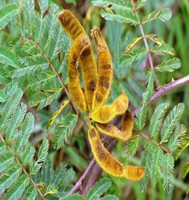
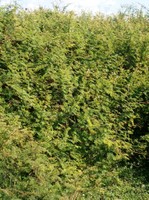
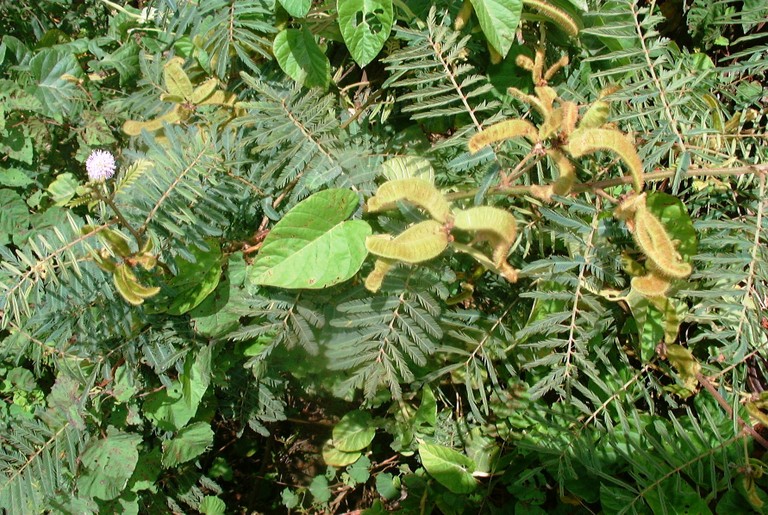
<p><i><strong>Mimosa Pigra,</strong> </i>the giant sensitive plant, is a prickly leguminous shrub that can reach up to 4m in height. It originates from tropical South and Central America but has been in Africa for at least 200 years. It has long brown woody stems that branch from the base and which bear many sharp, curved thorns. The leaves are soft, green, finely-pinnate and fold inwards when touched (hence the name “sensitive plant”). The flowers are balls of stamens usually pink or mauve, sometimes almost yellow in colour. The fruits are clustered pods, with a furry brown coating of small plant hairs, which break up into small sections (with one seed in each) when they mature. This plant has gradually become invasive in wetlands, lake and river edges and floodplains across Africa – during the last 30 to 40 years and continues to spread and invade.</p>
<h3><b>Impacts of </b><b>Mimosa pigra</b><b> </b></h3>
<ul>
<li><i>Mimosa pigra </i>is known to cause extensive damage to local vegetation by displacing native vegetation while forming a single species thicket which can be impenetrable to people and most animals;</li>
<li><i>Mimosa pigra </i>can diminish grazing/pastoral lands especially floodplains and reduces habitat diversity for wild animals and plants;</li>
<li>It can block waterways with impacts on transport and fisheries and can prevent peoples’ access to both aquatic and terrestrial habitats;</li>
<li>Tourism is at times affected when this plant invades protected areas and wildlife can be excluded from their feeding grounds by <i>Mimosa pigra </i>invasions;</li>
<li><i>Mimosa pigra </i>can also affect water flow in natural streams and irrigation canals and is very difficult to remove in the long-term.</li>
</ul>
<p class="Pa0"> </p>
<h3 class="Pa0"><img src="http://lta.iwlearn.org/Pigra2.jpg/image_mini" alt="Pigra2" style="float: left; " class="image-inline" title="Pigra2" />How does it spread?</h3>
<ul>
<li>
<div class="Pa6"></div>
</li>
<li>
<div class="Pa6">The seeds are readily spread be floating on water and being swept away by currents – in streams and floodplains;</div>
</li>
<li>
<div class="Pa6"></div>
</li>
<li>
<div class="Pa6">The seedpods adhere to clothing and coats of mammals (including cattle and small stock) and feathers of birds and can thus spread far and wide;</div>
</li>
<li>
<div class="Pa6"></div>
</li>
<li>
<div class="Pa6">The seeds and pods can also stick onto vehicle tyres facilitating their spread – by cars, farm vehicles and earth-moving machinery.</div>
</li>
</ul>
<p class="Pa1"> </p>
<h3 class="Pa1">Why should we be concerned?</h3>
<p><i>Mimosa pigra</i>, despite being present in Africa for possibly two centuries, has only recently begun to spread and become invasive. This may possibly be due to the recent arrival of soil micro-organisms from its original area that allow it to grow faster. But, whatever the reason, it is becoming a problem in almost every country in Africa – through invasion and changing the vegetation and uses of wetlands, lakes and rivers in many places. It is thus a threat to the coasts, wetlands and inflowing waters of Lake Tanganyika in all four riparian countries – which is a concern for the Lake Tanganyika Management Authority and the four countries concerned (Burundi, DRC, Tanzania and Zambia).</p>
<h3 class="Pa4"><img src="http://lta.iwlearn.org/Pigra3.jpg/image_mini" alt="Pigra3" style="float: right; " class="image-inline" title="Pigra3" />How can it be controlled?</h3>
<ul>
<li>
<div class="Pa7">Before thickets are established, isolated plants can be managed by mechanical removal through slashing, excavation of roots and burning. The method is very labour-intensive and may stimulate seed germination due to the removal of seed coats.</div>
</li>
<li>
<div class="Pa7">Herbicides may be used with subsequent sowing of competitive plants to suppress regeneration from seed; aerial spraying may be needed when the height and density of <i>Mimosa pigra </i>hinders acces;</div>
</li>
<li>
<div class="Pa7">Biological control is the most cost effective and long-term control strategy for <i>Mimosa pigra </i>and there is a range of biocontrol agents available which have been used in Asia and Australia.</div>
</li>
<li>
<div class="Pa7">A more integrated plan combining mechanical, chemical and biological control may result in quicker and more effective management results to reduce an invasion and prevent its spread.</div>
</li>
</ul>
<p class="Pa0"><b> </b></p>
<p class="Pa0" style="text-align: right; "><b>IUCN Global Invasive Species Initiative</b><b> - </b><b>IUCN ESARO Regional Office, Nairobi, Kenya</b><b>. </b></p>
<p class="Pa0" style="text-align: right; "><b>For more information: contact: </b><b>info@lta-alt.org </b><b>or </b><b>geoffrey.howard@iucn.org </b><b>or </b><b>esther.abonyo@iucn.org</b><b> </b></p>]]></content:encoded>
    <dc:publisher>No publisher</dc:publisher>
    <dc:creator>Alain Gashaka</dc:creator>
    <dc:rights></dc:rights>
    
      <dc:subject>Invasive Species</dc:subject>
    
    
      <dc:subject>Lake</dc:subject>
    
    
      <dc:subject>Tanganyika</dc:subject>
    
    <dc:date>2011-10-19T14:15:00Z</dc:date>
    <dc:type>News Item</dc:type>
  </item>


  <item rdf:about="http://lta.iwlearn.org/copy_of_Pigra1.jpg">
    <title>Pigra11</title>
    <link>http://lta.iwlearn.org/copy_of_Pigra1.jpg</link>
    <description>copy_of_Pigra1.jpg  Pigra11  Invasive Species Lake Tanganyika   
</description>
    
    <dc:publisher>No publisher</dc:publisher>
    <dc:creator>Alain Gashaka</dc:creator>
    <dc:rights></dc:rights>
    
      <dc:subject>Invasive Species</dc:subject>
    
    
      <dc:subject>Lake</dc:subject>
    
    
      <dc:subject>Tanganyika</dc:subject>
    
    <dc:date>2011-10-19T14:20:41Z</dc:date>
    <dc:type>Image</dc:type>
  </item>


  <item rdf:about="http://lta.iwlearn.org/Pigra1.jpg">
    <title>Pigra1</title>
    <link>http://lta.iwlearn.org/Pigra1.jpg</link>
    <description>Pigra1.jpg  Pigra1  Invasive Species Lake Tanganyika   
</description>
    
    <dc:publisher>No publisher</dc:publisher>
    <dc:creator>Alain Gashaka</dc:creator>
    <dc:rights></dc:rights>
    
      <dc:subject>Invasive Species</dc:subject>
    
    
      <dc:subject>Lake</dc:subject>
    
    
      <dc:subject>Tanganyika</dc:subject>
    
    <dc:date>2011-10-19T14:21:51Z</dc:date>
    <dc:type>Image</dc:type>
  </item>


</rdf:RDF>