<?xml version="1.0" encoding="utf-8" ?>
<rdf:RDF xmlns:rdf="http://www.w3.org/1999/02/22-rdf-syntax-ns#" xmlns:dc="http://purl.org/dc/elements/1.1/" xmlns:syn="http://purl.org/rss/1.0/modules/syndication/" xmlns="http://purl.org/rss/1.0/">


<channel rdf:about="http://lta.iwlearn.org/search_rss">
  <title>Lake Tanganyika</title>
  <link>http://lta.iwlearn.org</link>

  <description>
    
            These are the search results for the query, showing results 1 to 14.
        
  </description>


  <image rdf:resource="http://lta.iwlearn.org/logo.png"/>

  <items>
    <rdf:Seq>
      
        <rdf:li rdf:resource="http://lta.iwlearn.org/awareness-workshop-on-sustainable-management-of-fisheries-for-fishing-communities-in-burundi"/>
      
      
        <rdf:li rdf:resource="http://lta.iwlearn.org/new-guide-to-some-invasive-plants-affecting-lake-tanganyika"/>
      
      
        <rdf:li rdf:resource="http://lta.iwlearn.org/burundi-industrialists-called-to-contribute-to-protecting-water-resources"/>
      
      
        <rdf:li rdf:resource="http://lta.iwlearn.org/celebration-of-lake-tanganyika-national-day-2012-edition"/>
      
      
        <rdf:li rdf:resource="http://lta.iwlearn.org/lta-and-tnc-hands-on-hands-to-protect-lake-tanganyika"/>
      
      
        <rdf:li rdf:resource="http://lta.iwlearn.org/the-fishing-pressure-is-an-increasing-threat-to-the-sustainability-of-fishery-resources-in-lake-tanganyika"/>
      
      
        <rdf:li rdf:resource="http://lta.iwlearn.org/elusive-bururi-long-fingered-frog-found-after-62-years"/>
      
      
        <rdf:li rdf:resource="http://lta.iwlearn.org/lake-tanganyika-and-the-greater-mahale-ecosystem"/>
      
      
        <rdf:li rdf:resource="http://lta.iwlearn.org/investment-opportunities-in-lake-tanganyika-and-victoria-are-still-limited-by-security-and-environmental-threats"/>
      
      
        <rdf:li rdf:resource="http://lta.iwlearn.org/lake-tanganyika-basin-development-conference-recommendations"/>
      
      
        <rdf:li rdf:resource="http://lta.iwlearn.org/come-invest-in-lake-tanganyika-basin"/>
      
      
        <rdf:li rdf:resource="http://lta.iwlearn.org/the-invasive-mimosa-pigra-is-extending-its-range-in-the-lake-tanganyika-ecosystem"/>
      
      
        <rdf:li rdf:resource="http://lta.iwlearn.org/copy_of_Pigra1.jpg"/>
      
      
        <rdf:li rdf:resource="http://lta.iwlearn.org/Pigra1.jpg"/>
      
    </rdf:Seq>
  </items>

</channel>


  <item rdf:about="http://lta.iwlearn.org/awareness-workshop-on-sustainable-management-of-fisheries-for-fishing-communities-in-burundi">
    <title>AWARENESS WORKSHOP ON SUSTAINABLE MANAGEMENT OF FISHERIES FOR FISHING COMMUNITIES IN BURUNDI </title>
    <link>http://lta.iwlearn.org/awareness-workshop-on-sustainable-management-of-fisheries-for-fishing-communities-in-burundi</link>
    <description>The objectives of the workshop are to initiate awareness among fishing communities on the issues of sustainable use of living and non-living resources of Lake Tanganyika, and refine the analysis of the impact of the fishing business management of these resources.

The other objective is to produce videos of short stories in four languages on key issues related to the management and conservation of Lake Tanganyika. The videos will be used to educate people about the dangers of unsustainable practices and promote the use of best practices.
</description>
    <content:encoded xmlns:content="http://purl.org/rss/1.0/modules/content/"><![CDATA[<p><b>AWARENESS WORKSHOP ON SUSTAINABLE MANAGEMENT OF FISHERIES FOR FISHING COMMUNITIES IN BURUNDI – RUMONGE: FEBRUARY 13, 2014</b></p>
<p><b>Brief overview</b></p>
<p>Lake Tanganyika is shared by four riparian countries such as Burundi, Democratic Republic of Congo, Tanzania and Zambia. The Lake, noted for its wide variety of wildlife, home to at least 1,500 plant and animal species, of which more than 600 are found nowhere else in the world. The lake is a source of freshwater, fish and serves as a transport, and directly or indirectly provides a source of livelihood for about 10 million people living in the lake basin.</p>
<p>The Lake Tanganyika Authority (LTA), based in Bujumbura, is the regional organization representing the four riparian countries. The ALT was created to support the implementation of the Convention on the Sustainable Management of Lake Tanganyika (see Article 23 of the Convention). During ongoing discussions that took place recently with partners, stakeholders and beneficiaries ensuring coherence and coordination of assistance based on the needs and efforts of national and regional institutions in Africa, it was agreed to strengthen the ability of the Lake Tanganyika Authority to assist in the updating and implementation of the plan of Management Structure Fisheries of Lake Tanganyika.</p>
<p>Currently,  LTA has an agreement with the UN Food and Agriculture Organization ("FAO") under the implementation of a regional strategy for the ESA project - IO (GCP / RAF / 466/EC), which focuses on "<b>The participation of fishing communities in the sustainable use of living and non-living resources of Lake Tanganyika</b>." One of the main objectives of the agreement is to encourage communities to engage in sustainable resource management through awareness of best practices.</p>
<p><b>Workshop objectives</b></p>
<p class="Default">The objectives of the workshop are to initiate awareness among fishing communities on the issues of <b>sustainable use of living and non-living resources of Lake Tanganyika</b>, and refine the analysis of the impact of the fishing business management of these resources. <span>The other objective is to produce videos of short stories in four languages ​​on key issues related to the management and conservation of Lake Tanganyika. The videos will be used to educate people about the dangers of unsustainable practices and promote the use of best practices.</span></p>
<p class="Default"><span>The videos will be used in the activities of the community by LTA and its partners. In additional, the videos will also be available on the LTA website and social media for other potential users. The four key themes for the videos are:</span></p>
<p class="Default"><span>- </span><b>Dangers of using illegal fishing instrument</b></p>
<p class="Default"><b> </b><b>- Co - Management of Resources</b></p>
<p class="Default"><b> </b><b>- Hygiene on fish landing and beaches</b></p>
<p class="Default"><b> </b><b>- Alternative activities generating income for fishing communities</b></p>
<p class="Default"><span>The primary targeted public will be mainly fishing communities of Lake Tanganyika and related stakeholders such as traders and input suppliers. Other beneficiaries and end users of the videos are: local and national leaders (Burundi, DRC, Tanzania and Zambia) involved in fishing, Federation of Fishermen in Burundi and similar organizations in the DRC, Tanzania and Zambia, and partners of LTA like research institutes and NGOs, donors and their projects.</span></p>
<p class="Default"><span> </span><b>Organization and participation</b></p>
<p class="Default"><b> </b><span>The workshop is supported by the FAO / SMARTFISH and is organized by the Lake Tanganyika Authority.It will be held on 13</span><sup>th</sup><span> February 2014, in Lake Tanganyika Lodge in Rumonge, Bururi, Southern Burundi. </span><span>Participation in the workshop will include the representatives of fishermen's associations, women traders, local authorities/leaders, maritime authorities/leaders, agencies respectively of country fisheries and environment.</span></p>
<p><span>Participants will be selected by their agencies in close collaboration with the organizers. Representatives of FAO, SmartFish and Lake Tanganyika Authority will also participate in the workshop.</span></p>
<p><b>Agenda</b></p>
<p><b> </b></p>
<p>The opening of the workshop will be officially made ​​by His Excellency the Executive Director of LTA. Before the official opening, there will be two declarations, the Representatives of FAO and the Federation of Fishermen and Fish Suppliers in Burundi (“FPFPB”).  After the official opening, there will be a number of presentations:</p>
<p><b>i) </b><b>Dangers of the use of illegal fishing instruments,</b></p>
<p><b>ii) </b><b>Co - management of resources,</b></p>
<p><b>iii) </b><b>Hygiene on fish landing and beaches,</b></p>
<p><b>iv) </b><b>Alternative activities generating income for fishing communities.</b></p>
<p><b> </b></p>
<p>After the presentations and projections of mini movie of 10 minutes each, participants will be divided into working groups where they will discuss the four thematic answering the following <span>questions (which situation? What is being done now? What should be done by the fishing communities?  What contributions of institutions - FPFPB, LTA, Min Fishing, FAO / SmartFish), etc.</span></p>
<p>The workshop will be followed by a press conference.</p>
<p><b> </b></p>
<p><b>Detail of the Provisional Agenda - Thursday, 13<sup>th</sup> February 2014</b></p>
<p>8:30 / 9:00: Arrival and registration of guests</p>
<p>9:00 / 9:10: Speech by the Representative of  Commune of Rumonge</p>
<p>9:10 / 9:20: Speech by the Representative of Federation of Fishermen</p>
<p>9:20 / 9:30: Speech by FAO Representative (Burundi) / SmartFish</p>
<p>9:30 / 9:50: Official opening by His Excellency Jean Marie NIBIRANTIJE, Executive Director of LTA</p>
<p>9:50 / 10:00: Presentation of participants</p>
<p>10:00 /10:20: <b>Theme 1: Presentation on Dangers of using illegal fishing instruments</b></p>
<p>10:20 / 10:30: Projection of the 1<sup>st</sup> Video</p>
<p>10:30 / 11:00: Discussion - Debate on the theme</p>
<p>11:00 / 11:20: <b>((Coffee / tea break))</b></p>
<p>11:20 / 11:40: <b>Theme 2: Presentation on Co - Management of resources</b><b> </b></p>
<p>11:40 / 11:50: Projection of the 2<sup>nd</sup> Video</p>
<p>11:50 / 12:20: Discussion - Debate on the theme</p>
<p>12:20 / 12:40: <b>Theme 3: Presentation on Hygiene on the fish landing and beaches</b></p>
<p>12:50 / 1:20 p.m.: Discussion - Debate on the theme</p>
<p>1:20 p.m. / 1:30 p.m.: Logistic instructions</p>
<p>1:30 p.m. / 2:30 p.m.: <b>(( Lunch)) </b></p>
<p>2:30 p.m. / 2:50 p.m: <b>Theme 4: Alternative activities generating income for fishing communities</b></p>
<p><span>2:50 p.m. / 3:00 p.m.: Projection of the 4</span><sup>th</sup><span> Video</span></p>
<p>4:00 p.m. / 4:20 p.m.: Discussion</p>
<p>4:20 p.m. / 5:00: Group work</p>
<p>5:00 p.m. / 5:30 p.m.: Plenary group work</p>
<p>5:30 End of the session.</p>
<p><b>Expected results</b></p>
<p>The workshop is to encourage communities to engage in sustainable management of resources through awareness of best practices, and will provide a series of actions that can be implemented by communities to mitigate any negative impacts, but also establish the basis for future activities at local level.</p>
<p><b> </b></p>
<p>FAO and SmartFish hope to support the development of mitigation and adaptation in fishing communities around the Lake Tanganyika Basin in order to maintain current levels of fish production, support in daily life and food security at regional level.</p>
<p><b> </b></p>
<p><b>Languages </b></p>
<p>The languages ​​used in the workshop are respectively French and Kirundi.</p>
<p><b> </b></p>
<p><b>Registration and participation fees </b></p>
<p>Travel expenses and per diem during the workshop will be covered for participants.</p>]]></content:encoded>
    <dc:publisher>No publisher</dc:publisher>
    <dc:creator>Alain Gashaka</dc:creator>
    <dc:rights></dc:rights>
    
      <dc:subject>Awareness</dc:subject>
    
    
      <dc:subject>FAO</dc:subject>
    
    
      <dc:subject>LTA</dc:subject>
    
    
      <dc:subject>People</dc:subject>
    
    
      <dc:subject>SmartFish</dc:subject>
    
    
      <dc:subject>Tanganyika</dc:subject>
    
    
      <dc:subject>Workshop</dc:subject>
    
    <dc:date>2014-02-01T00:00:00Z</dc:date>
    <dc:type>News Item</dc:type>
  </item>


  <item rdf:about="http://lta.iwlearn.org/new-guide-to-some-invasive-plants-affecting-lake-tanganyika">
    <title>New Guide to some invasive plants affecting Lake Tanganyika</title>
    <link>http://lta.iwlearn.org/new-guide-to-some-invasive-plants-affecting-lake-tanganyika</link>
    <description>Lake Tanganyika Authority in collaboration with UNDP/GEF Project and IUCN Invasive Species Initiative organized a workshop on invasive species affecting Lake Tanganyika at Kibunoah Hotel, in Bujumbura - Burundi, for the Burundi and D. R. Congo Technical Teams on Environmental Issues. "From this 23 rd  to 24 th  August, 2012, you will be involved to how you can control species that have become invasive and be trained how you can prevent new invasions in order to develop a Monitoring Programme for Invasive Species for the four riparian countries of Lake Tanganyika” said Mr. Gabriel Hakizimana, Director of Environment of Lake Tanganyika Authority – LTA.</description>
    <content:encoded xmlns:content="http://purl.org/rss/1.0/modules/content/"><![CDATA[<p>Lake Tanganyika Authority in collaboration with UNDP/GEF Project and IUCN Invasive Species Initiative organized a workshop on invasive species affecting Lake Tanganyika at Kibunoah Hotel, in Bujumbura - Burundi, for the Burundi and DR Congo Technical Teams on Environmental Issues. "From this 23<sup>rd</sup> to 24<sup>th</sup> August, 2012, you will be involved to how you can control species that have become invasive and be trained how you can prevent new invasions in order to develop a Monitoring Programme for Invasive Species for the four riparian countries of Lake Tanganyika” said Mr. Gabriel Hakizimana, Director of Environment of Lake Tanganyika Authority – LTA.</p>
<p>According to Mr. Simbotwe Mwiya, Regional Coordinator of UNDP/GEF Project on Lake Tanganyika, “there is increasing pressure on Lake’s natural resources – thus need for the protection of Lake Tanganyika. In response to this need, the Lake Tanganyika Convention was signed by the four riparian states in 2003 and a Strategic Action Programme (SAP) was formulated to help in the establishment of a regional monitoring system in order to contribute to long-term sustainable management of Lake Tanganyika”.</p>
<p>Then, a guide to some invasive plants affecting Lake Tanganyika has been produced. “ This guide is a product  of the SAP through a project supported by UNDP/GEF, managed by UNOPS and implemented by International Union for Conservation of Nature (IUCN)”, indicated Mr Mwiya.</p>
<p>Dr Geoffrey Howard, one of authors of that guide, mentioned that the Invading species – especially invasive plants - can affect the environment in many ways – which are able to have short and long distance impacts on water quality and quantity relevant to the Lake Tanganyika. To Ms Esther Abonyo, co-author, indicated to the technical teams from Burundi and DR Congo that the initial introduction of these invasive plants may, in rare cases, be natural, but most often introduction is associated with people and can be intentional or unintentional (accidental). Most species introductions do not survive to the next stage of establishment.</p>
<p> “This process and its steps from introduction to invasion may take weeks or months, sometimes years or even decades or centuries (as in the case of some trees). This is why we need to take note of new species that arrive and join the flora or fauna - and check if they have a reputation of invasion elsewhere” recognized Dr Howard.</p>
<p>In the absence of national agencies solely responsible for the prevention and management of biological invasions (sometimes called Biosecurity Departments), invasions become the responsibility of the land ( and water) managers, biodiversity managers and human livelihood and welfare organizations. This is the origin of the idea to develop a monitoring system for invasive alien species in and around Lake Tanganyika. 31 groups of species are described in the Guide to some invasive plants affecting Lake Tanganyika.</p>]]></content:encoded>
    <dc:publisher>No publisher</dc:publisher>
    <dc:creator>Alain Gashaka</dc:creator>
    <dc:rights></dc:rights>
    
      <dc:subject>Guide</dc:subject>
    
    
      <dc:subject>Invasive Species</dc:subject>
    
    
      <dc:subject>Lake</dc:subject>
    
    
      <dc:subject>Tanganyika</dc:subject>
    
    <dc:date>2012-08-22T22:00:00Z</dc:date>
    <dc:type>News Item</dc:type>
  </item>


  <item rdf:about="http://lta.iwlearn.org/burundi-industrialists-called-to-contribute-to-protecting-water-resources">
    <title>Burundi industrialists called to contribute to protecting water resources</title>
    <link>http://lta.iwlearn.org/burundi-industrialists-called-to-contribute-to-protecting-water-resources</link>
    <description>It was during a discussion workshop on the main provisions of the water code in Burundi that was organised by the Ministry of Water, Environment, Land and Urban Planning, in partnership with the Sectoral Programme Water and Sanitation of the Federal German Republic. The water code being disseminated for the implementation of the national water policy adopted in 2009, proves that water management and use are based on 10 key principles.</description>
    <content:encoded xmlns:content="http://purl.org/rss/1.0/modules/content/"><![CDATA[<p><img src="http://lta.iwlearn.org/LogoMEEATU.jpg/@@images/9807833b-fe8b-4a7e-856a-6b90ef73a790.jpeg" style="float: left; " title="Logo Burundi" class="image-inline" alt="Logo Burundi" />BUJUMBURA, 24<sup>th</sup> July (ABP) – Burundian industrialists were called this Tuesday to contribute to protecting water resources mainly Lake Tanganyika, as well as safeguarding its biodiversity. It was during a discussion workshop on the main provisions of the water code in Burundi that was organised by the Ministry of Water, Environment, Land and Urban Planning, in partnership with the Sectoral Programme Water and Sanitation of the Federal German Republic. The workshop was organised for industrialists and managers of hotels implemented along Lake Tanganyika coast.</p>
<p>In his opening speech, the Minister in charge of water, Mr. Jean Marie Nibirantije declared that Lake Tanganyika, a globally important fresh water reserve hosting the richest biodiversity in the world, has become a dumping ground for industrialists and households in Bujumbura. According to him the sector of water faces numerous challenges that influenced the development of the water code adopted on 26<sup>th</sup> March 2012. Those challenges are related to uncontrolled management, drinking water supply, basic sanitation, the role of water playing a dynamic role in development, as well as to the problem of climate change. He called for a change of behaviour for a better management of water resource which is becoming increasingly rare and vulnerable in Burundi. “Without water, life is not possible, water is life. Water protects our environment as all living beings need this primary resource”, said the minister Nibirantije. Given these challenges, the Government of Burundi created the ministry in charge of water resources in order to distinguish management and use of water resources. Mr. Nibirantije recalled the vision of the Government with regard to this issue, which is “Building a nation where water is sufficiently available in quality and quantity to meet the needs of present and future generations, and where water is efficiently and equitably used for a sustainable socio economic development without compromising the environment”.</p>
<p><img src="http://lta.iwlearn.org/LogoGIZ.jpg/@@images/af25e7d6-bf62-4691-9b2f-29fbc08c8006.jpeg" style="float: right; " title="Logo GIZ" class="image-inline" alt="Logo GIZ" />As he is concerned, the Coordinator of PROSECEAU/GIZ (Sectoral Programme Water and Sanitation of the German Cooperation), Mr. Rudolph Jochen, indicated that in the aim of ensuring an equitable access to clean water and sanitation, the German Government is committed to support the Burundi Government to implement reforms in the sector of water. He noted that the promulgation of the water code is an important step in the reform process started some years ago. The PROSECEAU accompanied the ministry in charge of water in developing the national water policy which provided key orientations in terms of water resource management. It also supported the process of water code development, a tool that will enable all categories of Burundians to understand the importance of this resource.</p>
<p>According to M. Jochen, the two reference texts go back to the Dublin Principles, two of which are interesting for the sector of industry; these are the “polluter pays” principle or the “responsibility principle”, and the “collector pays” principle or the principle of recognizing the economic value of water which address to the main users of water resource. He called for the respect of the provisions of the code, mainly those related to the qualitative and quantitative protection of water. He reaffirmed the commitment of Germany to stand by Burundi side in implementing reforms complying with the main provisions in this code.</p>
<p>The water code being disseminated for the implementation of the national water policy adopted in 2009, proves that water management and use are based on 10 key principles. The first principle recognizes that water is an economic asset. The second principle of subsidiarity implies the transfer of related skills to the community at the base. The third is related to the participation of women in making decisions on water. The principle of solidarity insists on measures to enable the poor and vulnerable have access to water at an affordable price. The fifth principle focuses on the regional and international cooperation in this matter. The principle of good governance emphasizes on transparency and accountability in the sector. The principle of sustainability is to make water available for future generations. The eighth principle is on the participatory approach at all levels of development and water management. The principle of the program approach emphasizes on the development of water sector as a whole. The tenth principle of responsibility is meant to avoid misuse and potentially harmful activities to water resources.</p>]]></content:encoded>
    <dc:publisher>No publisher</dc:publisher>
    <dc:creator>Alain Gashaka &amp; Parfait Richard Nkunzimana</dc:creator>
    <dc:rights></dc:rights>
    
      <dc:subject>Codes</dc:subject>
    
    
      <dc:subject>Lake</dc:subject>
    
    
      <dc:subject>Tanganyika</dc:subject>
    
    
      <dc:subject>Water</dc:subject>
    
    <dc:date>2012-07-26T22:00:00Z</dc:date>
    <dc:type>News Item</dc:type>
  </item>


  <item rdf:about="http://lta.iwlearn.org/celebration-of-lake-tanganyika-national-day-2012-edition">
    <title>Celebration of Lake Tanganyika National Day, 2012 edition</title>
    <link>http://lta.iwlearn.org/celebration-of-lake-tanganyika-national-day-2012-edition</link>
    <description>"If we do not take care, many human activities pose a threat to Lake Tanganyika," noted Mr. Gabriel Toyi, representing the second Vice-President of the Republic of Burundi, in the ceremonies of Lake Tanganyika National Day, July 22 nd  each year.  
Dr. Henry Mwima, the Executive Director of Lake Tanganyika Authority (LTA) has recognized the efforts made by Burundi in protecting the lake and appealed to other Lake Tanganyika riparian countries (DRC, Tanzania and Zambia) to emulate the example set by the Government of the Republic of Burundi by setting aside one day to celebrate the unique and shared heritage: Lake Tanganyika.</description>
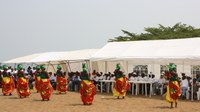
    <content:encoded xmlns:content="http://purl.org/rss/1.0/modules/content/"><![CDATA[<p class="yiv490790344msonormal"><img src="http://lta.iwlearn.org/LTDay2012webDanse.jpg/@@images/3c6ba887-444b-467c-9156-a351be178e21.jpeg" style="float: left; " title="L T Day 2012 Danse" class="image-inline" alt="L T Day 2012 Danse" />"If we do not take care, many human activities pose a threat to Lake Tanganyika," noted Mr. Gabriel Toyi, representing the second Vice-President of the Republic of Burundi, in the ceremonies of Lake Tanganyika National Day, July 22<sup>nd</sup> each year. <img src="http://lta.iwlearn.org/ToyiPic.jpg/@@images/77e6506a-6cf0-4cdb-b589-d71a5d5d5779.jpeg" style="float: right; " title="LT Day 2012 Toyi" class="image-inline" alt="LT Day 2012 Toyi" /></p>
<p class="yiv490790344msonormal">For him, if nothing is done in terms of protection, Lake Tanganyika can become an unusable pond. He called on all Burundians to act for the protection of this important aquatic ecosystem. Mr. Toyi also mentioned that the Burundi Government is committed to protecting the lake by promulgating the Water Code and the National Strategy for Sustainable Tourism Development in Burundi. He recalled that people should avoid throwing waste of any kind in this lake, which, after all, is not a public dumping ground, and instead, promote rational fisheries.</p>
<p class="yiv490790344msonormal"><img src="http://lta.iwlearn.org/MwimaPic.jpg/@@images/2c81d173-1a2d-45af-a6d3-1920580d09e2.jpeg" style="float: left; " title="LT Day 2012 ED" class="image-inline" alt="LT Day 2012 ED" />Dr. Henry Mwima, the Executive Director of Lake Tanganyika Authority (LTA) has recognized the efforts made by Burundi in protecting the lake and appealed to other Lake Tanganyika riparian countries (DRC, Tanzania and Zambia) to emulate the example set by the Government of the Republic of Burundi by setting aside one day to celebrate the unique and shared heritage: <b>Lake Tanganyika</b>. Mr. Mwima however informed that the problems to be solved for the protection of this lake include climate change, invasive species, sedimentation, overexploitation of natural resources, habitat destruction and pollution.</p>
<p class="yiv490790344msonormal"> In addition, Mr. Albert Mbonerane, the Legal Representative of ACVE (Green Belt Action for Environment), noted that Burundi was the first Lake Tanganyika riparian country to ratify in 2004, the Convention on Sustainable Management of Lake Tanganyika and to organise in 2005, the celebration of the national day dedicated to this lake. He took this opportunity to recommend a better implementation of the Water Code by users and investors in the sector of water.</p>
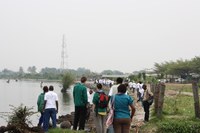
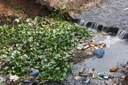
<p class="yiv490790344msonormal"><img src="http://lta.iwlearn.org/LTDay2012webKumase.jpg/@@images/e8fb7e3d-7f45-4dfc-8326-e6bb9b0a6543.jpeg" style="float: right; " title="LT Day 2012 Ku mase" class="image-inline" alt="LT Day 2012 Ku mase" />However, it was noted that the shoreline of Lake Tanganyika is seriously threatened by pollution from riparian cities, particularly in Bujumbura, at the place called "Ku mase". During a visit along the Lake Tanganyika shore, held on Friday 20<sup>th</sup> July, people were forced to hold their noses to avoid unpleasant odours caused by domestic wastewater flowing to the lake, and blackening the water and the silver sand on the beach.</p>
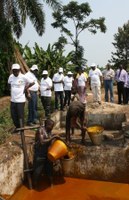
<p class="yiv490790344msonormal"><img src="http://lta.iwlearn.org/LTDay2012webPalmOil.jpg/@@images/3b543d2a-0492-4ab5-ac1b-afe34a544589.jpeg" style="float: left; " title="LT Day 2012 Palm Oil" class="image-inline" alt="LT Day 2012 Palm Oil" />Participants to this visit organised as part of the celebration of the day, also remarked that in some places along the lake, as in Gitaza, Bujumbura Rural province (in the west) and Magara, in Bururi province (in southwest), uncontrolled constructions threaten the protection zone of 150 meters from the lake as stated in the Water Code and some palm oil processing units visited in Rumonge, Bururi province, do not pre-treat their liquid waste before discharging them into the lake. However, some hotels located near the lake as "Blue Bay" in Rumonge, took into account the environmental aspect and comply with the standards in relation to beach management. For this, many tourists are coming to rest on the picturesque beach and enjoy swimming in the clean waters of Lake Tanganyika.</p>
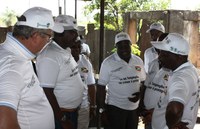
<p class="yiv490790344msonormal"><img src="http://lta.iwlearn.org/LTDay2012webDiscussion.jpg/@@images/99c64879-155a-4fe8-b3c9-4711cf35f528.jpeg" style="float: right; " title="LT Day 2012 Discussion" class="image-inline" alt="LT Day 2012 Discussion" />The Minister of Water, Environment, Land and Urban Planning, Mr. Jean Marie Nibirantije took this opportunity to mention that Burundi Government has implemented strategies to protect the lake through the Water Code. He indicated that severe penalties are provided for polluters, and that the water code requires observing a protection area of 150 meters from the shore, the destruction of illegally implemented building in this area, and the environmental impact assessment prior to implementing any project near the lake.</p>
<p class="yiv490790344msonormal">Mr. Gabriel Hakizimana, LTA Director of Environment, as he is concerned, stressed that pollution of the lake, considered as a freshwater reserve with a volume of 19,000 km³, is mainly caused by wastewater from the lake riparian cities, including Bujumbura. However, he moderated, analysis of waters in this lake of ​​32,900 km², conducted by the NGO "GIZ" confirm that the bacteriological quality of water from Lake Tanganyika is not proper for human consumption but, however, the chemical aspect of this water is not worrisome.</p>
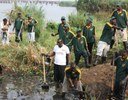
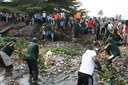
<p class="yiv490790344msonormal">It is worth to mention that the celebration of this day was marked by cleaning the beach near Bujumbura Port, the destruction of illegal fishing gears and giving awards to students who had presented the best poems and best sketches about the theme: "Lake Tanganyika is a treasure to protect".</p>
<p class="yiv490790344msonormal"><img src="http://lta.iwlearn.org/IMG_0861.JPG/@@images/51776eb0-4919-486c-b312-c4630f2eac99.jpeg" title="LT Day 2012 Déchets" height="78" width="121" alt="LT Day 2012 Déchets" class="image-inline" /> <img src="http://lta.iwlearn.org/IMG_0853.JPG/@@images/0ff0f260-3df6-44ab-846a-00ec81bce0f8.jpeg" title="LT Day Propre 2" height="79" width="107" alt="LT Day Propre 2" class="image-inline" /> <img src="http://lta.iwlearn.org/IMG_0952.JPG/@@images/4c14adbb-b496-4d61-bb1b-b9ae91d93797.jpeg" title="LT Day 2012 Propre 3" height="79" width="121" alt="LT Day 2012 Propre 3" class="image-inline" /> <img src="http://lta.iwlearn.org/IMG_1041.JPG/@@images/3ee20006-b01e-4786-af99-eead43c28948.jpeg" title="LT Day 2012 Propre 4" height="80" width="121" alt="LT Day 2012 Propre 4" class="image-inline" /> <img src="http://lta.iwlearn.org/IMG_1020.JPG/@@images/5750fd88-5a15-4357-940b-4157b0bb26e8.jpeg" title="LT Day 2012 Propre 5" height="80" width="123" alt="LT Day 2012 Propre 5" class="image-inline" /></p>]]></content:encoded>
    <dc:publisher>No publisher</dc:publisher>
    <dc:creator>Alain Gashaka &amp; Parfait Nkunzimana</dc:creator>
    <dc:rights></dc:rights>
    
      <dc:subject>2012</dc:subject>
    
    
      <dc:subject>Celebration</dc:subject>
    
    
      <dc:subject>Day</dc:subject>
    
    
      <dc:subject>Lake</dc:subject>
    
    
      <dc:subject>Tanganyika</dc:subject>
    
    <dc:date>2012-07-23T22:00:00Z</dc:date>
    <dc:type>News Item</dc:type>
  </item>


  <item rdf:about="http://lta.iwlearn.org/lta-and-tnc-hands-on-hands-to-protect-lake-tanganyika">
    <title>LTA and TNC: towards joint efforts to protect Lake Tanganyika</title>
    <link>http://lta.iwlearn.org/lta-and-tnc-hands-on-hands-to-protect-lake-tanganyika</link>
    <description>The collaboration area includes exploring opportunities to share resources on collaborative projects, in matters relating to fisheries management and environmental conservation through cooperative efforts.</description>
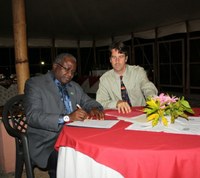
    <content:encoded xmlns:content="http://purl.org/rss/1.0/modules/content/"><![CDATA[<p class="NoSpacing"><img src="http://lta.iwlearn.org/LTALogo_JPEGFormat.jpg/@@images/b5553f78-1709-4245-bf0a-740742ca665a.jpeg" style="float: left; " title="LTA Logo" class="image-inline" alt="LTA Logo" /><img src="http://lta.iwlearn.org/TNCLogo.bmp/@@images/fd81bedc-7750-4a72-910d-debe4bc2d810.jpeg" style="float: left; " title="TNC Logo" class="image-inline" alt="TNC Logo" />On Tuesday, 19th June, 2012, a new partneship has been initied by the Lake Tanganyika Authority (LTA) and the The Nature Conservancy<b> </b>(TNC). The LTA reprensented by the Executive Director, Dr. Henry MWIMA and the TNC represented by the Senior Freshwater Conservation Adviser, Mr. Colin Apse, signed a Memorandum of Understanding (MoU) related to a collaboration to ensure Fisheries Management and Environmental Conservation on Lake Tanganyika.</p>
<p class="NoSpacing"><img src="http://lta.iwlearn.org/IMG_0395.jpg/@@images/59273df8-1071-4a5d-b899-d1b159a09068.jpeg" style="float: right; " title="LTA&amp;TNC MoU" class="image-inline" alt="LTA&amp;TNC MoU" />The MoU is extended to a period of  <b>three (3) years</b> and may be renewed to last for another mutually agreed term.  </p>
<p class="NoSpacing">According to Dr. Henry MWIMA, ED of LTA, the collaboration<strong> </strong>area includes exploring opportunities to share resources on collaborative projects, in matters relating to fisheries management and environmental conservation through cooperative efforts: <b><i>Beach Management Unit Development; <b><i>Research, Monitoring, and Assessment; <b><i>Cross Sector Engagement</i></b> <b><i>and Development Objectives and <b><i>Joint Fundraising.</i></b></i></b></i></b></i></b></p>]]></content:encoded>
    <dc:publisher>No publisher</dc:publisher>
    <dc:creator>Alain Gashaka</dc:creator>
    <dc:rights></dc:rights>
    
      <dc:subject>LTA</dc:subject>
    
    
      <dc:subject>Lake</dc:subject>
    
    
      <dc:subject>Tanganyika</dc:subject>
    
    
      <dc:subject>The Nature Conservancy</dc:subject>
    
    <dc:date>2012-06-20T16:55:00Z</dc:date>
    <dc:type>News Item</dc:type>
  </item>


  <item rdf:about="http://lta.iwlearn.org/the-fishing-pressure-is-an-increasing-threat-to-the-sustainability-of-fishery-resources-in-lake-tanganyika">
    <title>The fishing pressure is an increasing threat to the sustainability of fishery resources in Lake Tanganyika </title>
    <link>http://lta.iwlearn.org/the-fishing-pressure-is-an-increasing-threat-to-the-sustainability-of-fishery-resources-in-lake-tanganyika</link>
    <description>Interventions proposed for developing sustainable fisheries in this lake are such as reviewing and updating the national components of the Fisheries Management Frame Plan, developing and implementing fishing license process, improve the involvement of local communities in fisheries management, and promote sustainable fisheries alternative livelihoods.</description>
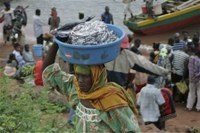
    <content:encoded xmlns:content="http://purl.org/rss/1.0/modules/content/"><![CDATA[<p><img src="http://lta.iwlearn.org/Fisheriesweb2.jpg/@@images/0e2b15c0-4166-4c15-82e2-b5baf4acce99.jpeg" style="float: right; " title="Fisheries web 2" class="image-inline" alt="Fisheries web 2" />The fishing pressure is an increasing threat to the sustainability of fishery resources in Lake Tanganyika, mentions M. Gaspard Ntakimazi in the “National Action Plan (NAP) for implementing the Strategic Action Programme (SAP) for protecting the biodiversity and sustainable management of natural resources in Lake Tanganyika basin”.</p>
<p>According to the same source, the main challenges identified in the SAP adopted by the Lake Tanganyika Authority Conference of Ministers in February, are such as an excessive fishing pressure in the pelagic area, an excessive fishing pressure in the littoral area and catches of ornamental fishes poorly controlled.</p>
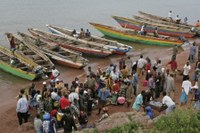
<p><img src="http://lta.iwlearn.org/Fisheriesweb.jpg/@@images/184c160b-7adc-4b68-bf1e-b984c8fc852b.jpeg" style="float: left; " title="Fisheries in LT" class="image-inline" alt="Fisheries in LT" />Management of fisheries and activities affecting the lake basin should be done under the regional planning frame including activities on the basin and the lake resources, as fisheries are now characterized by a free access. Interventions proposed for developing sustainable fisheries in this lake are such as reviewing and updating the national components of the Fisheries Management Frame Plan, developing and implementing fishing license process, improve the involvement of local communities in fisheries management, and promote sustainable fisheries alternative livelihoods.</p>]]></content:encoded>
    <dc:publisher>No publisher</dc:publisher>
    <dc:creator>Alain Gashaka (Pictures:Saskia M.)</dc:creator>
    <dc:rights></dc:rights>
    
      <dc:subject>Fisheries</dc:subject>
    
    
      <dc:subject>Lake</dc:subject>
    
    
      <dc:subject>Tanganyika</dc:subject>
    
    <dc:date>2012-05-28T22:00:00Z</dc:date>
    <dc:type>News Item</dc:type>
  </item>


  <item rdf:about="http://lta.iwlearn.org/elusive-bururi-long-fingered-frog-found-after-62-years">
    <title>Elusive Bururi Long-Fingered Frog Found After 62 Years</title>
    <link>http://lta.iwlearn.org/elusive-bururi-long-fingered-frog-found-after-62-years</link>
    <description>ScienceDaily (Mar. 27, 2012) — Herpetologists from the California Academy of Sciences and University of Texas at El Paso discovered a single specimen of the Bururi long-fingered frog (Cardioglossa cyaneospila) during a research expedition to Burundi in December 2011. The frog was last seen by scientists in 1949 and was feared to be extinct after decades of turmoil in the tiny East African nation.</description>
    <content:encoded xmlns:content="http://purl.org/rss/1.0/modules/content/"><![CDATA[<p><strong>For biologists studying the evolution and distribution of life in Africa, Burundi sits at an intriguing geographic crossroads since it borders the vast Congo River Basin, the Great Rift Valley, and the world's second largest freshwater lake, Lake Tanganyika.</strong> Many of the species in its high-elevation forests may be closely related to plants and animals found in Cameroon's mountains, suggesting that at some point in the past, a cooler climate may have allowed the forests to become contiguous.</p>
<p>Previous knowledge of Burundi's wildlife came from scientific surveys conducted in the mid-20th century, when the nation was under Belgian administration. But its history since then has been one of political unrest, population growth, and habitat loss. Today, approximately 10 million people occupy an area the size of Massachusetts, giving Burundi one of the highest population densities in Africa.</p>
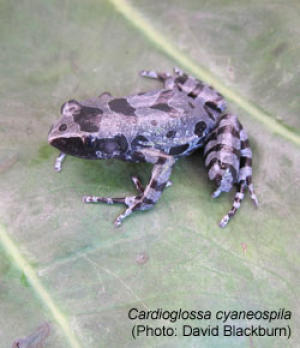
<p><img src="http://lta.iwlearn.org/GrenouilleBurundi.jpg" style="float: right; " title="Grenouille Bdi" class="image-inline" alt="Grenouille Bdi" />Academy curator David Blackburn joined his colleague Eli Greenbaum, professor at the University of Texas at El Paso, on the 2011 expedition with the goal of finding <i>Cardioglossa cyaneospila</i>, as well as other amphibians and reptiles first described 60 years ago. To their pleasant surprise, the habitats of the Bururi Forest Reserve in the southwest part of the country were still relatively intact, with populations of rare forest birds and chimpanzees present.</p>
<p>With little knowledge to go on except a hunch that <i>C. cyaneospila</i> would make a call like its possible close relatives in Cameroon, Blackburn finally found a single specimen on his fifth night in the forest.</p>
<p>"I thought I heard the call and walked toward it, then waited," said Blackburn. "In a tremendous stroke of luck, I casually moved aside some grass and the frog was just sitting there on a log. I heard multiple calls over the next few nights, indicating a healthy population of the species, but I was only able to find this one specimen."</p>
<p>The Bururi long-fingered frog is about 1.5 inches long, with a black and bluish-gray coloration. The males are notable for one extra-long finger on each foot, analogous to the "ring finger" in humans, whose purpose is unknown. Its closest relatives live in the mountains of Cameroon, more than 1,400 miles away.</p>
<p>The lone specimen collected, which now resides in the Academy's herpetology collection, can be used for DNA studies to determine how long the <i>Cardioglossa </i>species from Burundi and Cameroon have been genetically isolated from one another. The results will shed light on Africa's historical climate conditions, a topic that has far-reaching implications for understanding the evolution of life in the continent that gave rise to our own species.</p>
<p>In addition to locating the Bururi long-fingered frog, Blackburn and Greenbaum also documented dozens of other amphibians in Burundi, many of which had never before been recorded in the country. The team also discovered some species that may be new to science.</p>
<p>"Eventually, we will use the data from our expedition to update the IUCN conservation assessment for amphibians of Burundi," said Greenbaum. "Because Burundi is poorly explored, we've probably doubled the number of amphibian species known from the country. Once we demonstrate that Burundi contains rare and endemic species, we can work with the local community to make a strong case for preserving their remaining natural habitats."</p>
<p><strong>Source: Science Daily</strong></p>]]></content:encoded>
    <dc:publisher>No publisher</dc:publisher>
    <dc:creator>Alain Gashaka</dc:creator>
    <dc:rights></dc:rights>
    
      <dc:subject>Biodiversity</dc:subject>
    
    
      <dc:subject>Burundi</dc:subject>
    
    
      <dc:subject>Lake</dc:subject>
    
    
      <dc:subject>Tanganyika</dc:subject>
    
    <dc:date>2012-04-06T07:33:45Z</dc:date>
    <dc:type>News Item</dc:type>
  </item>


  <item rdf:about="http://lta.iwlearn.org/lake-tanganyika-and-the-greater-mahale-ecosystem">
    <title>Lake Tanganyika and the Greater Mahale Ecosystem</title>
    <link>http://lta.iwlearn.org/lake-tanganyika-and-the-greater-mahale-ecosystem</link>
    <description>In fact, a recent survey conducted by Nature Conservancy social scientists concluded that 95% of GME households earn income from farming. Rapidly growing village populations are left with little choice but to expand their settlements and farms into the wild lands and clear forest and woodland for agriculture, fuel and timber. Steep hillsides are haphazardly farmed and the run-off, heavy with sediment, fills coastal zones and pushes near-shore fishery production—the source of 40% of the protein for local families—into decline.</description>
    <content:encoded xmlns:content="http://purl.org/rss/1.0/modules/content/"><![CDATA[<p class="Default">Lake Tanganyika holds nearly as much water as all the U.S. Great Lakes combined—an impressive 17 percent of the world’s available freshwater—and is home to over 250 species of fish found nowhere else in the world. An amazing ecological system, this “inland ocean” forms the western boundary of Tanzania’s Greater Mahale Ecosystem (GME - see map below), which is a 4.8-million-acre forested landscape that is home to approximately 93 percent of Tanzania’s 2,800 endangered chimpanzees.</p>
<p class="Default">In this remote region, access to education, health services and viable markets is lacking and most families must survive on less than $150 each year. The majority of people derive their livelihoods from nature as small-scale farmers and fishers. In fact, a recent survey conducted by Nature Conservancy social scientists concluded that 95% of GME households earn income from farming. Therefore, healthy and productive ecosystems are critical to sustaining people’s health and livelihoods in this area.</p>
<p>At 4.8%, population growth rates in the GME are some of Tanzania’s highest. Rapidly growing village populations are left with little choice but to expand their settlements and farms into the wild lands and clear forest and woodland for agriculture, fuel and timber. Steep hillsides are haphazardly farmed and the run-off, heavy with sediment, fills coastal zones and pushes near-shore fishery production—the source of 40% of the protein for local families—into decline. The area’s deforestation rate (currently at 11%) only stands to increase as the human population grows. Without protection, this valuable ecosystem, and the people who rely on its resources, will remain quite vulnerable.</p>
<p><strong>Source : The Nature Conservancy</strong></p>]]></content:encoded>
    <dc:publisher>No publisher</dc:publisher>
    <dc:creator>Alain Gashaka</dc:creator>
    <dc:rights></dc:rights>
    
      <dc:subject>Lake</dc:subject>
    
    
      <dc:subject>Tanganyika</dc:subject>
    
    <dc:date>2012-01-15T23:00:00Z</dc:date>
    <dc:type>News Item</dc:type>
  </item>


  <item rdf:about="http://lta.iwlearn.org/investment-opportunities-in-lake-tanganyika-and-victoria-are-still-limited-by-security-and-environmental-threats">
    <title>Investment opportunities in Lake Tanganyika and Victoria are still limited by security and environmental threats</title>
    <link>http://lta.iwlearn.org/investment-opportunities-in-lake-tanganyika-and-victoria-are-still-limited-by-security-and-environmental-threats</link>
    <description>http://www.independent.co.ug/rwanda-ed/rwanda/5042-unlocking-a-regional-resource </description>
    <content:encoded xmlns:content="http://purl.org/rss/1.0/modules/content/"><![CDATA[<p>Source : <a href="http://www.independent.co.ug">http://www.independent.co.ug</a></p>
<p>The East African Community (EAC,) in an attempt to boost investment and the livelihood of more than the 20 million people whose livelihoods depend on Lake Tanganyika and its surroundings, organized a conference entitled, “Unlocking the Overflowing Trade and Investment Opportunities in the Lake Tanganyika Basin,” for the first time on Nov.28-29 in Bujumbura.</p>
<p>In his opening speech, Burundi President and the outgoing Chair of the EAC Heads of State Summit Pierre Nkurunziza appealed to investors from the EAC, Common Market for Eastern and Southern Africa (COMESA), Southern Africa Development Community (SADC), Europe, North America, China, Japan and India to exploit the investment opportunities in the lake’s basin.</p>
<p>“The development of transport on the lake, improvement of existing ports and the construction of new ones, and investment in the fishing industry would open up Lake Tanganyika basin as a whole,” said Nkurunziza. “The commercial and cultural exchanges between the three communities—[EAC, SADC, COMESA]—will accelerate the integration through the tripartite free trade zone,” he said.</p>
<p>Nkurunziza pointed out that the lake—also bordered by DRC, Zambia, Tanzania—forms a unique ecosystem, with its vast heritage of flora and fauna found in several forest reserves and natural parks, including the Kibira Forest, Kigwena Forest Reserve, and Rukoko Reserve in Burundi; Mahale Mountains National Park in Tanzania; the Nyungwe Forest between Rwanda and Burundi; Nsumbu National Park in Zambia, and the wetlands of Malagarazi shared by Tanzania and Burundi.</p>
<p>These areas, he added, are also rich in mineral resources such as nickel, diamonds, gold, iron, cobalt and oil and agricultural resources such as palm oil, sugar, fruits and vegetables.</p>
<p>Speaking at the same conference, Burundi’s Minister for EAC Affairs Hafsa Mossi added that Lake Victoria—which borders Kenya, Uganda and Tanzania—also has a “vast potential to feed the region [and] produce a surplus for export.”</p>
<p>“The two great lakes and their basins hold potential that goes beyond sustaining the livelihoods of their specific inhabitants,” she said. “With sustainable management and rational utilization of their resources, they would yield food sufficiency and surplus production for export.”</p>
<p>Mossi called for cooperation among the countries that share the lakes in the sustainable utilization of resources, including the conservation and protection of the delicate ecosystems. Cooperation, she said, was particularly necessary in the areas of joint marketing strategies and promotion of investments and trade in the two basins.</p>
<p>Activities, she highlighted, have included the ongoing joint negotiations of the Economic Partnership Agreement with the European Union. “Breakthroughs have also been made towards the conclusion of tailor-made trade and investment agreements with the leading world markets, USA, China, India and other strategic markets,” said Mossi.</p>
<p>Despite the EAC’s heavy call for investment, there are outstanding security and environmental issues that need to be addressed. According to Gerson Fumbuka, a maritime security officer at Lake Victoria Basin Commission (LVBC) cases of piracy have limited vessels from carrying goods and people in the area, and police remain poorly equipped to handle this threat. The situation, says Fumbuka, is consequently, “a pity in terms of trade and tourism.”</p>
<p>On the other hand, Lake Tanganyika’s biggest threat stems from its rising water temperatures. Geologists from Brown University in the U.S. recently revealed that at 26 degrees Celsius (78.8°F), temperatures are the warmest it’s been for a millennium and a half. This has impacted Tanganyika’s unique ecosystem by affecting necessary nutrients for the lake’s ecosystem.</p>
<p>Three new invasive plant species—Water Hyacinth, Mimosa Diplotricha, and Mimosa Pigra—have also recently been discovered in the lake. An invasive species is an animal or plant that is introduced into a new area where it does not occur naturally. If the introduction occurs without the accompaniment of its pests and diseases that keep the species under control in its natural range and if it is able to survive, establish and spread it can cause damage to biodiversity and peoples’ livelihoods or development. “It is thus a threat to the coasts, wetlands and inflowing waters of Lake Tanganyika in all four riparian countries,” says Henry Mwima, the executive director of Lake Tanganyika Authority (LTA).</p>
<p>Despite the challenges, the two lakes are receiving help from the beneficiary governments and development partners. Fumbuka said that with regard to Lake Victoria, the EAC enacted the Lake Victoria Transport Act in 2007, which intends to deploy new boats to patrol the lake.</p>
<p>“We have already brought [lake security] to the attention of the council of ministers and they directed Lake Victoria Basin Secretariat to institute a framework, which will be put in Lake Victoria and other inland waters to address the issue of personnel and equipments,” said Fumbuka.</p>
<p>The partner states, he said, will purchase state of the art equipment, including boats, which will help to fight piracy and carry out search and rescue activities—currently a big challenge to the people using the lake. “We are going to have boats and these boats will be equipped with personnel who are capable of assisting in any eventualities,” said Fumbuka, adding that the personnel will also receive heavy training to perfect their job.</p>
<p>As part of ensuring safety on Lake Victoria, the commission is carrying out an awareness program in all the five partner states of the EAC. Two sensitization campaigns have been held, one in Kenya and another one in Burundi. Last week, a similar campaign was held in Uganda and the team is expected to come to Kigali in the coming week to conduct the same exercise.</p>
<p>Actions are also being taken to harmonize national legislations amongst countries that border Lake Tanganyika in order to minimize conflicts that could arise from the lake’s resources.</p>
<p>Moreover, with the help of Nordic Fund for development and the African Development Bank, LTA is working with communities to identify and fund projects that would support socio-economic development in the lake basin.</p>
<p>If such actions can prove fruitful, both Lake Victoria and Tanganyika offer an abundance of resources. Lake Victoria Fisheries Organization (LVFO), another EAC institution charged with promoting fisheries in the lake, says the lake yields between 800,000 – 1 million tons valued at $350 – 400 million at the beach, with export earnings estimated at $250 million annually.</p>
<p>The fishery is supported by three main important fish stocks—the Nile perch, Rastrineobola argentea and Nile Tilapia. Over 75 percent of the Nile perch is directly sold to the fish processing factories for export while Dagaa and tilapia are serving the regional and local markets.</p>
<p>Unlike Lake Victoria, Lake Tanganyika yields between 165,000 to 200,000 tons of fish are harvested from the lack each year</p>]]></content:encoded>
    <dc:publisher>No publisher</dc:publisher>
    <dc:creator>Alain Gashaka</dc:creator>
    <dc:rights></dc:rights>
    
      <dc:subject>Environmental threats</dc:subject>
    
    
      <dc:subject>Lake</dc:subject>
    
    
      <dc:subject>Security threats</dc:subject>
    
    
      <dc:subject>Tanganyika</dc:subject>
    
    <dc:date>2011-12-23T00:00:00Z</dc:date>
    <dc:type>News Item</dc:type>
  </item>


  <item rdf:about="http://lta.iwlearn.org/lake-tanganyika-basin-development-conference-recommendations">
    <title>Lake Tanganyika Basin Development Conference recommendations</title>
    <link>http://lta.iwlearn.org/lake-tanganyika-basin-development-conference-recommendations</link>
    <description></description>
    <content:encoded xmlns:content="http://purl.org/rss/1.0/modules/content/"><![CDATA[<p><strong>The EAC-organized conference themed Unlocking the Overflowing Trade and Investment Opportunities in the Basin, was taking place at the Hotel Source du Nil and Roca Golf Hotel from 28-29 November 2011. Then, following very extensive and fruitful deliberations held in a cordial environment, the Conference made the following recommendations: <br /></strong><br /><strong>To promote Infrastructure Development;</strong><br /><br />1. Partner States should expedite implementation of the one-laptop-per child initiative as a step towards the achievement of ICT goals<br /><br />2. Partner states should invest more in infrastructure development to promote tourism in the Lake Tanganyika Basin.<br /><br />3. The EAC Secretariat should expedite the development and implementation of a maritime and inland waterways transport strategy for the region<br /><br /><strong>To address Energy Deficits;</strong><br /><br />4. The four riparian countries should develop and sign common exploration and mining conventions.<br /><br />5. The riparian countries should develop a legal framework on joint exploitation of trans-boundary hydrocarbon resources to prevent possible conflicts.<br /><br />6. The private sector in the East African region should partner with international private sector actors in the development of energy generation capacity for the Basin. <br /><br /><strong>To promote the Tourism Sector;<br /></strong><br />7. The Partner States should expedite harmonization of tourism promotion policies, particularly to enable the implementation of the single tourism visa initiative. <br /><br />8. Riparian countries should develop of a joint communication strategy targeting existing and potential tourism markets, both domestic and international.<br /><br />9. The Tripartite (COMESA-EAC-SADC) should expedite the implementation of the strategy towards improved cost-efficiency of air transport systems. <br /><br />To promote Agriculture and ensure Food Security;  <br /><br />10. The Tripartite should create the enabling policy environment for increased investment in the agricultural sector.<br /><br />11. Riparian countries should invest in building the capacity of the various actors in the food value chains in the Basin.<br /><br />12. Riparian countries should invest in value-addition and agro-processing of agricultural produce in the Basin to minimize post-harvest losses of crop, livestock and fisheries produce.</p>
<p><strong>To address the challenges to Natural Resource Management;</strong><br /><br />13. Riparian countries should initiate more research on invasive species to identify and harness the benefits that can be derived from the species,<br /><br />14. Riparian countries should develop bilateral and multilateral institutional frameworks to prevent smuggling of mineral and other natural resources.<br /><br /><strong>To promote Foreign Direct Investments in Regional Trade and Development;</strong><br /><br />15. Partner States should develop a harmonized investment regime and formulate a regional PPP framework to facilitate public and private sector collaboration.<br /><br />16. Enhance capacity of private and public sector to develop bankable projects to meet banking requirements<br /><br />17. Partner States should develop regional market information portals to enable the private sector to access trade and investments opportunities in the region.<br /><br /><strong>To promote Women and Youth Development;</strong><br /><br />18. Governments should  introduce and implement enabling policy and legal frameworks to insure women and youth have access to productive resources and assets</p>
<p>19.    Finance institutions should partner with national development banks so as to provide low cost financial services to women and youth <br /><br />20. Governments should put in place enabling environments for women and youth to form business organizations like savings and credit cooperatives to make them bankable<br /><br />21. Governments, Private Sector and NGOs offering micro-credits should build the capacity of women and youth entrepreneurs to improve their business skills <br /><br /><strong>To promote the Role of Development Partners and Media in Socio-economic Development;</strong><br /><br />22. The Tripartite Secretariats and Governments should collaborate with Development Partners in developing programmes that can address the infrastructure bottlenecks in the Lake Tanganyika region, for example developing a Lake Tanganyika Water and Sanitation Programme<br /><br />23. The Riparian Countries should put in place regulatory and institutional frameworks to support research and improve synergy and exchange of information<br /><br />24. The Tripartite should strengthen collaboration between Lake Tanganyika Authority and Inter University Council for East Africa in order to promote research along the Basin</p>]]></content:encoded>
    <dc:publisher>No publisher</dc:publisher>
    <dc:creator>Alain Gashaka</dc:creator>
    <dc:rights></dc:rights>
    
      <dc:subject>Basin</dc:subject>
    
    
      <dc:subject>Conference</dc:subject>
    
    
      <dc:subject>Investment</dc:subject>
    
    
      <dc:subject>Lake</dc:subject>
    
    
      <dc:subject>Tanganyika</dc:subject>
    
    <dc:date>2011-11-30T06:00:00Z</dc:date>
    <dc:type>News Item</dc:type>
  </item>


  <item rdf:about="http://lta.iwlearn.org/come-invest-in-lake-tanganyika-basin">
    <title>Come Invest in Lake Tanganyika Basin - HE President Nkurunziza</title>
    <link>http://lta.iwlearn.org/come-invest-in-lake-tanganyika-basin</link>
    <description>EAC Summit Chairperson urges investors to take advantage of basin’s vast potential as 1st Lake Tanganyika Basin Development Conference opens 

</description>
    <content:encoded xmlns:content="http://purl.org/rss/1.0/modules/content/"><![CDATA[<p>The EAC Summit Chairperson and President of the Republic of Burundi HE Pierre Nkurunziza opened the first-ever Lake Tanganyika Basin Development Conference in Bujumbura, Burundi by extending an invitation to investors to come and invest in the Lake Tanganyika Basin. “I would like to make a pressing appeal to potential investors, those of EAC, COMESA, SADC, The United States of America, China, Japan, Europe, India and elsewhere to come and invest in the Lake Tanganyika Basin,” HE Nkurunziza said.<br /><br />The EAC-organized conference themed Unlocking the Overflowing Trade and Investment Opportunities in the Basin, is taking place at the Hotel Source du Nil and Roca Golf Hotel from 28-29 November 2011. <br /><br />The two-day event is meant to harness the potential for trade, investment and socio-economic development in the Basin, and the President was quick to assure investors that the region was ready for investment.<br />“They can count on us for guarantees and facilities for their investments,” the EAC Summit Chair declared in his keynote address. The Head of State went on enumerate the vast opportunities that exist in the tourism, transport, agriculture and mining sectors, among others.<br /><br />“It (Lake Tanganyika Basin) is inhabited by a population of over twenty million. It has a huge potential in water, including Lake Tanganyika and its basin, that we could operate effectively and efficiently to produce electrical energy needed to ensure industrial development in the region,” President Nkurunziza affirmed.<br />“The Basin is also an area of high agricultural potential, producing palm oil, sugar, fruits and vegetables of high quality, to name but a few,” he added.<br /><br />The Burundian President also noted that the creation and improvement of port infrastructure in the Basin to boost transport would  open up the region and accelerate integration, especially as the Basin is shared by the three regional blocs of EAC, COMESA and SADC, which have already formed a Tripartite framework to foster cooperation.<br /><br />Burundi’s Minister for EAC Affairs Hon. Hafsa Mossi on her part described the Lake Tanganyika basin as well as that of Lake Victoria as potential food baskets for the EAC region and observed that on account of their trans-boundary nature, lakes Tanganyika and Victoria call for cooperation among their riparian countries in the rational utilization of their resources, including conservation and protection of their delicate ecosystems.<br /><br />The Secretary General of the East African Community Amb. Richard Sezibera similarly highlighted the lake’s potential as an important tourism and transport hub of the EAC region, saying it could be useful for linking goods transported by rail from Dar es Salaam through Kigoma, the DRC through Kalemie, and from the SADC region through Mpulungu in Zambia.<br /><br />“This capacity can not be overstates because the lake Tanganyika basin is rich in minerals, and has very fertile soils,” Amb. Sezibera asserted.<br /><br />Among the subjects being discussed at the conference include the sustainable exploitation of the natural resource base within the Lake Tanganyika Basin; state of play and role of public private partnerships (PPP) in infrastructural development in the region; and the role of ports and inland waterways in regional integration. <br /><br />The forum will also focus on revitalization of the rail network in the region; enhancing Information Communication Technologies for service economy; oil and gas exploration activities on Lake Tanganyika; as well as energy alternatives for productive use to improve income generation in Lake Tanganyika basin.<br />. <br />EAC Heads of State HE Mwai Kibaki of Kenya; Paul Kagame of Rwanda; Jakaya Kikwete of the United Republic of Tanzania; Yoweri Museveni of Uganda; as well as HE Joseph Kabila of the Democratic Republic of Congo and HE Michael Sata of Zambia are scheduled to take part in an interactive Heads of State session of the Lake Tanganyika Basin Development Conference on Tuesday afternoon, to be moderated by Mr. Jeff Koinange. DR Congo and Zambia are the other countries that share Lake Tanganyika with Burundi and Tanzania.<br /><br />The EAC Secretariat in collaboration with the Republic of Burundi as the host country and Lake Victoria Basin Commission (LVBC) are organizing the conference with the support of the EAC Partner States, Lake Tanganyika Authority (LTA), Trade Mark East Africa, United Nations Development Programme (UNDP) and East African Business Council (EABC).<br /><br />The Lake Tanganyika Basin Development Conference is being relayed live via the EAC website: www.eac.int. <br /><br /></p>]]></content:encoded>
    <dc:publisher>No publisher</dc:publisher>
    <dc:creator>Alain Gashaka</dc:creator>
    <dc:rights></dc:rights>
    
      <dc:subject>Basin</dc:subject>
    
    
      <dc:subject>Conference</dc:subject>
    
    
      <dc:subject>Investment</dc:subject>
    
    
      <dc:subject>Tanganyika</dc:subject>
    
    
      <dc:subject>Trade</dc:subject>
    
    <dc:date>2011-11-28T06:00:00Z</dc:date>
    <dc:type>News Item</dc:type>
  </item>


  <item rdf:about="http://lta.iwlearn.org/the-invasive-mimosa-pigra-is-extending-its-range-in-the-lake-tanganyika-ecosystem">
    <title>The invasive Mimosa pigra is extending its range in the Lake Tanganyika ecosystem</title>
    <link>http://lta.iwlearn.org/the-invasive-mimosa-pigra-is-extending-its-range-in-the-lake-tanganyika-ecosystem</link>
    <description>Mimosa pigra is an invasive species in many places in Africa and is spreading.</description>
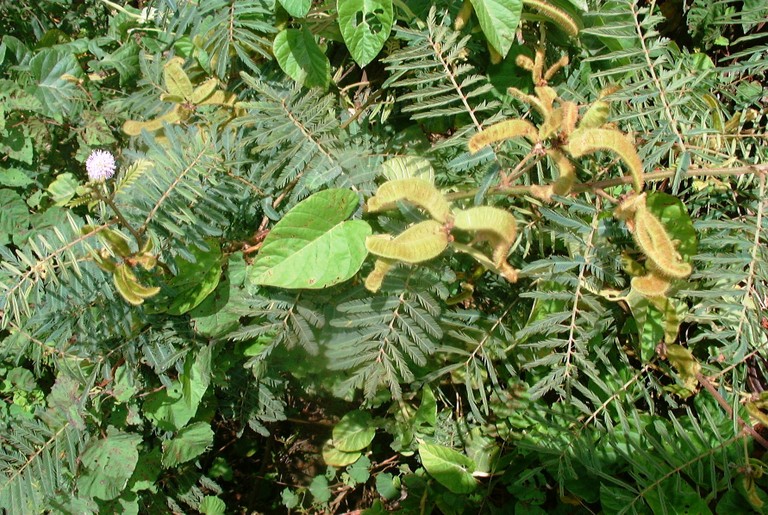
    <content:encoded xmlns:content="http://purl.org/rss/1.0/modules/content/"><![CDATA[<p><i><strong><img src="http://lta.iwlearn.org/copy_of_Pigra1.jpg/image_large" title="Pigra11" height="474" width="625" alt="Pigra11" class="image-inline" /></strong></i></p>
<h3><strong>What is an invasive species?</strong></h3>
<p>An invasive species is an animal or plant which is introduced into a new area where it does not occur naturally. If the introduction occurs without the accompaniment of its pests and diseases that keep the species in check (under control) in its natural range and if it is able to survive, establish and spread thus causing damage to biodiversity, peoples’ livelihoods or development, it is called “invasive”.</p>
<h3><strong>Definition of Mimosa Pigra</strong></h3>
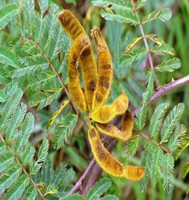
<p><i><strong>Mimosa Pigra,</strong> </i>the giant sensitive plant, is a prickly leguminous shrub that can reach up to 4m in height. It originates from tropical South and Central America but has been in Africa for at least 200 years. It has long brown woody stems that branch from the base and which bear many sharp, curved thorns. The leaves are soft, green, finely-pinnate and fold inwards when touched (hence the name “sensitive plant”). The flowers are balls of stamens usually pink or mauve, sometimes almost yellow in colour. The fruits are clustered pods, with a furry brown coating of small plant hairs, which break up into small sections (with one seed in each) when they mature. This plant has gradually become invasive in wetlands, lake and river edges and floodplains across Africa – during the last 30 to 40 years and continues to spread and invade.</p>
<h3><b>Impacts of </b><b>Mimosa pigra</b><b> </b></h3>
<ul>
<li><i>Mimosa pigra </i>is known to cause extensive damage to local vegetation by displacing native vegetation while forming a single species thicket which can be impenetrable to people and most animals;</li>
<li><i>Mimosa pigra </i>can diminish grazing/pastoral lands especially floodplains and reduces habitat diversity for wild animals and plants;</li>
<li>It can block waterways with impacts on transport and fisheries and can prevent peoples’ access to both aquatic and terrestrial habitats;</li>
<li>Tourism is at times affected when this plant invades protected areas and wildlife can be excluded from their feeding grounds by <i>Mimosa pigra </i>invasions;</li>
<li><i>Mimosa pigra </i>can also affect water flow in natural streams and irrigation canals and is very difficult to remove in the long-term.</li>
</ul>
<p class="Pa0"> </p>
<h3 class="Pa0"><img src="http://lta.iwlearn.org/Pigra2.jpg/image_mini" alt="Pigra2" style="float: left; " class="image-inline" title="Pigra2" />How does it spread?</h3>
<ul>
<li>
<div class="Pa6"></div>
</li>
<li>
<div class="Pa6">The seeds are readily spread be floating on water and being swept away by currents – in streams and floodplains;</div>
</li>
<li>
<div class="Pa6"></div>
</li>
<li>
<div class="Pa6">The seedpods adhere to clothing and coats of mammals (including cattle and small stock) and feathers of birds and can thus spread far and wide;</div>
</li>
<li>
<div class="Pa6"></div>
</li>
<li>
<div class="Pa6">The seeds and pods can also stick onto vehicle tyres facilitating their spread – by cars, farm vehicles and earth-moving machinery.</div>
</li>
</ul>
<p class="Pa1"> </p>
<h3 class="Pa1">Why should we be concerned?</h3>
<p><i>Mimosa pigra</i>, despite being present in Africa for possibly two centuries, has only recently begun to spread and become invasive. This may possibly be due to the recent arrival of soil micro-organisms from its original area that allow it to grow faster. But, whatever the reason, it is becoming a problem in almost every country in Africa – through invasion and changing the vegetation and uses of wetlands, lakes and rivers in many places. It is thus a threat to the coasts, wetlands and inflowing waters of Lake Tanganyika in all four riparian countries – which is a concern for the Lake Tanganyika Management Authority and the four countries concerned (Burundi, DRC, Tanzania and Zambia).</p>
<h3 class="Pa4"><img src="http://lta.iwlearn.org/Pigra3.jpg/image_mini" alt="Pigra3" style="float: right; " class="image-inline" title="Pigra3" />How can it be controlled?</h3>
<ul>
<li>
<div class="Pa7">Before thickets are established, isolated plants can be managed by mechanical removal through slashing, excavation of roots and burning. The method is very labour-intensive and may stimulate seed germination due to the removal of seed coats.</div>
</li>
<li>
<div class="Pa7">Herbicides may be used with subsequent sowing of competitive plants to suppress regeneration from seed; aerial spraying may be needed when the height and density of <i>Mimosa pigra </i>hinders acces;</div>
</li>
<li>
<div class="Pa7">Biological control is the most cost effective and long-term control strategy for <i>Mimosa pigra </i>and there is a range of biocontrol agents available which have been used in Asia and Australia.</div>
</li>
<li>
<div class="Pa7">A more integrated plan combining mechanical, chemical and biological control may result in quicker and more effective management results to reduce an invasion and prevent its spread.</div>
</li>
</ul>
<p class="Pa0"><b> </b></p>
<p class="Pa0" style="text-align: right; "><b>IUCN Global Invasive Species Initiative</b><b> - </b><b>IUCN ESARO Regional Office, Nairobi, Kenya</b><b>. </b></p>
<p class="Pa0" style="text-align: right; "><b>For more information: contact: </b><b>info@lta-alt.org </b><b>or </b><b>geoffrey.howard@iucn.org </b><b>or </b><b>esther.abonyo@iucn.org</b><b> </b></p>]]></content:encoded>
    <dc:publisher>No publisher</dc:publisher>
    <dc:creator>Alain Gashaka</dc:creator>
    <dc:rights></dc:rights>
    
      <dc:subject>Invasive Species</dc:subject>
    
    
      <dc:subject>Lake</dc:subject>
    
    
      <dc:subject>Tanganyika</dc:subject>
    
    <dc:date>2011-10-19T14:15:00Z</dc:date>
    <dc:type>News Item</dc:type>
  </item>


  <item rdf:about="http://lta.iwlearn.org/copy_of_Pigra1.jpg">
    <title>Pigra11</title>
    <link>http://lta.iwlearn.org/copy_of_Pigra1.jpg</link>
    <description>copy_of_Pigra1.jpg  Pigra11  Invasive Species Lake Tanganyika   
</description>
    
    <dc:publisher>No publisher</dc:publisher>
    <dc:creator>Alain Gashaka</dc:creator>
    <dc:rights></dc:rights>
    
      <dc:subject>Invasive Species</dc:subject>
    
    
      <dc:subject>Lake</dc:subject>
    
    
      <dc:subject>Tanganyika</dc:subject>
    
    <dc:date>2011-10-19T14:20:41Z</dc:date>
    <dc:type>Image</dc:type>
  </item>


  <item rdf:about="http://lta.iwlearn.org/Pigra1.jpg">
    <title>Pigra1</title>
    <link>http://lta.iwlearn.org/Pigra1.jpg</link>
    <description>Pigra1.jpg  Pigra1  Invasive Species Lake Tanganyika   
</description>
    
    <dc:publisher>No publisher</dc:publisher>
    <dc:creator>Alain Gashaka</dc:creator>
    <dc:rights></dc:rights>
    
      <dc:subject>Invasive Species</dc:subject>
    
    
      <dc:subject>Lake</dc:subject>
    
    
      <dc:subject>Tanganyika</dc:subject>
    
    <dc:date>2011-10-19T14:21:51Z</dc:date>
    <dc:type>Image</dc:type>
  </item>


</rdf:RDF>