<?xml version="1.0" encoding="utf-8" ?>
<rdf:RDF xmlns:rdf="http://www.w3.org/1999/02/22-rdf-syntax-ns#" xmlns:dc="http://purl.org/dc/elements/1.1/" xmlns:syn="http://purl.org/rss/1.0/modules/syndication/" xmlns="http://purl.org/rss/1.0/">


<channel rdf:about="http://lta.iwlearn.org/search_rss">
  <title>Lake Tanganyika</title>
  <link>http://lta.iwlearn.org</link>

  <description>
    
            These are the search results for the query, showing results 1 to 4.
        
  </description>


  <image rdf:resource="http://lta.iwlearn.org/logo.png"/>

  <items>
    <rdf:Seq>
      
        <rdf:li rdf:resource="http://lta.iwlearn.org/the-7th-great-lakes-of-the-world-glow-is-being-co-hosted-by-lta-and-aehms-at-bujumbura"/>
      
      
        <rdf:li rdf:resource="http://lta.iwlearn.org/lake-tanganyika-basin-development-conference-recommendations"/>
      
      
        <rdf:li rdf:resource="http://lta.iwlearn.org/come-invest-in-lake-tanganyika-basin"/>
      
      
        <rdf:li rdf:resource="http://lta.iwlearn.org/seventh-great-lakes-of-the-world-conference-glow-vii"/>
      
    </rdf:Seq>
  </items>

</channel>


  <item rdf:about="http://lta.iwlearn.org/the-7th-great-lakes-of-the-world-glow-is-being-co-hosted-by-lta-and-aehms-at-bujumbura">
    <title>The 7th Great Lakes of the World (GLOW) is being co-hosted by LTA and AEHMS at Bujumbura</title>
    <link>http://lta.iwlearn.org/the-7th-great-lakes-of-the-world-glow-is-being-co-hosted-by-lta-and-aehms-at-bujumbura</link>
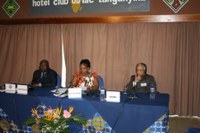
    <description>The Lake Tanganyika Authority (LTA) and the Aquatic Ecosystem Health  and Management Society (AEHMS) of Canada co-hosted the 7th Great Lakes of the World (GLOW) Conference that is being held from 17th – 20th  June, 2012 in Bujumbura, Burundi. The opening ceremonies were lead by Honorable Odette Kayitesi, Minister of Agriculture and Livestock of the Republic of Burundi. 
</description>
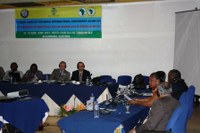
    <content:encoded xmlns:content="http://purl.org/rss/1.0/modules/content/"><![CDATA[<p><img src="http://lta.iwlearn.org/OpeningCeremoniesDay11.jpg/@@images/19a40378-8e5f-4fe9-bb55-4e24548d877f.jpeg" style="float: left; " title="GLOW VII 1" class="image-inline" alt="GLOW VII 1" />The Lake Tanganyika Authority (LTA) and the Aquatic Ecosystem Health  and Management Society (AEHMS) of Canada co-hosted the 7<sup>th</sup> Great Lakes of the World (GLOW) Conference that is being held from 17<sup>th </sup>– 20<sup>th</sup>  June, 2012 in Bujumbura, Burundi. The opening ceremonies were lead by Honorable Odette Kayitesi, Minister of Agriculture and Livestock of the Republic of Burundi. " I apperciate that this 7th Conference which is part of the continuing series of international symposia aimed at promoting interaction and communication between the Great Lakes Scientists and communities across the World, is being held here at Bujumbura", added Honorable Odette Kayitesi. She continued saying that the 7th GLOW Conference has really added value to the Lake Tanganyika profile.</p>
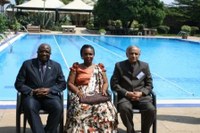
<p><img src="http://lta.iwlearn.org/OpeningCeremoniesDay12.jpg/@@images/cee4f193-c1e3-4406-8b77-db3d65557ca1.jpeg" style="float: right; " title="GLOW VII 2" class="image-inline" alt="GLOW VII 2" />LTA Executive Director, Dr. Henry Mwimwa, in his welcome remarks, he mentioned that this particularyIinternational Conference is not only focused on the African Great Lakes, but on other lakes and ecosystems as well of the world at large. He took a time to thank Pr. Mohiuddin Munawar and the AEHMS team for having accepted to co-host this important International conference. He extended thanks  to the LTA Secretariat host Governement: the Government of the Republic of Burundi, the governments of other Lake Tanganyika riparian countries (Democratic Republic of Congo, Tanzania and Zambia) and the African Development Bank for the continued support to the efforts made in ensuring a sustainable management of the Lake Tanganyika. He congratulated the Conference Secretariat, the Scientific and Local Organizing Committees for having reviewed the manuscripts in a timely manner. </p>
<p>" It is my hope that you will all take advantage of this occasion to not only share information but begin to explore ways in wich you can work together" wished Pr Munawar to the partcipants.</p>
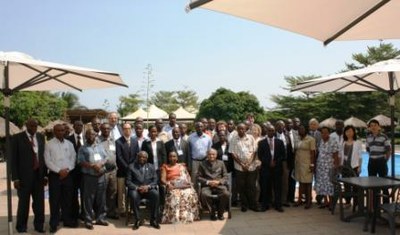
<p><img src="http://lta.iwlearn.org/OpeningCeremoniesDay13.jpg/@@images/b6a4ea2d-2e63-416f-83d9-d8748769236d.jpeg" style="float: left; " title="GLOW VII 3" class="image-inline" alt="GLOW VII 3" />The Great Lakes of the World (GLOW) Working Group was established by the Aquatic Ecosystem Health &amp; Management Society in 1996 when the first GLOW symposium was organized at Victoria Falls, Zimbabwe. Since then the AEHMS has launched a continuing series of international symposia in order to promote interaction and communication amongst various great lakes/large lakes researchers across the world. The purpose of GLOW is to establish a global platform where ecosystem-based studies of structure, function and performance of large/great lake ecosystems is promoted, organized and synthesized. In addition, GLOW attempts to promote ecosystem, science-based management of these extensive natural resources in an integrated, multi-trophic and multi-disciplinary fashion. A majority of the great lakes/large lakes researchers, students and managers are aware of the GLOW series of symposia as well as the resulting peer reviewed publications. These publications include special issues of the journal AEHM and books of the Ecovision World Monograph Series.</p>
<p><img src="http://lta.iwlearn.org/OpeningCeremoniesDay14.jpg/@@images/b291277e-dca2-4415-bdb7-6423f3e48ef4.jpeg" style="float: right; " title="GLOW VII 4" class="image-inline" alt="GLOW VII 4" />Lake Tanganyika is well-known as a hotspot of aquatic biodiversity, harbouring hundreds of species. It is famous for its colourful fish, as well as snails, crabs, shrimps, sponges, and many other organisms that are found nowhere else in the world. As Africa’s oldest and deepest lake it contains almost 17% of the world’s available freshwater supply. Millions of people depend on the lake for water, food, and transportation including important transport routes between the riparian countries of Burundi, Democratic Republic of Congo (DRC), Tanzania and Zambia. Due to Tanganyika’s important ecosystem, the AEHMS decided to convene the seventh conference on the Great Lakes of the World (GLOW 7) on this amazing lake, with the help of the Lake Tanganyika Authority (LTA).</p>
<p> </p>]]></content:encoded>
    <dc:publisher>No publisher</dc:publisher>
    <dc:creator>Alain Gashaka</dc:creator>
    <dc:rights></dc:rights>
    
      <dc:subject>Bujumbura</dc:subject>
    
    
      <dc:subject>Burundi</dc:subject>
    
    
      <dc:subject>Conference</dc:subject>
    
    
      <dc:subject>GLOW VII</dc:subject>
    
    <dc:date>2012-06-18T15:00:00Z</dc:date>
    <dc:type>News Item</dc:type>
  </item>


  <item rdf:about="http://lta.iwlearn.org/lake-tanganyika-basin-development-conference-recommendations">
    <title>Lake Tanganyika Basin Development Conference recommendations</title>
    <link>http://lta.iwlearn.org/lake-tanganyika-basin-development-conference-recommendations</link>
    <description></description>
    <content:encoded xmlns:content="http://purl.org/rss/1.0/modules/content/"><![CDATA[<p><strong>The EAC-organized conference themed Unlocking the Overflowing Trade and Investment Opportunities in the Basin, was taking place at the Hotel Source du Nil and Roca Golf Hotel from 28-29 November 2011. Then, following very extensive and fruitful deliberations held in a cordial environment, the Conference made the following recommendations: <br /></strong><br /><strong>To promote Infrastructure Development;</strong><br /><br />1. Partner States should expedite implementation of the one-laptop-per child initiative as a step towards the achievement of ICT goals<br /><br />2. Partner states should invest more in infrastructure development to promote tourism in the Lake Tanganyika Basin.<br /><br />3. The EAC Secretariat should expedite the development and implementation of a maritime and inland waterways transport strategy for the region<br /><br /><strong>To address Energy Deficits;</strong><br /><br />4. The four riparian countries should develop and sign common exploration and mining conventions.<br /><br />5. The riparian countries should develop a legal framework on joint exploitation of trans-boundary hydrocarbon resources to prevent possible conflicts.<br /><br />6. The private sector in the East African region should partner with international private sector actors in the development of energy generation capacity for the Basin. <br /><br /><strong>To promote the Tourism Sector;<br /></strong><br />7. The Partner States should expedite harmonization of tourism promotion policies, particularly to enable the implementation of the single tourism visa initiative. <br /><br />8. Riparian countries should develop of a joint communication strategy targeting existing and potential tourism markets, both domestic and international.<br /><br />9. The Tripartite (COMESA-EAC-SADC) should expedite the implementation of the strategy towards improved cost-efficiency of air transport systems. <br /><br />To promote Agriculture and ensure Food Security;  <br /><br />10. The Tripartite should create the enabling policy environment for increased investment in the agricultural sector.<br /><br />11. Riparian countries should invest in building the capacity of the various actors in the food value chains in the Basin.<br /><br />12. Riparian countries should invest in value-addition and agro-processing of agricultural produce in the Basin to minimize post-harvest losses of crop, livestock and fisheries produce.</p>
<p><strong>To address the challenges to Natural Resource Management;</strong><br /><br />13. Riparian countries should initiate more research on invasive species to identify and harness the benefits that can be derived from the species,<br /><br />14. Riparian countries should develop bilateral and multilateral institutional frameworks to prevent smuggling of mineral and other natural resources.<br /><br /><strong>To promote Foreign Direct Investments in Regional Trade and Development;</strong><br /><br />15. Partner States should develop a harmonized investment regime and formulate a regional PPP framework to facilitate public and private sector collaboration.<br /><br />16. Enhance capacity of private and public sector to develop bankable projects to meet banking requirements<br /><br />17. Partner States should develop regional market information portals to enable the private sector to access trade and investments opportunities in the region.<br /><br /><strong>To promote Women and Youth Development;</strong><br /><br />18. Governments should  introduce and implement enabling policy and legal frameworks to insure women and youth have access to productive resources and assets</p>
<p>19.    Finance institutions should partner with national development banks so as to provide low cost financial services to women and youth <br /><br />20. Governments should put in place enabling environments for women and youth to form business organizations like savings and credit cooperatives to make them bankable<br /><br />21. Governments, Private Sector and NGOs offering micro-credits should build the capacity of women and youth entrepreneurs to improve their business skills <br /><br /><strong>To promote the Role of Development Partners and Media in Socio-economic Development;</strong><br /><br />22. The Tripartite Secretariats and Governments should collaborate with Development Partners in developing programmes that can address the infrastructure bottlenecks in the Lake Tanganyika region, for example developing a Lake Tanganyika Water and Sanitation Programme<br /><br />23. The Riparian Countries should put in place regulatory and institutional frameworks to support research and improve synergy and exchange of information<br /><br />24. The Tripartite should strengthen collaboration between Lake Tanganyika Authority and Inter University Council for East Africa in order to promote research along the Basin</p>]]></content:encoded>
    <dc:publisher>No publisher</dc:publisher>
    <dc:creator>Alain Gashaka</dc:creator>
    <dc:rights></dc:rights>
    
      <dc:subject>Basin</dc:subject>
    
    
      <dc:subject>Conference</dc:subject>
    
    
      <dc:subject>Investment</dc:subject>
    
    
      <dc:subject>Lake</dc:subject>
    
    
      <dc:subject>Tanganyika</dc:subject>
    
    <dc:date>2011-11-30T06:00:00Z</dc:date>
    <dc:type>News Item</dc:type>
  </item>


  <item rdf:about="http://lta.iwlearn.org/come-invest-in-lake-tanganyika-basin">
    <title>Come Invest in Lake Tanganyika Basin - HE President Nkurunziza</title>
    <link>http://lta.iwlearn.org/come-invest-in-lake-tanganyika-basin</link>
    <description>EAC Summit Chairperson urges investors to take advantage of basin’s vast potential as 1st Lake Tanganyika Basin Development Conference opens 

</description>
    <content:encoded xmlns:content="http://purl.org/rss/1.0/modules/content/"><![CDATA[<p>The EAC Summit Chairperson and President of the Republic of Burundi HE Pierre Nkurunziza opened the first-ever Lake Tanganyika Basin Development Conference in Bujumbura, Burundi by extending an invitation to investors to come and invest in the Lake Tanganyika Basin. “I would like to make a pressing appeal to potential investors, those of EAC, COMESA, SADC, The United States of America, China, Japan, Europe, India and elsewhere to come and invest in the Lake Tanganyika Basin,” HE Nkurunziza said.<br /><br />The EAC-organized conference themed Unlocking the Overflowing Trade and Investment Opportunities in the Basin, is taking place at the Hotel Source du Nil and Roca Golf Hotel from 28-29 November 2011. <br /><br />The two-day event is meant to harness the potential for trade, investment and socio-economic development in the Basin, and the President was quick to assure investors that the region was ready for investment.<br />“They can count on us for guarantees and facilities for their investments,” the EAC Summit Chair declared in his keynote address. The Head of State went on enumerate the vast opportunities that exist in the tourism, transport, agriculture and mining sectors, among others.<br /><br />“It (Lake Tanganyika Basin) is inhabited by a population of over twenty million. It has a huge potential in water, including Lake Tanganyika and its basin, that we could operate effectively and efficiently to produce electrical energy needed to ensure industrial development in the region,” President Nkurunziza affirmed.<br />“The Basin is also an area of high agricultural potential, producing palm oil, sugar, fruits and vegetables of high quality, to name but a few,” he added.<br /><br />The Burundian President also noted that the creation and improvement of port infrastructure in the Basin to boost transport would  open up the region and accelerate integration, especially as the Basin is shared by the three regional blocs of EAC, COMESA and SADC, which have already formed a Tripartite framework to foster cooperation.<br /><br />Burundi’s Minister for EAC Affairs Hon. Hafsa Mossi on her part described the Lake Tanganyika basin as well as that of Lake Victoria as potential food baskets for the EAC region and observed that on account of their trans-boundary nature, lakes Tanganyika and Victoria call for cooperation among their riparian countries in the rational utilization of their resources, including conservation and protection of their delicate ecosystems.<br /><br />The Secretary General of the East African Community Amb. Richard Sezibera similarly highlighted the lake’s potential as an important tourism and transport hub of the EAC region, saying it could be useful for linking goods transported by rail from Dar es Salaam through Kigoma, the DRC through Kalemie, and from the SADC region through Mpulungu in Zambia.<br /><br />“This capacity can not be overstates because the lake Tanganyika basin is rich in minerals, and has very fertile soils,” Amb. Sezibera asserted.<br /><br />Among the subjects being discussed at the conference include the sustainable exploitation of the natural resource base within the Lake Tanganyika Basin; state of play and role of public private partnerships (PPP) in infrastructural development in the region; and the role of ports and inland waterways in regional integration. <br /><br />The forum will also focus on revitalization of the rail network in the region; enhancing Information Communication Technologies for service economy; oil and gas exploration activities on Lake Tanganyika; as well as energy alternatives for productive use to improve income generation in Lake Tanganyika basin.<br />. <br />EAC Heads of State HE Mwai Kibaki of Kenya; Paul Kagame of Rwanda; Jakaya Kikwete of the United Republic of Tanzania; Yoweri Museveni of Uganda; as well as HE Joseph Kabila of the Democratic Republic of Congo and HE Michael Sata of Zambia are scheduled to take part in an interactive Heads of State session of the Lake Tanganyika Basin Development Conference on Tuesday afternoon, to be moderated by Mr. Jeff Koinange. DR Congo and Zambia are the other countries that share Lake Tanganyika with Burundi and Tanzania.<br /><br />The EAC Secretariat in collaboration with the Republic of Burundi as the host country and Lake Victoria Basin Commission (LVBC) are organizing the conference with the support of the EAC Partner States, Lake Tanganyika Authority (LTA), Trade Mark East Africa, United Nations Development Programme (UNDP) and East African Business Council (EABC).<br /><br />The Lake Tanganyika Basin Development Conference is being relayed live via the EAC website: www.eac.int. <br /><br /></p>]]></content:encoded>
    <dc:publisher>No publisher</dc:publisher>
    <dc:creator>Alain Gashaka</dc:creator>
    <dc:rights></dc:rights>
    
      <dc:subject>Basin</dc:subject>
    
    
      <dc:subject>Conference</dc:subject>
    
    
      <dc:subject>Investment</dc:subject>
    
    
      <dc:subject>Tanganyika</dc:subject>
    
    
      <dc:subject>Trade</dc:subject>
    
    <dc:date>2011-11-28T06:00:00Z</dc:date>
    <dc:type>News Item</dc:type>
  </item>


  <item rdf:about="http://lta.iwlearn.org/seventh-great-lakes-of-the-world-conference-glow-vii">
    <title>Seventh Great Lakes of the World Conference (GLOW VII) </title>
    <link>http://lta.iwlearn.org/seventh-great-lakes-of-the-world-conference-glow-vii</link>
    <description>Just to inform you that due to many requests, and logistic reasons, the conference committee has elected to move the dates of the GLOW VII conference from April 29th – May 2nd to June 17th to 20th. This will permit broader participation of scientists who are involved with teaching assignments at Universities as well as attending students.</description>
    <content:encoded xmlns:content="http://purl.org/rss/1.0/modules/content/"><![CDATA[<p><img src="http://lta.iwlearn.org/GLOWVIIPosterweb.jpg" alt="GLOW VII pOSTER" class="image-inline" title="GLOW VII pOSTER" /></p>
<p>Dear GLOW VII participants, </p>
<p>We can appreciate that this change of date will mean an adjustment to your plans and we hope that by providing as much notice as possible you will still be able to attend. If you are not able to attend please let us know. If we do not hear from you the committee will still consider you as an active participant.</p>
<p><strong>The new conference date means that all submission deadlines have been extended. All abstracts are due April 15th 2012 and all registration fees are now due by May 15th 2012. </strong></p>
<p>More information about accommodation and registration fees will be sent out very soon. We thank you for your cooperation and look forward to seeing you in Bujumbura! Thank you and Best regards,</p>
<p>Jennifer Lorimer AEHMS Coordinator 867 Lakeshore Rd. Burlington, ON, L7R 4A6 Canada www.aehms.org Ecosystem Health: It's Everybody's Business</p>]]></content:encoded>
    <dc:publisher>No publisher</dc:publisher>
    <dc:creator>Alain Gashaka</dc:creator>
    <dc:rights></dc:rights>
    
      <dc:subject>Conference</dc:subject>
    
    
      <dc:subject>LTA</dc:subject>
    
    <dc:date>2011-11-14T08:15:00Z</dc:date>
    <dc:type>Event</dc:type>
  </item>


</rdf:RDF>