<?xml version="1.0" encoding="utf-8" ?>
<rdf:RDF xmlns:rdf="http://www.w3.org/1999/02/22-rdf-syntax-ns#" xmlns:dc="http://purl.org/dc/elements/1.1/" xmlns:syn="http://purl.org/rss/1.0/modules/syndication/" xmlns="http://purl.org/rss/1.0/">


<channel rdf:about="http://lta.iwlearn.org/search_rss">
  <title>Lake Tanganyika</title>
  <link>http://lta.iwlearn.org</link>

  <description>
    
            These are the search results for the query, showing results 1 to 3.
        
  </description>


  <image rdf:resource="http://lta.iwlearn.org/logo.png"/>

  <items>
    <rdf:Seq>
      
        <rdf:li rdf:resource="http://lta.iwlearn.org/lake-tanganyika-basin-development-conference-recommendations"/>
      
      
        <rdf:li rdf:resource="http://lta.iwlearn.org/thelake_and_basin"/>
      
      
        <rdf:li rdf:resource="http://lta.iwlearn.org/come-invest-in-lake-tanganyika-basin"/>
      
    </rdf:Seq>
  </items>

</channel>


  <item rdf:about="http://lta.iwlearn.org/lake-tanganyika-basin-development-conference-recommendations">
    <title>Lake Tanganyika Basin Development Conference recommendations</title>
    <link>http://lta.iwlearn.org/lake-tanganyika-basin-development-conference-recommendations</link>
    <description></description>
    <content:encoded xmlns:content="http://purl.org/rss/1.0/modules/content/"><![CDATA[<p><strong>The EAC-organized conference themed Unlocking the Overflowing Trade and Investment Opportunities in the Basin, was taking place at the Hotel Source du Nil and Roca Golf Hotel from 28-29 November 2011. Then, following very extensive and fruitful deliberations held in a cordial environment, the Conference made the following recommendations: <br /></strong><br /><strong>To promote Infrastructure Development;</strong><br /><br />1. Partner States should expedite implementation of the one-laptop-per child initiative as a step towards the achievement of ICT goals<br /><br />2. Partner states should invest more in infrastructure development to promote tourism in the Lake Tanganyika Basin.<br /><br />3. The EAC Secretariat should expedite the development and implementation of a maritime and inland waterways transport strategy for the region<br /><br /><strong>To address Energy Deficits;</strong><br /><br />4. The four riparian countries should develop and sign common exploration and mining conventions.<br /><br />5. The riparian countries should develop a legal framework on joint exploitation of trans-boundary hydrocarbon resources to prevent possible conflicts.<br /><br />6. The private sector in the East African region should partner with international private sector actors in the development of energy generation capacity for the Basin. <br /><br /><strong>To promote the Tourism Sector;<br /></strong><br />7. The Partner States should expedite harmonization of tourism promotion policies, particularly to enable the implementation of the single tourism visa initiative. <br /><br />8. Riparian countries should develop of a joint communication strategy targeting existing and potential tourism markets, both domestic and international.<br /><br />9. The Tripartite (COMESA-EAC-SADC) should expedite the implementation of the strategy towards improved cost-efficiency of air transport systems. <br /><br />To promote Agriculture and ensure Food Security;  <br /><br />10. The Tripartite should create the enabling policy environment for increased investment in the agricultural sector.<br /><br />11. Riparian countries should invest in building the capacity of the various actors in the food value chains in the Basin.<br /><br />12. Riparian countries should invest in value-addition and agro-processing of agricultural produce in the Basin to minimize post-harvest losses of crop, livestock and fisheries produce.</p>
<p><strong>To address the challenges to Natural Resource Management;</strong><br /><br />13. Riparian countries should initiate more research on invasive species to identify and harness the benefits that can be derived from the species,<br /><br />14. Riparian countries should develop bilateral and multilateral institutional frameworks to prevent smuggling of mineral and other natural resources.<br /><br /><strong>To promote Foreign Direct Investments in Regional Trade and Development;</strong><br /><br />15. Partner States should develop a harmonized investment regime and formulate a regional PPP framework to facilitate public and private sector collaboration.<br /><br />16. Enhance capacity of private and public sector to develop bankable projects to meet banking requirements<br /><br />17. Partner States should develop regional market information portals to enable the private sector to access trade and investments opportunities in the region.<br /><br /><strong>To promote Women and Youth Development;</strong><br /><br />18. Governments should  introduce and implement enabling policy and legal frameworks to insure women and youth have access to productive resources and assets</p>
<p>19.    Finance institutions should partner with national development banks so as to provide low cost financial services to women and youth <br /><br />20. Governments should put in place enabling environments for women and youth to form business organizations like savings and credit cooperatives to make them bankable<br /><br />21. Governments, Private Sector and NGOs offering micro-credits should build the capacity of women and youth entrepreneurs to improve their business skills <br /><br /><strong>To promote the Role of Development Partners and Media in Socio-economic Development;</strong><br /><br />22. The Tripartite Secretariats and Governments should collaborate with Development Partners in developing programmes that can address the infrastructure bottlenecks in the Lake Tanganyika region, for example developing a Lake Tanganyika Water and Sanitation Programme<br /><br />23. The Riparian Countries should put in place regulatory and institutional frameworks to support research and improve synergy and exchange of information<br /><br />24. The Tripartite should strengthen collaboration between Lake Tanganyika Authority and Inter University Council for East Africa in order to promote research along the Basin</p>]]></content:encoded>
    <dc:publisher>No publisher</dc:publisher>
    <dc:creator>Alain Gashaka</dc:creator>
    <dc:rights></dc:rights>
    
      <dc:subject>Basin</dc:subject>
    
    
      <dc:subject>Conference</dc:subject>
    
    
      <dc:subject>Investment</dc:subject>
    
    
      <dc:subject>Lake</dc:subject>
    
    
      <dc:subject>Tanganyika</dc:subject>
    
    <dc:date>2011-11-30T06:00:00Z</dc:date>
    <dc:type>News Item</dc:type>
  </item>


  <item rdf:about="http://lta.iwlearn.org/thelake_and_basin">
    <title>Lake &amp; Basin</title>
    <link>http://lta.iwlearn.org/thelake_and_basin</link>
    <description>-</description>
    <content:encoded xmlns:content="http://purl.org/rss/1.0/modules/content/"><![CDATA[<h3 style="text-align: left; ">Facts about the Lake Basin</h3>
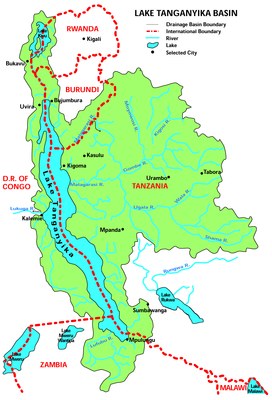
<p style="text-align: left; "><img src="http://lta.iwlearn.org/Fig1LakeTanganyikaMap.jpg/@@images/53ca9e41-a4e1-4cfd-ab6c-e77936d6761f.jpeg" style="float: right; " title="Lake Tanganyika Map" class="image-inline" alt="Lake Tanganyika Map" />Lake Tanganyika and its Basin are endowed with exceptionally large and highly diverse heritage of flora and fauna. The lake is a global hotspot of biodiversity, and an extremely valuable aquatic ecosystem containing almost 17% of the global available surface freshwater supply and some of the largest freshwater fisheries on the African continent. Estimates suggest that Lake Tanganyika harbours at least 1500 species out of which approximately 600 are currently considered endemic to the lake. In addition to Lake Tanganyika’s elevated levels of aquatic biodiversity, the Basin is renowned for its terrestrial biodiversity and scenic beauty. The Basin contains several forest reserves and national parks including Rusizi Nature Reserve and Kigwena Forest Reserve in Burundi, Gombe Stream, Katavi and Mahale Mountains National Park in Tanzania, and Nsumbu National Park in Zambia. The lake and its Basin provide a diverse range of ecosystem services that sustain the livelihoods of millions of people.</p>
<p>Environmental degradation caused mainly by human induced activities poses serious threats to the biodiversity and sustainable use of the natural resources in the Lake Tanganyika Basin. In recognition of these threats, the four riparian countries of Burundi, Democratic Republic of Congo, Tanzania and Zambia with support from international partners convened the first international scientific conference on the conservation of biodiversity of Lake Tanganyika and its Basin in 1991. One of the main outcomes of this conference was that international funding agencies were attracted. Between 1992 and 2003 the riparian countries and supporting partners jointly implemented the Lake Tanganyika Research Project (LTR), the Lake Tanganyika Biodiversity Project (LTBP) and the Lake Tanganyika Management Planning Project</p>
<h3>Hotspot of Biodiversity</h3>
<p>Lake Tanganyika is internationally recognised as a global hotspot of biodiversity, representing some of the most diverse aquatic ecosystems in the world (Groombridge and Jenkins, 1998). The lake’s valuable aquatic ecosystem and the many natural resources found in its Basin provide essential sources of livelihood and income for over 10 million riparian population around the lake, and contribute to the growing economies of surrounding countries of Burundi, Democratic Republic of Congo (DR Congo), Tanzania and Zambia.</p>
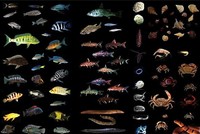
<p><img src="http://lta.iwlearn.org/AquaticBiodiversity.jpg/image_mini" alt="Aquatic Biodiversity" style="float: left; " class="image-inline" title="Aquatic Biodiversity" />Estimates suggest that Lake Tanganyika harbours at least 1500 species (Coulter, 1991), although species numbers vary according to taxonomic authority. Approximately 600 species are endemic to the lake, including 245 morphologically diverse and colourful cichlid fish species (Snoeks, 2000; Genner et al., 2004). Lake Tanganyika is unique in harbouring endemic species clusters of bagrids, cyprinids, mastacembelids, and mochokids (Coulter, 1991; Vreven, 2005; Day &amp; Wilkinson, 2006). Moreover, a large diversity of endemic ostracods, gastropods, shrimp, crabs (e.g., Martens, 1994; West et al., 2003; Marijnissen et al., 2004; Fryer 2006), as well as many other taxa can be found in Lake Tanganyika. The lake is valuable not only for the presence of these unique species, but also as a microcosm in which to study the processes of evolution that have led to this diversity.</p>
<h3>Environmental challenges</h3>
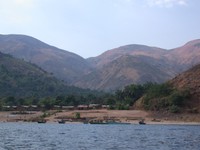
<p><img src="http://lta.iwlearn.org/DSCN4972copy.jpg/image_mini" alt="Sedimentation Photo" style="float: right; " class="image-inline" title="Sedimentation Photo" />The Lake Tanganyika Basin faces multiples challenges, resulting from the activities  of rapidly expanding human populations in the riparian countries. The most immediate threats are:</p>
<ul>
<li>Unsustainable agricultural practices and deforestation, resulting in erosion and excessive sediment and nutrient loads</li>
<li>Indutrial and urban pollution (including boats discharges)</li>
<li>Overexploitation of the lake's fish stocks</li>
<li>Invasive species</li>
<li>Effects of global climate change</li>
</ul>
<p>The transboundary environmental problems in Lake Tanganyikabasin have  the potential to impact the livelihoods of millions people.</p>]]></content:encoded>
    <dc:publisher>No publisher</dc:publisher>
    <dc:creator>Alain Gashaka</dc:creator>
    <dc:rights></dc:rights>
    
      <dc:subject>Basin</dc:subject>
    
    
      <dc:subject>Lake</dc:subject>
    
    <dc:date>2011-05-29T14:45:00Z</dc:date>
    <dc:type>Page</dc:type>
  </item>


  <item rdf:about="http://lta.iwlearn.org/come-invest-in-lake-tanganyika-basin">
    <title>Come Invest in Lake Tanganyika Basin - HE President Nkurunziza</title>
    <link>http://lta.iwlearn.org/come-invest-in-lake-tanganyika-basin</link>
    <description>EAC Summit Chairperson urges investors to take advantage of basin’s vast potential as 1st Lake Tanganyika Basin Development Conference opens 

</description>
    <content:encoded xmlns:content="http://purl.org/rss/1.0/modules/content/"><![CDATA[<p>The EAC Summit Chairperson and President of the Republic of Burundi HE Pierre Nkurunziza opened the first-ever Lake Tanganyika Basin Development Conference in Bujumbura, Burundi by extending an invitation to investors to come and invest in the Lake Tanganyika Basin. “I would like to make a pressing appeal to potential investors, those of EAC, COMESA, SADC, The United States of America, China, Japan, Europe, India and elsewhere to come and invest in the Lake Tanganyika Basin,” HE Nkurunziza said.<br /><br />The EAC-organized conference themed Unlocking the Overflowing Trade and Investment Opportunities in the Basin, is taking place at the Hotel Source du Nil and Roca Golf Hotel from 28-29 November 2011. <br /><br />The two-day event is meant to harness the potential for trade, investment and socio-economic development in the Basin, and the President was quick to assure investors that the region was ready for investment.<br />“They can count on us for guarantees and facilities for their investments,” the EAC Summit Chair declared in his keynote address. The Head of State went on enumerate the vast opportunities that exist in the tourism, transport, agriculture and mining sectors, among others.<br /><br />“It (Lake Tanganyika Basin) is inhabited by a population of over twenty million. It has a huge potential in water, including Lake Tanganyika and its basin, that we could operate effectively and efficiently to produce electrical energy needed to ensure industrial development in the region,” President Nkurunziza affirmed.<br />“The Basin is also an area of high agricultural potential, producing palm oil, sugar, fruits and vegetables of high quality, to name but a few,” he added.<br /><br />The Burundian President also noted that the creation and improvement of port infrastructure in the Basin to boost transport would  open up the region and accelerate integration, especially as the Basin is shared by the three regional blocs of EAC, COMESA and SADC, which have already formed a Tripartite framework to foster cooperation.<br /><br />Burundi’s Minister for EAC Affairs Hon. Hafsa Mossi on her part described the Lake Tanganyika basin as well as that of Lake Victoria as potential food baskets for the EAC region and observed that on account of their trans-boundary nature, lakes Tanganyika and Victoria call for cooperation among their riparian countries in the rational utilization of their resources, including conservation and protection of their delicate ecosystems.<br /><br />The Secretary General of the East African Community Amb. Richard Sezibera similarly highlighted the lake’s potential as an important tourism and transport hub of the EAC region, saying it could be useful for linking goods transported by rail from Dar es Salaam through Kigoma, the DRC through Kalemie, and from the SADC region through Mpulungu in Zambia.<br /><br />“This capacity can not be overstates because the lake Tanganyika basin is rich in minerals, and has very fertile soils,” Amb. Sezibera asserted.<br /><br />Among the subjects being discussed at the conference include the sustainable exploitation of the natural resource base within the Lake Tanganyika Basin; state of play and role of public private partnerships (PPP) in infrastructural development in the region; and the role of ports and inland waterways in regional integration. <br /><br />The forum will also focus on revitalization of the rail network in the region; enhancing Information Communication Technologies for service economy; oil and gas exploration activities on Lake Tanganyika; as well as energy alternatives for productive use to improve income generation in Lake Tanganyika basin.<br />. <br />EAC Heads of State HE Mwai Kibaki of Kenya; Paul Kagame of Rwanda; Jakaya Kikwete of the United Republic of Tanzania; Yoweri Museveni of Uganda; as well as HE Joseph Kabila of the Democratic Republic of Congo and HE Michael Sata of Zambia are scheduled to take part in an interactive Heads of State session of the Lake Tanganyika Basin Development Conference on Tuesday afternoon, to be moderated by Mr. Jeff Koinange. DR Congo and Zambia are the other countries that share Lake Tanganyika with Burundi and Tanzania.<br /><br />The EAC Secretariat in collaboration with the Republic of Burundi as the host country and Lake Victoria Basin Commission (LVBC) are organizing the conference with the support of the EAC Partner States, Lake Tanganyika Authority (LTA), Trade Mark East Africa, United Nations Development Programme (UNDP) and East African Business Council (EABC).<br /><br />The Lake Tanganyika Basin Development Conference is being relayed live via the EAC website: www.eac.int. <br /><br /></p>]]></content:encoded>
    <dc:publisher>No publisher</dc:publisher>
    <dc:creator>Alain Gashaka</dc:creator>
    <dc:rights></dc:rights>
    
      <dc:subject>Basin</dc:subject>
    
    
      <dc:subject>Conference</dc:subject>
    
    
      <dc:subject>Investment</dc:subject>
    
    
      <dc:subject>Tanganyika</dc:subject>
    
    
      <dc:subject>Trade</dc:subject>
    
    <dc:date>2011-11-28T06:00:00Z</dc:date>
    <dc:type>News Item</dc:type>
  </item>


</rdf:RDF>