<?xml version="1.0" encoding="utf-8" ?>
<rdf:RDF xmlns:rdf="http://www.w3.org/1999/02/22-rdf-syntax-ns#" xmlns:dc="http://purl.org/dc/elements/1.1/" xmlns:syn="http://purl.org/rss/1.0/modules/syndication/" xmlns="http://purl.org/rss/1.0/">


<channel rdf:about="http://lta.iwlearn.org/rssfeed/RSS">
  <title>RSS</title>
  <link>http://lta.iwlearn.org</link>

  <description>
    
      This is collection for RSS feeds of new from the site
    
  </description>


            <syn:updatePeriod>daily</syn:updatePeriod>
            <syn:updateFrequency>1</syn:updateFrequency>
            <syn:updateBase>2011-06-03T05:52:40Z</syn:updateBase>
        

  <image rdf:resource="http://lta.iwlearn.org/logo.png"/>

  <items>
    <rdf:Seq>
      
        <rdf:li rdf:resource="http://lta.iwlearn.org/news/unece-water-convention-could-offer-solutions-to-african-countries-for-shared-water-resource-management"/>
      
      
        <rdf:li rdf:resource="http://lta.iwlearn.org/news/the-niglas-hosted-a-training-workshop-on-water-quality-monitoring-and-lake-basin-ecosystem-management"/>
      
      
        <rdf:li rdf:resource="http://lta.iwlearn.org/news/delivering-practical-regional-biodiversity-information-systems-bioinformatics-in-the-albertine-rift"/>
      
      
        <rdf:li rdf:resource="http://lta.iwlearn.org/news/dr-henry-mwima-lta-executive-received-in-audience-by-he-second-vice-president-of-republic-of-burundi"/>
      
      
        <rdf:li rdf:resource="http://lta.iwlearn.org/news/water-hyacinth-an-invasive-plant-in-the-lake-tanganyika-basin"/>
      
      
        <rdf:li rdf:resource="http://lta.iwlearn.org/news/News20110613b"/>
      
      
        <rdf:li rdf:resource="http://lta.iwlearn.org/news/news20110613a"/>
      
    </rdf:Seq>
  </items>

</channel>


  <item rdf:about="http://lta.iwlearn.org/news/unece-water-convention-could-offer-solutions-to-african-countries-for-shared-water-resource-management">
    <title>UNECE Water Convention could offer solutions to African countries for shared water resource management </title>
    <link>http://lta.iwlearn.org/news/unece-water-convention-could-offer-solutions-to-african-countries-for-shared-water-resource-management</link>
    <description>UNECE Water Convention could offer solutions to African countries for shared water resource management </description>
    <content:encoded xmlns:content="http://purl.org/rss/1.0/modules/content/"><![CDATA[<p>Increasing awareness and understanding of the Water Convention and its  work in Africa was the objective of the second Africa-Targeted Workshop  for Global Environment Facility International Waters Projects, which  took place from 12 to 14 November 2012 at the United Nations Convention  Centre in Addis Ababa.</p>
<p> </p>
<p>For more:<a class="external-link" href="http://iwlearn.net/news/unece-water-convention-could-offer-solutions-to-african-countries-for-shared-water-resource-management"> http://iwlearn.net/news/unece-water-convention-could-offer-solutions-to-african-countries-for-shared-water-resource-management</a></p>]]></content:encoded>
    <dc:publisher>No publisher</dc:publisher>
    <dc:creator>Pacifique Ndoricimpa</dc:creator>
    <dc:rights></dc:rights>
    <dc:date>2012-11-28T08:55:00Z</dc:date>
    <dc:type>News Item</dc:type>
  </item>


  <item rdf:about="http://lta.iwlearn.org/news/the-niglas-hosted-a-training-workshop-on-water-quality-monitoring-and-lake-basin-ecosystem-management">
    <title>The NIGLAS Hosted a Training Workshop on Water Quality Monitoring and Lake Basin Ecosystem Management </title>
    <link>http://lta.iwlearn.org/news/the-niglas-hosted-a-training-workshop-on-water-quality-monitoring-and-lake-basin-ecosystem-management</link>
    <description>.
</description>
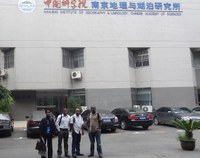
    <content:encoded xmlns:content="http://purl.org/rss/1.0/modules/content/"><![CDATA[<p><img src="http://lta.iwlearn.org/copy_of_NIGLASBuilding.JPG/@@images/4137dbf7-8be4-4e85-90e0-6f9c494c2968.jpeg" alt="NIGLAS Building" class="image-left" title="NIGLAS Building" />From 10 to 25 September, 2012, the Nanjing Institute of Geography and Limnology, Chinese Academy of Science (NIGLAS) organized a training workshop on <b><i>Water Quality Monitoring and Lake-basin Ecosystem Management</i></b>. The workshop falls in the framework of the project of <b>Technical Cooperation on Protection of Water Resources and Ecosystem intended to fight against environment threats, conserve and improve the health of ecosystem resources</b>. This project is being implemented in partnership with the Lake Tanganyika Authority (LTA) and national research teams of participating African countries, riparian to Lake Tanganyika basin, Lake Victoria basin and Nile basin.</p>
<p>Scientists, University Lectures and Decisions Makers of the following countries were represented: Burundi, D.R Congo, Egypt, Ethiopia, Kenya, Malawi, Rwanda, Tanzania, Uganda and Zambia.</p>
<p>Courses coupled with field trips focused on policy, standard and technology used in water monitoring, hydrological monitoring and modeling, lakes remote sensing, climate changes and risks, integrated Lake Basin management, aquaculture, watershed management, environmental challenges due to urban growth and their implication to lake basin sustainable development, principles, methods and technology of biological monitoring and many other topics. Participants on their turn shared experiences on the African environmental situation in their respective lake basins.</p>
<p>The courses were lectured by Professors, Associate Professors and Natural Resources Management Specialists from the NIGLAS and other Institution partners and Universities like the World Bank.</p>
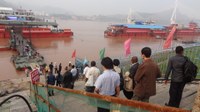
<p><img src="http://lta.iwlearn.org/LakeTaihuResarchSation.JPG/@@images/05692622-8c87-4ff4-a597-b3ab5b865eee.jpeg" alt="" class="image-left" title="" />Participants then visited the Taihu Lake Ecosystem Research Station in Wuxi City, Jiangsu Province The Station belongs to the Chinese Ecosystem Research Network (CERN). After a brief introduction of the water quality data monitoring and warning system for algal bloom in the lake, another field visit on the restoration project was held. A final field trip was held on the Three Gorges Dam located on Yangtze River, which is believed to be the world’s powerful dam which serves both as a hydropower generator and flood controller in China.<img src="http://lta.iwlearn.org/ParticipantsheadingforYangtzeRiver.JPG/@@images/4197dbc5-d13e-413e-923d-98bb902b0f01.jpeg" style="float: right; " title="" class="image-inline" alt="" /></p>
<p>After the training, participants were awarded certificates of participation preceded by exchanging documents of the Memorandum of Understanding between the NIGLAS and Tanzania Fisheries Research Institute (TAFIRI).</p>]]></content:encoded>
    <dc:publisher>No publisher</dc:publisher>
    <dc:creator>Pacifique Ndoricimpa</dc:creator>
    <dc:rights></dc:rights>
    <dc:date>2012-10-23T17:05:00Z</dc:date>
    <dc:type>News Item</dc:type>
  </item>


  <item rdf:about="http://lta.iwlearn.org/news/delivering-practical-regional-biodiversity-information-systems-bioinformatics-in-the-albertine-rift">
    <title>Delivering Practical Regional Biodiversity Information  Systems (BioInformatics) in the Albertine Rift</title>
    <link>http://lta.iwlearn.org/news/delivering-practical-regional-biodiversity-information-systems-bioinformatics-in-the-albertine-rift</link>
    <description></description>
    <content:encoded xmlns:content="http://purl.org/rss/1.0/modules/content/"><![CDATA[<p> </p>
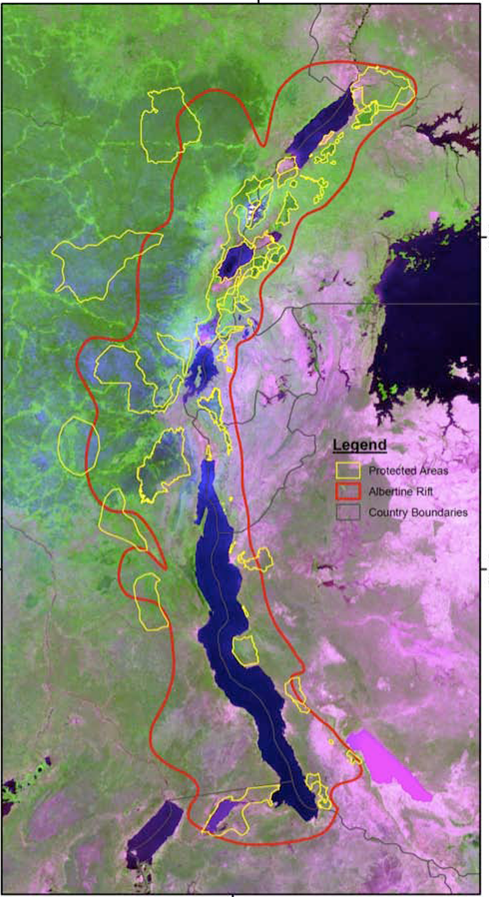
<p style="text-align: center; "><img src="http://lta.iwlearn.org/ArcosArbertineRift.JPG" alt="Arbertine Rift" class="image-inline" title="Arbertine Rift" /></p>
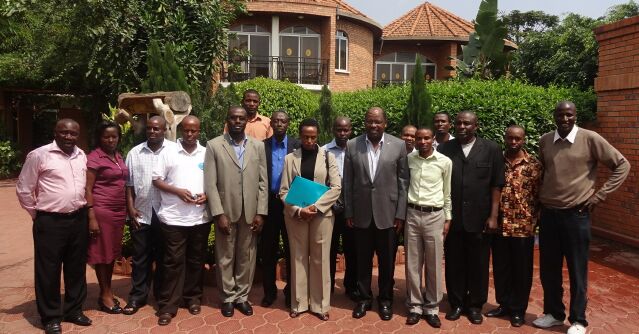
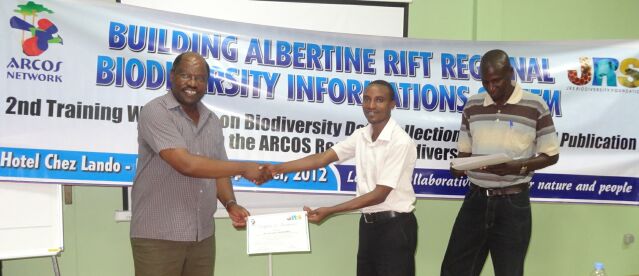
<p>The Arbertine Conservation Society (ARCOS) with support from JRS Biodiversity Foundation organized a Regional Training Workshop at Chez Lando Hotel in Kigali-Rwanda from 3 to 5 September, 2012. The workshop was intended to Scientists and Seniors from the Albertine Lift and the following countries were represented: Burundi, the Democratic Republic of Congo, Kenya, Tanzania, Uganda and Rwanda.</p>
<p><img src="http://lta.iwlearn.org/ARCOSGroupphoto.jpg" alt="ARCOS Workshop group photo" class="image-inline" title="ARCOS Workshop group photo" /></p>
<p>The training workshop was intended to delivering practical regional biodiversity information systems (Bioinformatics) in the Albertine Rift.</p>
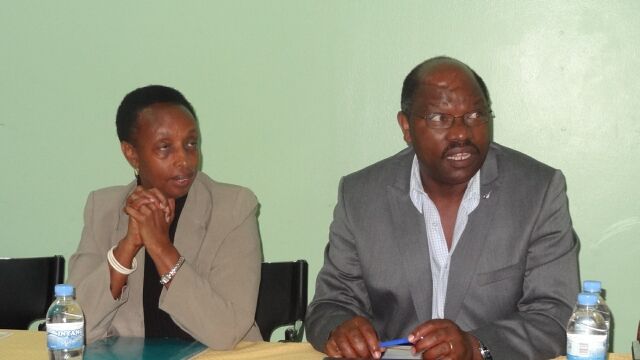
<p>In her opening speech, the Guest of Honour, Director General in the Ministry of Education of the Republic of Rwanda, Dr. Marie Christine GASINGIRWA welcomed everyone and congratulated organizers to have set up a portal for data sharing and management, which is a result from good collaboration. We need to fight against poverty and ignorance through common solution, added Dr. Marie Christine GASINGIRWA.  She called upon participants to implement what they will have learned during the training. She ended her remarks warning participants that mistakes they commit will blame participants in the future and urged them to involve the youth and community in the aspects of environment conservation.</p>
<p><img src="http://lta.iwlearn.org/ARCOSStatementdelivery.jpg" alt="ARCOS Statement delivery" class="image-inline" title="ARCOS Statement delivery" /></p>
<p>The training was organized in the such a way that participants were involved in discussions and practical exercises on Spatial Data Mobilization, Remote Sensing and Land use Planning, Data Management an Publishing.</p>
<p>At the end of the training, participants sat for course evaluation and at the end of the workshop, successful participants were awarded certificates by the Executive Secretary of the ARCOS, Dr. Sam KANYAMIBWA.</p>
<p><img src="http://lta.iwlearn.org/ARCOSCertificateAwarding.jpg" alt="" class="image-left captioned" title="" /></p>]]></content:encoded>
    <dc:publisher>No publisher</dc:publisher>
    <dc:creator>Pacifique Ndoricimpa</dc:creator>
    <dc:rights></dc:rights>
    <dc:date>2012-09-10T14:10:00Z</dc:date>
    <dc:type>News Item</dc:type>
  </item>


  <item rdf:about="http://lta.iwlearn.org/news/dr-henry-mwima-lta-executive-received-in-audience-by-he-second-vice-president-of-republic-of-burundi">
    <title>Dr Henry Mwima, LTA Executive Director received in audience by HE Second Vice President of Republic of Burundi  </title>
    <link>http://lta.iwlearn.org/news/dr-henry-mwima-lta-executive-received-in-audience-by-he-second-vice-president-of-republic-of-burundi</link>
    <description>The LTA Executive Director, Dr Henry MWIMA and LTA Director of Environment, Mr. Gabriel HAKIZIMANA received in audience by HE Second Vice - President of Republic of Burundi, Mr. Gervais RUFYKIRI on this Thursday, 23rd February, 2012.</description>
    <content:encoded xmlns:content="http://purl.org/rss/1.0/modules/content/"><![CDATA[<p>The LTA Executive Director (left), Dr Henry MWIMA and LTA Director of Environment (right), Mr. Gabriel HAKIZIMANA received in audience by HE Second Vice - President of Republic of Burundi, Mr. Gervais RUFYKIRI on this Thursday, 23rd February, 2012.</p>
<p>" We would like to congratulate you and your government and present to you the progress report on the activities of Lake Tanganyika Authority" indicates Dr Mwima to the Second Vice President.</p>
<p>He also inform him that LTA is organising the 5th Conference of Ministers at Kigoma, on 29th February 2012, and Burundi will be represented by the Minister of Water, Environment and Land Management, Ir Jean Marie NIBIRANTIJE.</p>
<p>" Burundi will host the 6th Conference of Ministers" added the LTA Executive Director, then he wished the government to success and to be aware on that event". " We will be honored to discuss with all LTA Stakeholders about Lake Tanganyika issues and my government will support LTA as a special partner" mentioned HE Second Vice President.</p>
<p> </p>]]></content:encoded>
    <dc:publisher>No publisher</dc:publisher>
    <dc:creator>Alain Gashaka</dc:creator>
    <dc:rights></dc:rights>
    <dc:date>2012-02-24T16:55:00Z</dc:date>
    <dc:type>News Item</dc:type>
  </item>


  <item rdf:about="http://lta.iwlearn.org/news/water-hyacinth-an-invasive-plant-in-the-lake-tanganyika-basin">
    <title>Water Hyacinth, an Invasive Plant in the Lake Tanganyika Basin</title>
    <link>http://lta.iwlearn.org/news/water-hyacinth-an-invasive-plant-in-the-lake-tanganyika-basin</link>
    <description>Water hyacinth, sometimes called the World’s Worst Water Weed, is becoming invasive in the Lake Tanganyika basin and on the shores and wetlands of some parts of the lake.

</description>
    <content:encoded xmlns:content="http://purl.org/rss/1.0/modules/content/"><![CDATA[<h3><img src="http://lta.iwlearn.org/Hyacinth1.jpg/image_large" title="Hyacinth 1" height="493" width="624" alt="Hyacinth1.jpg  Hyacinth 1 " class="image-inline" /></h3>
<p><strong><em> </em></strong></p>
<h3><strong>What is an invasive species?</strong></h3>
<p>An invasive species is an animal or plant which is introduced into a new area where it does not occur naturally. If the introduction occurs without the accompaniment of its pests and diseases that keep the species in check (under control) in its natural range and if it is able to survive, establish and spread thus causing damage to biodiversity, peoples’ livelihoods or development, it is called “invasive”.</p>
<h3><strong>Definition of Water Hyacinth</strong></h3>
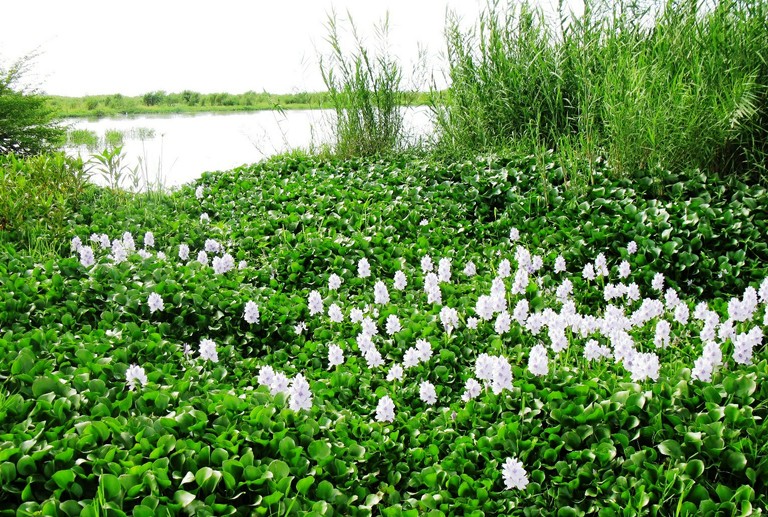
<p><strong><em>Water hyacinth</em></strong> (<i>Eichhornia crassipes</i>) is an exotic free-floating aquatic plant from the Amazon River basin in tropical South America. The dark green, shiny leaves have expanded hollow stems (petioles) that enhance its ability to float and can extend to 2 m above the water level. Below the water surface, there are root-like structures (rhizoids) which balance the plant and keep its aerial parts upright while taking up water and some nutrients. It reproduces through flowers and seeds (which can remain viable for up to 15 or more years) and has vegetative propagation by its stolons which are lateral extensions from the main plant which produce new plants which eventually leave the “mother plant”.</p>
<h3 class="Default">Impacts of water hyacinth</h3>
<ul>
<li>
<div class="Pa5"><i>Eichhornia crassipes </i>can form dense floating mats that cover large areas of water surface - thus excluding light, and air. This then affects animals (including fish) and plants that live and grow below the water surface; the area of a water hyacinth mat can double over several days when conditions of water and temperature are optimal;</div>
</li>
<li>
<div class="Pa5">The floating water hyacinth mats can have serious mechanical impacts on water supply systems, drainage canals, inflows to hydropower turbines, movement of ships and river flows;</div>
</li>
<li>
<div class="Pa5">Water hyacinth increases evapotranspiration well above that of open water (often over 3 times “open pan” evaporation) thus causing significant water loss to dams, reservoirs and wild waters;</div>
</li>
<li>
<div class="Pa5">The crowding of plants at edges of water bodies can prevent people’s access to the water for domestic use, fishing and transport, and can, at the same time, make the water unsuitable for human use;</div>
</li>
<li>
<div class="Pa5">The mats provide habitats for intermediate hosts of human diseases such as bilharzia-carrying water snails and larvae and pupae of malaria-spreading mosquitoes;</div>
</li>
<li>
<div class="Pa5">The floating plants and the mats they produce can also provide habitats for dangerous animals (snakes, crocodiles) and can support other aquatic plants that then form “floating islands” that can block water flows and damage machinery - such as hydropower turbines.</div>
</li>
</ul>
<h3 class="Pa3"></h3>
<h3 class="Pa3">How can it be controlled?</h3>
<ul>
<li>
<div class="Pa7">Mechanical control can be effective (in the short-term), using manpower and machines. However, this has to be repeated frequently because once the plants flower, seeds accumulate in the substrate and can then germinate from the seed bank – sometimes several times a year for many, many years;</div>
</li>
<li>
<div class="Pa7">Herbicides have been used and can be effective, but there is always concern for effects on non-target aquatic biodiversity and peoples’ use of the waters; and poisoning does not affect the seed bank which will replace the poisoned plants within months;</div>
</li>
<li>
<div class="Pa7">Biological control is the most effective, affordable and self-sustaining means of management and some very effective agents (insects) have been used effectively in many large and small water bodies across Africa;</div>
</li>
<li>
<div class="Pa7">Integrated control where two or more of the above methods are combined to manage the plant to reduce its impacts and stop its spread;</div>
</li>
<li>
<div class="Pa7">Water hyacinth requires some dissolved nutrients in its waters to grow and spread. Thus effective control of water pollution from agricultural run-off, rural and urban drainage and insufficiently treated sewage should be maintained to ensure that if there is a first infestation, it is unable to grow into a significant water hyacinth invasion.</div>
</li>
</ul>
<h3 class="Default"></h3>
<h3 class="Default">It’s presence in the Lake Tanganyika ecosystem</h3>
<p>Water hyacinth is present and invasive in wetlands and swampy shorelines around Bujumbura and other parts of the Burundi shoreline. This is a recent invasion which entered the lake in the late 1990s and has spread widely – to the detriment of other aquatic plants, fish, other aquatic animals and people. We do not have records of lake-side invasions in the other riparian countries of the lake (DRC, Tanzania and Zambia) but are aware that this water weed is present in other parts and catchments of all three countries – and in upland wetlands and lakes in Burundi as well as in Rwanda. <i>Eichhornia crassipes </i>is quite able to spread across the lake and establish in suitable sites – but does not seem to have done so – YET.</p>
<h3 class="Pa0">How does it spread?</h3>
<p>Water hyacinth came to the lake from infestations upstream in the Rusizi River and from “water gardens” where the plant was growing in cities and towns near the lake – where it was kept for its attractive foliage and beautiful flowers. Once it is established in a wetland or water body it can spread through wind propulsion of floating plants (or plant fragments), through water currents and on the feathers and feet of the numerous species of local and migratory waterbirds. In other countries in Africa it has been spread by people – as a green cover for dams and other water supplies; and as packaging for fresh fish on their way to far-off markets.</p>
<h3 class="Pa3">What is my role in controlling this invasive species and so retaining the benefits of Lake Tanganyika?</h3>
<ul>
<li>
<div class="Pa7">Ensure that any effluents that are released into the lake or its tributaries are treated first to avoid providing nutrients to the water hyacinth plants;</div>
</li>
<li>
<div class="Pa7">Discourage or ban the sale of water hyacinth plants for decoration and the sale of its flowers which can easily spread seeds and encourage private growing of the plants;</div>
</li>
<li>
<div class="Pa7">After clearing the invading plants from urban areas, do not dispose of the debris on the river banks or lake shore because decomposition that follows will release nutrients that will then flow back into the water; also plant fragments from such clearing can regrow if they reach the water. If possible transport all waste from the clearance site and burn the debris elsewhere;</div>
</li>
<li>
<div class="Pa7">If any new infestations are noticed, please inform the relevant authorities or LTA;</div>
</li>
<li>
<div class="Pa7">It is inadvisable to make any economic use of cleared plants of water hyacinth as this is likely to give this plant economic value and so stop its control and management. If utilisation is desirable or congruent with current national policy then carry this out in drainage basins far from Lake Tanganyika.</div>
</li>
</ul>
<p class="Pa0"><b> </b></p>
<p class="Pa0" style="text-align: right; "><strong>IUCN Global Invasive Species Initiative, IUCN ESARO Regional Office, Nairobi, Kenya.</strong></p>
<p class="Pa0" style="text-align: right; "><strong>For more information: contact: info@lta-alt.org or geoffrey.howard@iucn.org or esther.abonyo@iucn.org</strong></p>]]></content:encoded>
    <dc:publisher>No publisher</dc:publisher>
    <dc:creator>Alain Gashaka</dc:creator>
    <dc:rights></dc:rights>
    <dc:date>2011-10-17T13:10:00Z</dc:date>
    <dc:type>News Item</dc:type>
  </item>


  <item rdf:about="http://lta.iwlearn.org/news/News20110613b">
    <title>New species discovered</title>
    <link>http://lta.iwlearn.org/news/News20110613b</link>
    <description> 
</description>
    <content:encoded xmlns:content="http://purl.org/rss/1.0/modules/content/"><![CDATA[<p>The New Scientist: New species of fish discovered in Lake Tanganyika:<br /><a href="http://www.newscientist.com/article/dn20359-zoologger-the-african-eel-that-travels-light.html" rel="nofollow" target="_blank"><span>http://www.newscientist.com/article/dn20359-zoologger-the-african-eel-that-travels-light.html</span></a></p>]]></content:encoded>
    <dc:publisher>No publisher</dc:publisher>
    <dc:creator>Matthew Kleinosky</dc:creator>
    <dc:rights></dc:rights>
    <dc:date>2011-06-13T16:55:00Z</dc:date>
    <dc:type>News Item</dc:type>
  </item>


  <item rdf:about="http://lta.iwlearn.org/news/news20110613a">
    <title>IUCN: The Fight Against Invasives</title>
    <link>http://lta.iwlearn.org/news/news20110613a</link>
    <description>  
</description>
    <content:encoded xmlns:content="http://purl.org/rss/1.0/modules/content/"><![CDATA[<p>Article on the fight against invasive species from IUCN website<br /><a href="http://www.iucn.org/about/work/programmes/species/?7634%2FThe-Fight-Against-Invasives" target="_blank">http://www.iucn.org/about/work/programmes/species/?7634%2FThe-Fight-Against-Invasives</a></p>]]></content:encoded>
    <dc:publisher>No publisher</dc:publisher>
    <dc:creator>Matthew Kleinosky</dc:creator>
    <dc:rights></dc:rights>
    <dc:date>2011-06-13T16:55:00Z</dc:date>
    <dc:type>News Item</dc:type>
  </item>


</rdf:RDF>