<?xml version="1.0" encoding="utf-8" ?>
<rdf:RDF xmlns:rdf="http://www.w3.org/1999/02/22-rdf-syntax-ns#" xmlns:dc="http://purl.org/dc/elements/1.1/" xmlns:syn="http://purl.org/rss/1.0/modules/syndication/" xmlns="http://purl.org/rss/1.0/">


<channel rdf:about="http://lta.iwlearn.org/news/aggregator/RSS">
  <title>News</title>
  <link>http://lta.iwlearn.org</link>

  <description>
    
      Site News
    
  </description>


            <syn:updatePeriod>daily</syn:updatePeriod>
            <syn:updateFrequency>1</syn:updateFrequency>
            <syn:updateBase>2011-04-20T13:26:33Z</syn:updateBase>
        

  <image rdf:resource="http://lta.iwlearn.org/logo.png"/>

  <items>
    <rdf:Seq>
      
        <rdf:li rdf:resource="http://lta.iwlearn.org/consultative-forum-on-the-strategic-action-programme-at-bujumbura"/>
      
      
        <rdf:li rdf:resource="http://lta.iwlearn.org/awareness-workshop-on-sustainable-management-of-fisheries-for-fishing-communities-in-burundi"/>
      
      
        <rdf:li rdf:resource="http://lta.iwlearn.org/news/unece-water-convention-could-offer-solutions-to-african-countries-for-shared-water-resource-management"/>
      
      
        <rdf:li rdf:resource="http://lta.iwlearn.org/news/the-niglas-hosted-a-training-workshop-on-water-quality-monitoring-and-lake-basin-ecosystem-management"/>
      
      
        <rdf:li rdf:resource="http://lta.iwlearn.org/news/delivering-practical-regional-biodiversity-information-systems-bioinformatics-in-the-albertine-rift"/>
      
      
        <rdf:li rdf:resource="http://lta.iwlearn.org/new-guide-to-some-invasive-plants-affecting-lake-tanganyika"/>
      
      
        <rdf:li rdf:resource="http://lta.iwlearn.org/optimized-extraction-of-daily-bio-optical-time-series-derived-from-modis-aqua-imagery-for-lake-tanganyika-africa-1"/>
      
      
        <rdf:li rdf:resource="http://lta.iwlearn.org/possible-effects-of-global-climate-change-on-the-ecosystem-of-lake-tanganyika"/>
      
      
        <rdf:li rdf:resource="http://lta.iwlearn.org/tanzania-lake-tanganyika-integrated-regional-development-programme-prodap-supply-and-commissioning-of-four-surveillance-boats-and-communication-equipment-aoi"/>
      
      
        <rdf:li rdf:resource="http://lta.iwlearn.org/burundi-industrialists-called-to-contribute-to-protecting-water-resources"/>
      
      
        <rdf:li rdf:resource="http://lta.iwlearn.org/celebration-of-lake-tanganyika-national-day-2012-edition"/>
      
      
        <rdf:li rdf:resource="http://lta.iwlearn.org/harmonisation-des-mesures-de-l2019impact-environnemental-de-l2019elevage"/>
      
      
        <rdf:li rdf:resource="http://lta.iwlearn.org/lta-and-tnc-hands-on-hands-to-protect-lake-tanganyika"/>
      
      
        <rdf:li rdf:resource="http://lta.iwlearn.org/the-7th-great-lakes-of-the-world-glow-is-being-co-hosted-by-lta-and-aehms-at-bujumbura"/>
      
      
        <rdf:li rdf:resource="http://lta.iwlearn.org/the-fishing-pressure-is-an-increasing-threat-to-the-sustainability-of-fishery-resources-in-lake-tanganyika"/>
      
    </rdf:Seq>
  </items>

</channel>


  <item rdf:about="http://lta.iwlearn.org/consultative-forum-on-the-strategic-action-programme-at-bujumbura">
    <title>Consultative Forum on the Strategic Action Programme at Bujumbura</title>
    <link>http://lta.iwlearn.org/consultative-forum-on-the-strategic-action-programme-at-bujumbura</link>
    <description></description>
    <content:encoded xmlns:content="http://purl.org/rss/1.0/modules/content/"><![CDATA[<p><img src="http://lta.iwlearn.org/copy_of_LTALogo_JPEGFormat.jpg/@@images/f49bd1e9-c0da-41f1-9dbf-03cad2e53c15.jpeg" title="Logo LTA" height="134" width="130" alt="Logo LTA" class="image-inline" /><img src="http://lta.iwlearn.org/unhabitatlogo260px1.jpg/@@images/9da7ccc4-f3f3-46e3-97e3-01300ac3d276.jpeg" alt="Logo UNHabitat" class="image-inline" title="Logo UNHabitat" /><img src="http://lta.iwlearn.org/UnidoLogo.jpg/@@images/f4c663c3-f7b7-41d3-8ae9-9494099b8fa5.jpeg" title="Logo UNIDO" height="156" width="154" alt="Logo UNIDO" class="image-inline" /></p>
<p>The Lake Tanganyika Authority (LTA) in collaboration with the UN- Habitat, the United Nations Industrial Development Organization (UNIDO) and the Common Market for Eastern and Southern Africa (COMESA), are organising on 30<sup>th</sup>, April 2014, a one-day Consultative Forum on the Strategic Action Programme for the Protection of Biodiversity and Sustainable Management of Natural Resources in Lake Tanganyika and its Basin, and the Lake Tanganyika Water Supply, Sanitation, Environmental and Sustainable Economic Development Programme (LT-WATSAN).</p>
<p>The Forum will take place at “Hotel Club du Lac Tanganyika” in Bujumbura, Republic of Burundi and we would like to invite the Development Partners to participate in order to discuss with authorities from the Lake Tanganyika riparian countries and representatives from the above mentioned organisations on ways and means necessary to consider a successful cooperation to sustainably improve the livelihood for urban and suburban communities in Lake Tanganyika basin.</p>
<p><span style="text-decoration: underline;">Contact persons </span></p>
<p><b>Ir. Jean Marie NIBIRANTIJE, </b>LTA, Executive Director, Bujumbura, Burundi, Tel.: +257 22273580 (Office), + 257 79327527 (Mobile), E-mail : <a href="mailto:jeanmarie.nibirantije@lta-alt.org">jeanmarie.nibirantije@lta-alt.org</a></p>
<p><b>Mr. Robert Goodwin, </b>UN-Habitat, Nairobi, Kenya, Tel : + 254 207624910 (Office), +254 720920103 (Mobile), E-mail : <a href="mailto:robert.goodwin@unhabitat.org">robert.goodwin@unhabitat.org</a></p>
<p><strong>M. Jean Bakole Bagambanya, </strong>UNIDO, Regional Director, Addis ABEBBA, Tel: +251 115514245, E-mail: <a href="mailto:J.bakole@unido.org">J.bakole@unido.org</a></p>
<p><b>Dr Gervais Nkanagu, </b>COMESA Brussels Liaison Office, Ambassador, Phone : +3233438410, E-mail : <a href="mailto:GNkanagu@comesa.int">GNkanagu@comesa.int</a></p>]]></content:encoded>
    <dc:publisher>No publisher</dc:publisher>
    <dc:creator>Alain Gashaka</dc:creator>
    <dc:rights></dc:rights>
    <dc:date>2014-04-16T09:45:00Z</dc:date>
    <dc:type>News Item</dc:type>
  </item>


  <item rdf:about="http://lta.iwlearn.org/awareness-workshop-on-sustainable-management-of-fisheries-for-fishing-communities-in-burundi">
    <title>AWARENESS WORKSHOP ON SUSTAINABLE MANAGEMENT OF FISHERIES FOR FISHING COMMUNITIES IN BURUNDI </title>
    <link>http://lta.iwlearn.org/awareness-workshop-on-sustainable-management-of-fisheries-for-fishing-communities-in-burundi</link>
    <description>The objectives of the workshop are to initiate awareness among fishing communities on the issues of sustainable use of living and non-living resources of Lake Tanganyika, and refine the analysis of the impact of the fishing business management of these resources.

The other objective is to produce videos of short stories in four languages on key issues related to the management and conservation of Lake Tanganyika. The videos will be used to educate people about the dangers of unsustainable practices and promote the use of best practices.
</description>
    <content:encoded xmlns:content="http://purl.org/rss/1.0/modules/content/"><![CDATA[<p><b>AWARENESS WORKSHOP ON SUSTAINABLE MANAGEMENT OF FISHERIES FOR FISHING COMMUNITIES IN BURUNDI – RUMONGE: FEBRUARY 13, 2014</b></p>
<p><b>Brief overview</b></p>
<p>Lake Tanganyika is shared by four riparian countries such as Burundi, Democratic Republic of Congo, Tanzania and Zambia. The Lake, noted for its wide variety of wildlife, home to at least 1,500 plant and animal species, of which more than 600 are found nowhere else in the world. The lake is a source of freshwater, fish and serves as a transport, and directly or indirectly provides a source of livelihood for about 10 million people living in the lake basin.</p>
<p>The Lake Tanganyika Authority (LTA), based in Bujumbura, is the regional organization representing the four riparian countries. The ALT was created to support the implementation of the Convention on the Sustainable Management of Lake Tanganyika (see Article 23 of the Convention). During ongoing discussions that took place recently with partners, stakeholders and beneficiaries ensuring coherence and coordination of assistance based on the needs and efforts of national and regional institutions in Africa, it was agreed to strengthen the ability of the Lake Tanganyika Authority to assist in the updating and implementation of the plan of Management Structure Fisheries of Lake Tanganyika.</p>
<p>Currently,  LTA has an agreement with the UN Food and Agriculture Organization ("FAO") under the implementation of a regional strategy for the ESA project - IO (GCP / RAF / 466/EC), which focuses on "<b>The participation of fishing communities in the sustainable use of living and non-living resources of Lake Tanganyika</b>." One of the main objectives of the agreement is to encourage communities to engage in sustainable resource management through awareness of best practices.</p>
<p><b>Workshop objectives</b></p>
<p class="Default">The objectives of the workshop are to initiate awareness among fishing communities on the issues of <b>sustainable use of living and non-living resources of Lake Tanganyika</b>, and refine the analysis of the impact of the fishing business management of these resources. <span>The other objective is to produce videos of short stories in four languages ​​on key issues related to the management and conservation of Lake Tanganyika. The videos will be used to educate people about the dangers of unsustainable practices and promote the use of best practices.</span></p>
<p class="Default"><span>The videos will be used in the activities of the community by LTA and its partners. In additional, the videos will also be available on the LTA website and social media for other potential users. The four key themes for the videos are:</span></p>
<p class="Default"><span>- </span><b>Dangers of using illegal fishing instrument</b></p>
<p class="Default"><b> </b><b>- Co - Management of Resources</b></p>
<p class="Default"><b> </b><b>- Hygiene on fish landing and beaches</b></p>
<p class="Default"><b> </b><b>- Alternative activities generating income for fishing communities</b></p>
<p class="Default"><span>The primary targeted public will be mainly fishing communities of Lake Tanganyika and related stakeholders such as traders and input suppliers. Other beneficiaries and end users of the videos are: local and national leaders (Burundi, DRC, Tanzania and Zambia) involved in fishing, Federation of Fishermen in Burundi and similar organizations in the DRC, Tanzania and Zambia, and partners of LTA like research institutes and NGOs, donors and their projects.</span></p>
<p class="Default"><span> </span><b>Organization and participation</b></p>
<p class="Default"><b> </b><span>The workshop is supported by the FAO / SMARTFISH and is organized by the Lake Tanganyika Authority.It will be held on 13</span><sup>th</sup><span> February 2014, in Lake Tanganyika Lodge in Rumonge, Bururi, Southern Burundi. </span><span>Participation in the workshop will include the representatives of fishermen's associations, women traders, local authorities/leaders, maritime authorities/leaders, agencies respectively of country fisheries and environment.</span></p>
<p><span>Participants will be selected by their agencies in close collaboration with the organizers. Representatives of FAO, SmartFish and Lake Tanganyika Authority will also participate in the workshop.</span></p>
<p><b>Agenda</b></p>
<p><b> </b></p>
<p>The opening of the workshop will be officially made ​​by His Excellency the Executive Director of LTA. Before the official opening, there will be two declarations, the Representatives of FAO and the Federation of Fishermen and Fish Suppliers in Burundi (“FPFPB”).  After the official opening, there will be a number of presentations:</p>
<p><b>i) </b><b>Dangers of the use of illegal fishing instruments,</b></p>
<p><b>ii) </b><b>Co - management of resources,</b></p>
<p><b>iii) </b><b>Hygiene on fish landing and beaches,</b></p>
<p><b>iv) </b><b>Alternative activities generating income for fishing communities.</b></p>
<p><b> </b></p>
<p>After the presentations and projections of mini movie of 10 minutes each, participants will be divided into working groups where they will discuss the four thematic answering the following <span>questions (which situation? What is being done now? What should be done by the fishing communities?  What contributions of institutions - FPFPB, LTA, Min Fishing, FAO / SmartFish), etc.</span></p>
<p>The workshop will be followed by a press conference.</p>
<p><b> </b></p>
<p><b>Detail of the Provisional Agenda - Thursday, 13<sup>th</sup> February 2014</b></p>
<p>8:30 / 9:00: Arrival and registration of guests</p>
<p>9:00 / 9:10: Speech by the Representative of  Commune of Rumonge</p>
<p>9:10 / 9:20: Speech by the Representative of Federation of Fishermen</p>
<p>9:20 / 9:30: Speech by FAO Representative (Burundi) / SmartFish</p>
<p>9:30 / 9:50: Official opening by His Excellency Jean Marie NIBIRANTIJE, Executive Director of LTA</p>
<p>9:50 / 10:00: Presentation of participants</p>
<p>10:00 /10:20: <b>Theme 1: Presentation on Dangers of using illegal fishing instruments</b></p>
<p>10:20 / 10:30: Projection of the 1<sup>st</sup> Video</p>
<p>10:30 / 11:00: Discussion - Debate on the theme</p>
<p>11:00 / 11:20: <b>((Coffee / tea break))</b></p>
<p>11:20 / 11:40: <b>Theme 2: Presentation on Co - Management of resources</b><b> </b></p>
<p>11:40 / 11:50: Projection of the 2<sup>nd</sup> Video</p>
<p>11:50 / 12:20: Discussion - Debate on the theme</p>
<p>12:20 / 12:40: <b>Theme 3: Presentation on Hygiene on the fish landing and beaches</b></p>
<p>12:50 / 1:20 p.m.: Discussion - Debate on the theme</p>
<p>1:20 p.m. / 1:30 p.m.: Logistic instructions</p>
<p>1:30 p.m. / 2:30 p.m.: <b>(( Lunch)) </b></p>
<p>2:30 p.m. / 2:50 p.m: <b>Theme 4: Alternative activities generating income for fishing communities</b></p>
<p><span>2:50 p.m. / 3:00 p.m.: Projection of the 4</span><sup>th</sup><span> Video</span></p>
<p>4:00 p.m. / 4:20 p.m.: Discussion</p>
<p>4:20 p.m. / 5:00: Group work</p>
<p>5:00 p.m. / 5:30 p.m.: Plenary group work</p>
<p>5:30 End of the session.</p>
<p><b>Expected results</b></p>
<p>The workshop is to encourage communities to engage in sustainable management of resources through awareness of best practices, and will provide a series of actions that can be implemented by communities to mitigate any negative impacts, but also establish the basis for future activities at local level.</p>
<p><b> </b></p>
<p>FAO and SmartFish hope to support the development of mitigation and adaptation in fishing communities around the Lake Tanganyika Basin in order to maintain current levels of fish production, support in daily life and food security at regional level.</p>
<p><b> </b></p>
<p><b>Languages </b></p>
<p>The languages ​​used in the workshop are respectively French and Kirundi.</p>
<p><b> </b></p>
<p><b>Registration and participation fees </b></p>
<p>Travel expenses and per diem during the workshop will be covered for participants.</p>]]></content:encoded>
    <dc:publisher>No publisher</dc:publisher>
    <dc:creator>Alain Gashaka</dc:creator>
    <dc:rights></dc:rights>
    
      <dc:subject>Awareness</dc:subject>
    
    
      <dc:subject>FAO</dc:subject>
    
    
      <dc:subject>LTA</dc:subject>
    
    
      <dc:subject>People</dc:subject>
    
    
      <dc:subject>SmartFish</dc:subject>
    
    
      <dc:subject>Tanganyika</dc:subject>
    
    
      <dc:subject>Workshop</dc:subject>
    
    <dc:date>2014-02-01T00:00:00Z</dc:date>
    <dc:type>News Item</dc:type>
  </item>


  <item rdf:about="http://lta.iwlearn.org/news/unece-water-convention-could-offer-solutions-to-african-countries-for-shared-water-resource-management">
    <title>UNECE Water Convention could offer solutions to African countries for shared water resource management </title>
    <link>http://lta.iwlearn.org/news/unece-water-convention-could-offer-solutions-to-african-countries-for-shared-water-resource-management</link>
    <description>UNECE Water Convention could offer solutions to African countries for shared water resource management </description>
    <content:encoded xmlns:content="http://purl.org/rss/1.0/modules/content/"><![CDATA[<p>Increasing awareness and understanding of the Water Convention and its  work in Africa was the objective of the second Africa-Targeted Workshop  for Global Environment Facility International Waters Projects, which  took place from 12 to 14 November 2012 at the United Nations Convention  Centre in Addis Ababa.</p>
<p> </p>
<p>For more:<a class="external-link" href="http://iwlearn.net/news/unece-water-convention-could-offer-solutions-to-african-countries-for-shared-water-resource-management"> http://iwlearn.net/news/unece-water-convention-could-offer-solutions-to-african-countries-for-shared-water-resource-management</a></p>]]></content:encoded>
    <dc:publisher>No publisher</dc:publisher>
    <dc:creator>Pacifique Ndoricimpa</dc:creator>
    <dc:rights></dc:rights>
    <dc:date>2012-11-28T08:55:00Z</dc:date>
    <dc:type>News Item</dc:type>
  </item>


  <item rdf:about="http://lta.iwlearn.org/news/the-niglas-hosted-a-training-workshop-on-water-quality-monitoring-and-lake-basin-ecosystem-management">
    <title>The NIGLAS Hosted a Training Workshop on Water Quality Monitoring and Lake Basin Ecosystem Management </title>
    <link>http://lta.iwlearn.org/news/the-niglas-hosted-a-training-workshop-on-water-quality-monitoring-and-lake-basin-ecosystem-management</link>
    <description>.
</description>
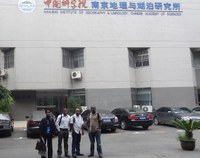
    <content:encoded xmlns:content="http://purl.org/rss/1.0/modules/content/"><![CDATA[<p><img src="http://lta.iwlearn.org/copy_of_NIGLASBuilding.JPG/@@images/4137dbf7-8be4-4e85-90e0-6f9c494c2968.jpeg" alt="NIGLAS Building" class="image-left" title="NIGLAS Building" />From 10 to 25 September, 2012, the Nanjing Institute of Geography and Limnology, Chinese Academy of Science (NIGLAS) organized a training workshop on <b><i>Water Quality Monitoring and Lake-basin Ecosystem Management</i></b>. The workshop falls in the framework of the project of <b>Technical Cooperation on Protection of Water Resources and Ecosystem intended to fight against environment threats, conserve and improve the health of ecosystem resources</b>. This project is being implemented in partnership with the Lake Tanganyika Authority (LTA) and national research teams of participating African countries, riparian to Lake Tanganyika basin, Lake Victoria basin and Nile basin.</p>
<p>Scientists, University Lectures and Decisions Makers of the following countries were represented: Burundi, D.R Congo, Egypt, Ethiopia, Kenya, Malawi, Rwanda, Tanzania, Uganda and Zambia.</p>
<p>Courses coupled with field trips focused on policy, standard and technology used in water monitoring, hydrological monitoring and modeling, lakes remote sensing, climate changes and risks, integrated Lake Basin management, aquaculture, watershed management, environmental challenges due to urban growth and their implication to lake basin sustainable development, principles, methods and technology of biological monitoring and many other topics. Participants on their turn shared experiences on the African environmental situation in their respective lake basins.</p>
<p>The courses were lectured by Professors, Associate Professors and Natural Resources Management Specialists from the NIGLAS and other Institution partners and Universities like the World Bank.</p>
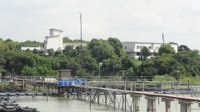
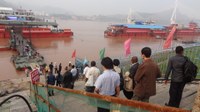
<p><img src="http://lta.iwlearn.org/LakeTaihuResarchSation.JPG/@@images/05692622-8c87-4ff4-a597-b3ab5b865eee.jpeg" alt="" class="image-left" title="" />Participants then visited the Taihu Lake Ecosystem Research Station in Wuxi City, Jiangsu Province The Station belongs to the Chinese Ecosystem Research Network (CERN). After a brief introduction of the water quality data monitoring and warning system for algal bloom in the lake, another field visit on the restoration project was held. A final field trip was held on the Three Gorges Dam located on Yangtze River, which is believed to be the world’s powerful dam which serves both as a hydropower generator and flood controller in China.<img src="http://lta.iwlearn.org/ParticipantsheadingforYangtzeRiver.JPG/@@images/4197dbc5-d13e-413e-923d-98bb902b0f01.jpeg" style="float: right; " title="" class="image-inline" alt="" /></p>
<p>After the training, participants were awarded certificates of participation preceded by exchanging documents of the Memorandum of Understanding between the NIGLAS and Tanzania Fisheries Research Institute (TAFIRI).</p>]]></content:encoded>
    <dc:publisher>No publisher</dc:publisher>
    <dc:creator>Pacifique Ndoricimpa</dc:creator>
    <dc:rights></dc:rights>
    <dc:date>2012-10-23T17:05:00Z</dc:date>
    <dc:type>News Item</dc:type>
  </item>


  <item rdf:about="http://lta.iwlearn.org/news/delivering-practical-regional-biodiversity-information-systems-bioinformatics-in-the-albertine-rift">
    <title>Delivering Practical Regional Biodiversity Information  Systems (BioInformatics) in the Albertine Rift</title>
    <link>http://lta.iwlearn.org/news/delivering-practical-regional-biodiversity-information-systems-bioinformatics-in-the-albertine-rift</link>
    <description></description>
    <content:encoded xmlns:content="http://purl.org/rss/1.0/modules/content/"><![CDATA[<p> </p>
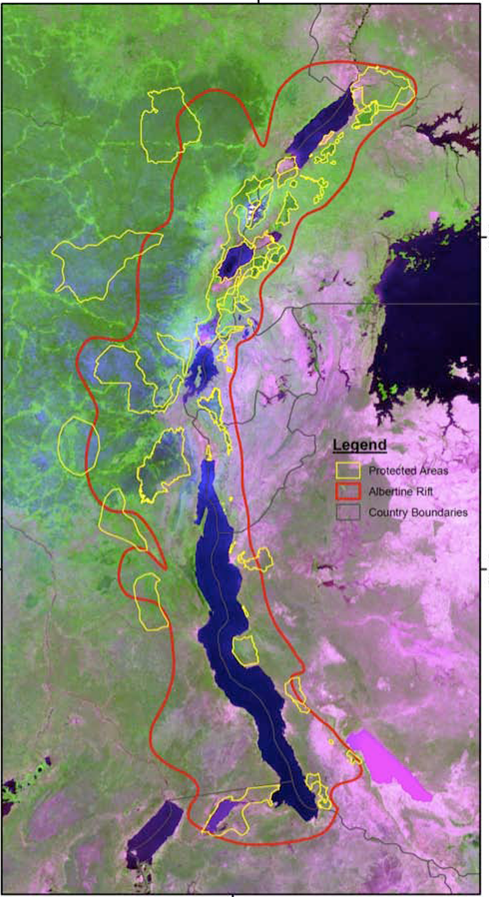
<p style="text-align: center; "><img src="http://lta.iwlearn.org/ArcosArbertineRift.JPG" alt="Arbertine Rift" class="image-inline" title="Arbertine Rift" /></p>
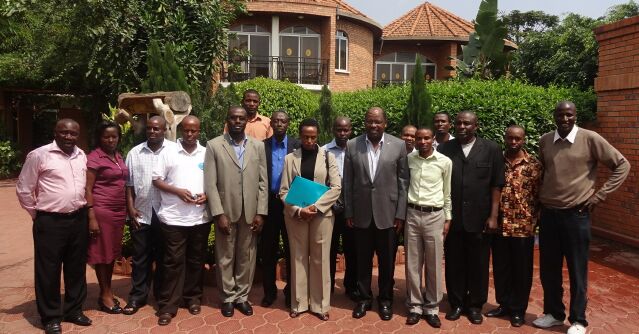
<p>The Arbertine Conservation Society (ARCOS) with support from JRS Biodiversity Foundation organized a Regional Training Workshop at Chez Lando Hotel in Kigali-Rwanda from 3 to 5 September, 2012. The workshop was intended to Scientists and Seniors from the Albertine Lift and the following countries were represented: Burundi, the Democratic Republic of Congo, Kenya, Tanzania, Uganda and Rwanda.</p>
<p><img src="http://lta.iwlearn.org/ARCOSGroupphoto.jpg" alt="ARCOS Workshop group photo" class="image-inline" title="ARCOS Workshop group photo" /></p>
<p>The training workshop was intended to delivering practical regional biodiversity information systems (Bioinformatics) in the Albertine Rift.</p>
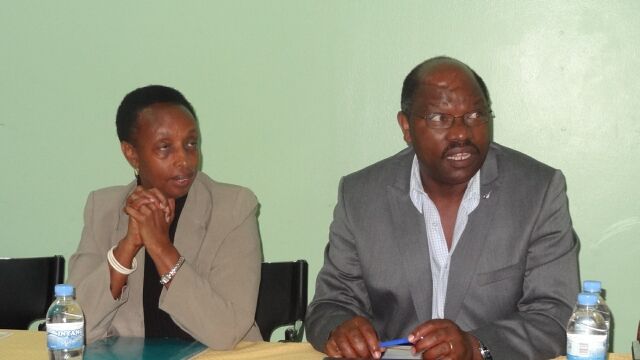
<p>In her opening speech, the Guest of Honour, Director General in the Ministry of Education of the Republic of Rwanda, Dr. Marie Christine GASINGIRWA welcomed everyone and congratulated organizers to have set up a portal for data sharing and management, which is a result from good collaboration. We need to fight against poverty and ignorance through common solution, added Dr. Marie Christine GASINGIRWA.  She called upon participants to implement what they will have learned during the training. She ended her remarks warning participants that mistakes they commit will blame participants in the future and urged them to involve the youth and community in the aspects of environment conservation.</p>
<p><img src="http://lta.iwlearn.org/ARCOSStatementdelivery.jpg" alt="ARCOS Statement delivery" class="image-inline" title="ARCOS Statement delivery" /></p>
<p>The training was organized in the such a way that participants were involved in discussions and practical exercises on Spatial Data Mobilization, Remote Sensing and Land use Planning, Data Management an Publishing.</p>
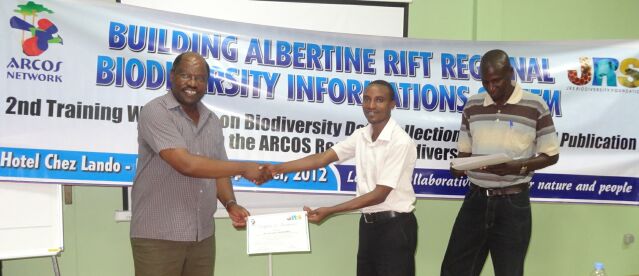
<p>At the end of the training, participants sat for course evaluation and at the end of the workshop, successful participants were awarded certificates by the Executive Secretary of the ARCOS, Dr. Sam KANYAMIBWA.</p>
<p><img src="http://lta.iwlearn.org/ARCOSCertificateAwarding.jpg" alt="" class="image-left captioned" title="" /></p>]]></content:encoded>
    <dc:publisher>No publisher</dc:publisher>
    <dc:creator>Pacifique Ndoricimpa</dc:creator>
    <dc:rights></dc:rights>
    <dc:date>2012-09-10T14:10:00Z</dc:date>
    <dc:type>News Item</dc:type>
  </item>


  <item rdf:about="http://lta.iwlearn.org/new-guide-to-some-invasive-plants-affecting-lake-tanganyika">
    <title>New Guide to some invasive plants affecting Lake Tanganyika</title>
    <link>http://lta.iwlearn.org/new-guide-to-some-invasive-plants-affecting-lake-tanganyika</link>
    <description>Lake Tanganyika Authority in collaboration with UNDP/GEF Project and IUCN Invasive Species Initiative organized a workshop on invasive species affecting Lake Tanganyika at Kibunoah Hotel, in Bujumbura - Burundi, for the Burundi and D. R. Congo Technical Teams on Environmental Issues. "From this 23 rd  to 24 th  August, 2012, you will be involved to how you can control species that have become invasive and be trained how you can prevent new invasions in order to develop a Monitoring Programme for Invasive Species for the four riparian countries of Lake Tanganyika” said Mr. Gabriel Hakizimana, Director of Environment of Lake Tanganyika Authority – LTA.</description>
    <content:encoded xmlns:content="http://purl.org/rss/1.0/modules/content/"><![CDATA[<p>Lake Tanganyika Authority in collaboration with UNDP/GEF Project and IUCN Invasive Species Initiative organized a workshop on invasive species affecting Lake Tanganyika at Kibunoah Hotel, in Bujumbura - Burundi, for the Burundi and DR Congo Technical Teams on Environmental Issues. "From this 23<sup>rd</sup> to 24<sup>th</sup> August, 2012, you will be involved to how you can control species that have become invasive and be trained how you can prevent new invasions in order to develop a Monitoring Programme for Invasive Species for the four riparian countries of Lake Tanganyika” said Mr. Gabriel Hakizimana, Director of Environment of Lake Tanganyika Authority – LTA.</p>
<p>According to Mr. Simbotwe Mwiya, Regional Coordinator of UNDP/GEF Project on Lake Tanganyika, “there is increasing pressure on Lake’s natural resources – thus need for the protection of Lake Tanganyika. In response to this need, the Lake Tanganyika Convention was signed by the four riparian states in 2003 and a Strategic Action Programme (SAP) was formulated to help in the establishment of a regional monitoring system in order to contribute to long-term sustainable management of Lake Tanganyika”.</p>
<p>Then, a guide to some invasive plants affecting Lake Tanganyika has been produced. “ This guide is a product  of the SAP through a project supported by UNDP/GEF, managed by UNOPS and implemented by International Union for Conservation of Nature (IUCN)”, indicated Mr Mwiya.</p>
<p>Dr Geoffrey Howard, one of authors of that guide, mentioned that the Invading species – especially invasive plants - can affect the environment in many ways – which are able to have short and long distance impacts on water quality and quantity relevant to the Lake Tanganyika. To Ms Esther Abonyo, co-author, indicated to the technical teams from Burundi and DR Congo that the initial introduction of these invasive plants may, in rare cases, be natural, but most often introduction is associated with people and can be intentional or unintentional (accidental). Most species introductions do not survive to the next stage of establishment.</p>
<p> “This process and its steps from introduction to invasion may take weeks or months, sometimes years or even decades or centuries (as in the case of some trees). This is why we need to take note of new species that arrive and join the flora or fauna - and check if they have a reputation of invasion elsewhere” recognized Dr Howard.</p>
<p>In the absence of national agencies solely responsible for the prevention and management of biological invasions (sometimes called Biosecurity Departments), invasions become the responsibility of the land ( and water) managers, biodiversity managers and human livelihood and welfare organizations. This is the origin of the idea to develop a monitoring system for invasive alien species in and around Lake Tanganyika. 31 groups of species are described in the Guide to some invasive plants affecting Lake Tanganyika.</p>]]></content:encoded>
    <dc:publisher>No publisher</dc:publisher>
    <dc:creator>Alain Gashaka</dc:creator>
    <dc:rights></dc:rights>
    
      <dc:subject>Guide</dc:subject>
    
    
      <dc:subject>Invasive Species</dc:subject>
    
    
      <dc:subject>Lake</dc:subject>
    
    
      <dc:subject>Tanganyika</dc:subject>
    
    <dc:date>2012-08-22T22:00:00Z</dc:date>
    <dc:type>News Item</dc:type>
  </item>


  <item rdf:about="http://lta.iwlearn.org/optimized-extraction-of-daily-bio-optical-time-series-derived-from-modis-aqua-imagery-for-lake-tanganyika-africa-1">
    <title>Optimized extraction of daily bio-optical time series derived from MODIS/Aqua imagery for Lake Tanganyika, Africa</title>
    <link>http://lta.iwlearn.org/optimized-extraction-of-daily-bio-optical-time-series-derived-from-modis-aqua-imagery-for-lake-tanganyika-africa-1</link>
    <description>Standard MODIS Aqua Ocean Color products were found to not provide a suitable calibration for high altitude lakes such as the    Lake     Tanganyika .  
 Our results show that for the geographical, atmospheric and optical conditions of    Lake     Tanganyika : (i) a coastal aerosol model set with high relative humidity (90%) provides a suitable atmospheric correction;</description>
    <content:encoded xmlns:content="http://purl.org/rss/1.0/modules/content/"><![CDATA[<p><a name="hit3"></a><span>Lake</span> <a name="hit4"></a><span>Tanganyika</span> is one of the world s great freshwater ecosystems. In recent decades its hydrodynamic characteristics have undergone important changes that have had consequences on the <a name="hit5"></a><span>lake</span> s primary productivity. The establishment of a long-term Ocean Color dataset for <a name="hit6"></a><span>Lake</span> <a name="hit7"></a><span>Tanganyika</span> is a fundamental tool for understanding and monitoring these changes.</p>
<p>We developed an approach to create a regionally calibrated dataset of chlorophyll-a concentrations (CHL) and attenuation coefficients at 490nm (K490) for the period from July 2002 to December 2006 using daily calibrated radiances retrieved from the MODIS-Aqua sensor.</p>
<p>Standard MODIS Aqua Ocean Color products were found to not provide a suitable calibration for high altitude lakes such as the <a name="hit8"></a><span>Lake</span> <a name="hit9"></a><span>Tanganyika</span>. An optimization of the extraction process and the validation of the dataset were performed with independent sets of in situ measurements.</p>
<p>Our results show that for the geographical, atmospheric and optical conditions of <a name="hit10"></a><span>Lake</span> <a name="hit11"></a><span>Tanganyika</span>: (i) a coastal aerosol model set with high relative humidity (90%) provides a suitable atmospheric correction; (ii) a significant correlation between in situ data and CHL estimates using the MODIS specific OC3 algorithm is possible; and (iii) K490 estimates provide a good level of significance.</p>
<p>The resulting validated time series of bio-optical properties provides a fundamental information base for the study of phytoplankton and primary production dynamics and interannual trends. A comparison between surface chlorophyll-a concentrations estimated from field monitoring and from the MODIS based dataset shows that remote sensing allows improved detection of surface blooms in <a name="hit12"></a><span>Lake</span> <a name="hit13"></a><span>Tanganyika</span>.</p>
<table id="contentTable">
<tbody align="left">
<tr>
<td class="data_heading" style="text-align: left; " width="100"><b>Author:</b></td>
<td style="text-align: left; "> </td>
<td class="data_content" style="text-align: left; "><a>Horion, S</a>; <a>Bergamino, N</a>; <a>Stenuite, S</a>; <a>Descy, J-P</a>; <a>Plisnier, P-D</a>; <a>Loiselle, SA</a>; <a>Cornet, Y</a></td>
</tr>
</tbody>
</table>]]></content:encoded>
    <dc:publisher>No publisher</dc:publisher>
    <dc:creator>Alain Gashaka</dc:creator>
    <dc:rights></dc:rights>
    <dc:date>2012-08-07T12:10:47Z</dc:date>
    <dc:type>News Item</dc:type>
  </item>


  <item rdf:about="http://lta.iwlearn.org/possible-effects-of-global-climate-change-on-the-ecosystem-of-lake-tanganyika">
    <title>Possible effects of global climate change on the ecosystem of Lake Tanganyika</title>
    <link>http://lta.iwlearn.org/possible-effects-of-global-climate-change-on-the-ecosystem-of-lake-tanganyika</link>
    <description>Any change in the air temperature, wind speed, precipitation, and incoming solar radiation induced by increasing greenhouse gasses and climate change will directly influence lakes and other water bodies. The effects of a slight increase in lake  water temperature on the Lake Tanganyika  ecosystem might be mitigated by increased windiness, if the latter was sufficient to induce greater mixing.</description>
    <content:encoded xmlns:content="http://purl.org/rss/1.0/modules/content/"><![CDATA[<p>Any change in the air temperature, wind speed, precipitation, and incoming solar radiation induced by increasing greenhouse gasses and climate change will directly influence lakes and other water bodies.</p>
<p>The influence can cause changes in the physical (water temperature, stratification, transparency), chemical (nutrient loading, oxygen) and biological (structure and functioning of the ecosystem) components of the <a name="hit3"></a><span>Lake</span>. In this work an influence of the likely effects of the climate change on the above three components of <a name="hit4"></a><span>Lake</span> <a name="hit5"></a><span>Tanganyika</span> are studied by means of a simple ecological model.</p>
<p>Simulations for the years 2002-2009 have been performed using the wind and solar radiation data from the National Centres for Environmental Protection (NCEP) reanalysis. Various possible climatic scenarios are studied by changing the surface layer depth, its temperature and the wind stress.</p>
<p>Any change in any of the above physical forcing parameters modifies the timing and intensity of the dry season peaks of the biogeochemical parameters. It is seen that the gross production increases as temperature of the surface layer increases and its depth decreases. High temperature and low wind stress, reduces the biomass.</p>
<p>The effects of a slight increase in <a name="hit6"></a><span>lake</span> water temperature on the <a name="hit7"></a><span>Lake</span> <a name="hit8"></a><span>Tanganyika</span> ecosystem might be mitigated by increased windiness, if the latter was sufficient to induce greater mixing.</p>
<table id="contentTable">
<tbody align="left">
<tr>
<td class="data_heading" style="text-align: left; " width="100"><b>Author:</b></td>
<td style="text-align: left; "> </td>
<td class="data_content" style="text-align: left; "><a>Naithani, Jaya</a>; <a>Plisnier, Pierre-Denis</a>; <a>Deleersnijder, Eric</a></td>
</tr>
</tbody>
</table>
<p style="text-align: left; "><strong>Source:</strong> Hydrobiologia [Hydrobiologia]. Vol. 671, no. 1, pp. 147-163. Aug 2011.</p>]]></content:encoded>
    <dc:publisher>No publisher</dc:publisher>
    <dc:creator>Alain Gashaka</dc:creator>
    <dc:rights></dc:rights>
    
      <dc:subject>Climatic changes</dc:subject>
    
    
      <dc:subject>Tanganyika L.</dc:subject>
    
    <dc:date>2012-08-02T22:00:00Z</dc:date>
    <dc:type>News Item</dc:type>
  </item>


  <item rdf:about="http://lta.iwlearn.org/tanzania-lake-tanganyika-integrated-regional-development-programme-prodap-supply-and-commissioning-of-four-surveillance-boats-and-communication-equipment-aoi">
    <title>Tanzania - Lake Tanganyika Integrated Regional Development Programme (PRODAP) - Supply and Commissioning of Four Surveillance Boats and Communication Equipment - AOI</title>
    <link>http://lta.iwlearn.org/tanzania-lake-tanganyika-integrated-regional-development-programme-prodap-supply-and-commissioning-of-four-surveillance-boats-and-communication-equipment-aoi</link>
    <description>-</description>
    <content:encoded xmlns:content="http://purl.org/rss/1.0/modules/content/"><![CDATA[<p align="center" class="Default"><b>THE UNITED REPUBLIC OF TANZANIA</b></p>
<p align="center" class="Default"><b>LAKE TANGANYIKA INTEGRATED REGIONAL DEVELOPMENT PROGRAMME (PRODAP)</b></p>
<p align="center" class="Default">(Loan No: 2100150009043)</p>
<p align="center" class="Default">SPECIFIC PROCUREMENT NOTICE</p>
<p align="center" class="Default">INVITATION FOR BIDS</p>
<p align="center" class="Default">TENDER NO. ME 002/2011-2012/PRODAP/G/10</p>
<p align="center" class="Default">FOR</p>
<p align="center" class="Default">FOR THE SUPPLY AND COMMISSIONING OF FOUR SURVEILLANCE BOATS AND COMMUNICATION EQUIPMENT</p>
<p align="center" class="Default"> </p>
<p class="Default"><b>1. </b>Government of the United Republic of Tanzania has received Financing from the African Development Fund in various currencies towards the cost of the Lake Tanganyika Integrated Regional Development Programme (PRODAP) and intends to apply part of the proceeds of the loan to cover eligible payments under the contract for the supply and Commissioning of Four Surveillance Boats and Communication Equipment.</p>
<p class="Default">2. Vice Presidents Office now invites sealed bids from eligible bidders for the supply of Four Surveillance Boats, each fixed with 150 HP Twin outboard Engines, Communication equipment and other gadgets as shall be detailed in the technical specifications..</p>
<p class="Default">3. Interested eligible bidders may obtain further information from and inspect the bidding documents at the office of the <b>Secretary, Vice Presidents Office </b>Tender Board<b>, Luthuli Street, P.O BOX 5380 Dar es Salaam, and Fax No. +255 22 2113856, e-mail: ps@vpo.go.tz OR </b>at the office of the <b>Coordinator, </b>Lake Tanganyika Integrated Regional Development Programme (PRODAP), Regional Administration and Local Government, Kigoma Regional Block, <b>P.O. Box 885, Kigoma, fax No. +255 28 2802821, e-mail: ncutanzania@yahoo.com </b></p>
<p class="Default"> 4. A complete set of bidding documents may be purchased by interested bidders on the submission of a written application to the above and upon payment of a non-refundable fee of Tanzanian Shillings One hundred Thousand (TZS 100,000/=), or its equivalent in a freely-convertible currency from the <b>Secretary, Vice Presidents Office </b>Tender Board, <b>OR </b>from the office of the <b>Coordinator, </b>Lake Tanganyika Integrated Regional Development Programme (PRODAP). Bidders who participated in tender <b>No. RAS – NCU/004/2011-2012/G/1 for procurement of surveillance boats (which have been cancelled), </b>and wish to participate in this tender will be issued bidding documents without paying any fee<b>. </b></p>
<p class="Default">5. The provision in the Instructions to Bidders and the General Conditions of Contract are the provisions of the African Development Bank’s Standard Bidding Documents: Procurement of Goods.</p>
<p class="Default">6. Bids must be delivered to the office of <b>Secretary, Vice Presidents Office </b>Tender Board<b>, Luthuli Street, P.O BOX 5380 Dar es Salaam </b>on or before 10:00 am local time on <b>Friday </b>14th September 2012. Bids shall be valid for a bid period of one hundred and twenty (120) days after Bid Opening and must be accompanied by a Bid security of Tanzania shillings one million or an equivalent amount in freely convertible currency (TZS. 1,000,000/=) OR a Bid Securing Declaration of a period of five (5) years.</p>
<p class="Default">7. Bids will be opened in the presence of bidders’ representatives who choose to attend <b>at 10.30 </b>hours local time on <b>Friday </b>14th September 2012 at the <b>Secretary, Vice Presidents Office </b>Tender Board<b>, Luthuli Street, P.O BOX 5380 Dar es Salaam</b>.</p>
<p> Source: <a href="http://www.afdb.org/fileadmin/uploads/afdb/Documents/Project-related-Procurement/AOITanzaniaPRODAP%20%207-12.pdf">http://www.afdb.org/fileadmin/uploads/afdb/Documents/Project-related-Procurement/AOITanzaniaPRODAP%20%207-12.pdf</a></p>]]></content:encoded>
    <dc:publisher>No publisher</dc:publisher>
    <dc:creator>Alain Gashaka</dc:creator>
    <dc:rights></dc:rights>
    
      <dc:subject>ADB</dc:subject>
    
    
      <dc:subject>PRODAP</dc:subject>
    
    
      <dc:subject>Tanzania</dc:subject>
    
    <dc:date>2012-07-31T10:26:36Z</dc:date>
    <dc:type>News Item</dc:type>
  </item>


  <item rdf:about="http://lta.iwlearn.org/burundi-industrialists-called-to-contribute-to-protecting-water-resources">
    <title>Burundi industrialists called to contribute to protecting water resources</title>
    <link>http://lta.iwlearn.org/burundi-industrialists-called-to-contribute-to-protecting-water-resources</link>
    <description>It was during a discussion workshop on the main provisions of the water code in Burundi that was organised by the Ministry of Water, Environment, Land and Urban Planning, in partnership with the Sectoral Programme Water and Sanitation of the Federal German Republic. The water code being disseminated for the implementation of the national water policy adopted in 2009, proves that water management and use are based on 10 key principles.</description>
    <content:encoded xmlns:content="http://purl.org/rss/1.0/modules/content/"><![CDATA[<p><img src="http://lta.iwlearn.org/LogoMEEATU.jpg/@@images/9807833b-fe8b-4a7e-856a-6b90ef73a790.jpeg" style="float: left; " title="Logo Burundi" class="image-inline" alt="Logo Burundi" />BUJUMBURA, 24<sup>th</sup> July (ABP) – Burundian industrialists were called this Tuesday to contribute to protecting water resources mainly Lake Tanganyika, as well as safeguarding its biodiversity. It was during a discussion workshop on the main provisions of the water code in Burundi that was organised by the Ministry of Water, Environment, Land and Urban Planning, in partnership with the Sectoral Programme Water and Sanitation of the Federal German Republic. The workshop was organised for industrialists and managers of hotels implemented along Lake Tanganyika coast.</p>
<p>In his opening speech, the Minister in charge of water, Mr. Jean Marie Nibirantije declared that Lake Tanganyika, a globally important fresh water reserve hosting the richest biodiversity in the world, has become a dumping ground for industrialists and households in Bujumbura. According to him the sector of water faces numerous challenges that influenced the development of the water code adopted on 26<sup>th</sup> March 2012. Those challenges are related to uncontrolled management, drinking water supply, basic sanitation, the role of water playing a dynamic role in development, as well as to the problem of climate change. He called for a change of behaviour for a better management of water resource which is becoming increasingly rare and vulnerable in Burundi. “Without water, life is not possible, water is life. Water protects our environment as all living beings need this primary resource”, said the minister Nibirantije. Given these challenges, the Government of Burundi created the ministry in charge of water resources in order to distinguish management and use of water resources. Mr. Nibirantije recalled the vision of the Government with regard to this issue, which is “Building a nation where water is sufficiently available in quality and quantity to meet the needs of present and future generations, and where water is efficiently and equitably used for a sustainable socio economic development without compromising the environment”.</p>
<p><img src="http://lta.iwlearn.org/LogoGIZ.jpg/@@images/af25e7d6-bf62-4691-9b2f-29fbc08c8006.jpeg" style="float: right; " title="Logo GIZ" class="image-inline" alt="Logo GIZ" />As he is concerned, the Coordinator of PROSECEAU/GIZ (Sectoral Programme Water and Sanitation of the German Cooperation), Mr. Rudolph Jochen, indicated that in the aim of ensuring an equitable access to clean water and sanitation, the German Government is committed to support the Burundi Government to implement reforms in the sector of water. He noted that the promulgation of the water code is an important step in the reform process started some years ago. The PROSECEAU accompanied the ministry in charge of water in developing the national water policy which provided key orientations in terms of water resource management. It also supported the process of water code development, a tool that will enable all categories of Burundians to understand the importance of this resource.</p>
<p>According to M. Jochen, the two reference texts go back to the Dublin Principles, two of which are interesting for the sector of industry; these are the “polluter pays” principle or the “responsibility principle”, and the “collector pays” principle or the principle of recognizing the economic value of water which address to the main users of water resource. He called for the respect of the provisions of the code, mainly those related to the qualitative and quantitative protection of water. He reaffirmed the commitment of Germany to stand by Burundi side in implementing reforms complying with the main provisions in this code.</p>
<p>The water code being disseminated for the implementation of the national water policy adopted in 2009, proves that water management and use are based on 10 key principles. The first principle recognizes that water is an economic asset. The second principle of subsidiarity implies the transfer of related skills to the community at the base. The third is related to the participation of women in making decisions on water. The principle of solidarity insists on measures to enable the poor and vulnerable have access to water at an affordable price. The fifth principle focuses on the regional and international cooperation in this matter. The principle of good governance emphasizes on transparency and accountability in the sector. The principle of sustainability is to make water available for future generations. The eighth principle is on the participatory approach at all levels of development and water management. The principle of the program approach emphasizes on the development of water sector as a whole. The tenth principle of responsibility is meant to avoid misuse and potentially harmful activities to water resources.</p>]]></content:encoded>
    <dc:publisher>No publisher</dc:publisher>
    <dc:creator>Alain Gashaka &amp; Parfait Richard Nkunzimana</dc:creator>
    <dc:rights></dc:rights>
    
      <dc:subject>Codes</dc:subject>
    
    
      <dc:subject>Lake</dc:subject>
    
    
      <dc:subject>Tanganyika</dc:subject>
    
    
      <dc:subject>Water</dc:subject>
    
    <dc:date>2012-07-26T22:00:00Z</dc:date>
    <dc:type>News Item</dc:type>
  </item>


  <item rdf:about="http://lta.iwlearn.org/celebration-of-lake-tanganyika-national-day-2012-edition">
    <title>Celebration of Lake Tanganyika National Day, 2012 edition</title>
    <link>http://lta.iwlearn.org/celebration-of-lake-tanganyika-national-day-2012-edition</link>
    <description>"If we do not take care, many human activities pose a threat to Lake Tanganyika," noted Mr. Gabriel Toyi, representing the second Vice-President of the Republic of Burundi, in the ceremonies of Lake Tanganyika National Day, July 22 nd  each year.  
Dr. Henry Mwima, the Executive Director of Lake Tanganyika Authority (LTA) has recognized the efforts made by Burundi in protecting the lake and appealed to other Lake Tanganyika riparian countries (DRC, Tanzania and Zambia) to emulate the example set by the Government of the Republic of Burundi by setting aside one day to celebrate the unique and shared heritage: Lake Tanganyika.</description>
    <content:encoded xmlns:content="http://purl.org/rss/1.0/modules/content/"><![CDATA[<p class="yiv490790344msonormal"><img src="http://lta.iwlearn.org/LTDay2012webDanse.jpg/@@images/3c6ba887-444b-467c-9156-a351be178e21.jpeg" style="float: left; " title="L T Day 2012 Danse" class="image-inline" alt="L T Day 2012 Danse" />"If we do not take care, many human activities pose a threat to Lake Tanganyika," noted Mr. Gabriel Toyi, representing the second Vice-President of the Republic of Burundi, in the ceremonies of Lake Tanganyika National Day, July 22<sup>nd</sup> each year. <img src="http://lta.iwlearn.org/ToyiPic.jpg/@@images/77e6506a-6cf0-4cdb-b589-d71a5d5d5779.jpeg" style="float: right; " title="LT Day 2012 Toyi" class="image-inline" alt="LT Day 2012 Toyi" /></p>
<p class="yiv490790344msonormal">For him, if nothing is done in terms of protection, Lake Tanganyika can become an unusable pond. He called on all Burundians to act for the protection of this important aquatic ecosystem. Mr. Toyi also mentioned that the Burundi Government is committed to protecting the lake by promulgating the Water Code and the National Strategy for Sustainable Tourism Development in Burundi. He recalled that people should avoid throwing waste of any kind in this lake, which, after all, is not a public dumping ground, and instead, promote rational fisheries.</p>
<p class="yiv490790344msonormal"><img src="http://lta.iwlearn.org/MwimaPic.jpg/@@images/2c81d173-1a2d-45af-a6d3-1920580d09e2.jpeg" style="float: left; " title="LT Day 2012 ED" class="image-inline" alt="LT Day 2012 ED" />Dr. Henry Mwima, the Executive Director of Lake Tanganyika Authority (LTA) has recognized the efforts made by Burundi in protecting the lake and appealed to other Lake Tanganyika riparian countries (DRC, Tanzania and Zambia) to emulate the example set by the Government of the Republic of Burundi by setting aside one day to celebrate the unique and shared heritage: <b>Lake Tanganyika</b>. Mr. Mwima however informed that the problems to be solved for the protection of this lake include climate change, invasive species, sedimentation, overexploitation of natural resources, habitat destruction and pollution.</p>
<p class="yiv490790344msonormal"> In addition, Mr. Albert Mbonerane, the Legal Representative of ACVE (Green Belt Action for Environment), noted that Burundi was the first Lake Tanganyika riparian country to ratify in 2004, the Convention on Sustainable Management of Lake Tanganyika and to organise in 2005, the celebration of the national day dedicated to this lake. He took this opportunity to recommend a better implementation of the Water Code by users and investors in the sector of water.</p>
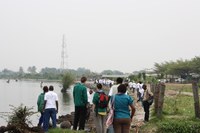
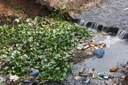
<p class="yiv490790344msonormal"><img src="http://lta.iwlearn.org/LTDay2012webKumase.jpg/@@images/e8fb7e3d-7f45-4dfc-8326-e6bb9b0a6543.jpeg" style="float: right; " title="LT Day 2012 Ku mase" class="image-inline" alt="LT Day 2012 Ku mase" />However, it was noted that the shoreline of Lake Tanganyika is seriously threatened by pollution from riparian cities, particularly in Bujumbura, at the place called "Ku mase". During a visit along the Lake Tanganyika shore, held on Friday 20<sup>th</sup> July, people were forced to hold their noses to avoid unpleasant odours caused by domestic wastewater flowing to the lake, and blackening the water and the silver sand on the beach.</p>
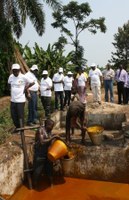
<p class="yiv490790344msonormal"><img src="http://lta.iwlearn.org/LTDay2012webPalmOil.jpg/@@images/3b543d2a-0492-4ab5-ac1b-afe34a544589.jpeg" style="float: left; " title="LT Day 2012 Palm Oil" class="image-inline" alt="LT Day 2012 Palm Oil" />Participants to this visit organised as part of the celebration of the day, also remarked that in some places along the lake, as in Gitaza, Bujumbura Rural province (in the west) and Magara, in Bururi province (in southwest), uncontrolled constructions threaten the protection zone of 150 meters from the lake as stated in the Water Code and some palm oil processing units visited in Rumonge, Bururi province, do not pre-treat their liquid waste before discharging them into the lake. However, some hotels located near the lake as "Blue Bay" in Rumonge, took into account the environmental aspect and comply with the standards in relation to beach management. For this, many tourists are coming to rest on the picturesque beach and enjoy swimming in the clean waters of Lake Tanganyika.</p>
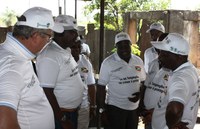
<p class="yiv490790344msonormal"><img src="http://lta.iwlearn.org/LTDay2012webDiscussion.jpg/@@images/99c64879-155a-4fe8-b3c9-4711cf35f528.jpeg" style="float: right; " title="LT Day 2012 Discussion" class="image-inline" alt="LT Day 2012 Discussion" />The Minister of Water, Environment, Land and Urban Planning, Mr. Jean Marie Nibirantije took this opportunity to mention that Burundi Government has implemented strategies to protect the lake through the Water Code. He indicated that severe penalties are provided for polluters, and that the water code requires observing a protection area of 150 meters from the shore, the destruction of illegally implemented building in this area, and the environmental impact assessment prior to implementing any project near the lake.</p>
<p class="yiv490790344msonormal">Mr. Gabriel Hakizimana, LTA Director of Environment, as he is concerned, stressed that pollution of the lake, considered as a freshwater reserve with a volume of 19,000 km³, is mainly caused by wastewater from the lake riparian cities, including Bujumbura. However, he moderated, analysis of waters in this lake of ​​32,900 km², conducted by the NGO "GIZ" confirm that the bacteriological quality of water from Lake Tanganyika is not proper for human consumption but, however, the chemical aspect of this water is not worrisome.</p>
<p class="yiv490790344msonormal">It is worth to mention that the celebration of this day was marked by cleaning the beach near Bujumbura Port, the destruction of illegal fishing gears and giving awards to students who had presented the best poems and best sketches about the theme: "Lake Tanganyika is a treasure to protect".</p>
<p class="yiv490790344msonormal"><img src="http://lta.iwlearn.org/IMG_0861.JPG/@@images/51776eb0-4919-486c-b312-c4630f2eac99.jpeg" title="LT Day 2012 Déchets" height="78" width="121" alt="LT Day 2012 Déchets" class="image-inline" /> <img src="http://lta.iwlearn.org/IMG_0853.JPG/@@images/0ff0f260-3df6-44ab-846a-00ec81bce0f8.jpeg" title="LT Day Propre 2" height="79" width="107" alt="LT Day Propre 2" class="image-inline" /> <img src="http://lta.iwlearn.org/IMG_0952.JPG/@@images/4c14adbb-b496-4d61-bb1b-b9ae91d93797.jpeg" title="LT Day 2012 Propre 3" height="79" width="121" alt="LT Day 2012 Propre 3" class="image-inline" /> <img src="http://lta.iwlearn.org/IMG_1041.JPG/@@images/3ee20006-b01e-4786-af99-eead43c28948.jpeg" title="LT Day 2012 Propre 4" height="80" width="121" alt="LT Day 2012 Propre 4" class="image-inline" /> <img src="http://lta.iwlearn.org/IMG_1020.JPG/@@images/5750fd88-5a15-4357-940b-4157b0bb26e8.jpeg" title="LT Day 2012 Propre 5" height="80" width="123" alt="LT Day 2012 Propre 5" class="image-inline" /></p>]]></content:encoded>
    <dc:publisher>No publisher</dc:publisher>
    <dc:creator>Alain Gashaka &amp; Parfait Nkunzimana</dc:creator>
    <dc:rights></dc:rights>
    
      <dc:subject>2012</dc:subject>
    
    
      <dc:subject>Celebration</dc:subject>
    
    
      <dc:subject>Day</dc:subject>
    
    
      <dc:subject>Lake</dc:subject>
    
    
      <dc:subject>Tanganyika</dc:subject>
    
    <dc:date>2012-07-23T22:00:00Z</dc:date>
    <dc:type>News Item</dc:type>
  </item>


  <item rdf:about="http://lta.iwlearn.org/harmonisation-des-mesures-de-l2019impact-environnemental-de-l2019elevage">
    <title>Harmonisation des mesures de l’impact environnemental de l’élevage</title>
    <link>http://lta.iwlearn.org/harmonisation-des-mesures-de-l2019impact-environnemental-de-l2019elevage</link>
    <description>Les directives et indicateurs communs d’évaluation permettront de mieux comprendre les impacts et d’élaborer des politiques</description>
    <content:encoded xmlns:content="http://purl.org/rss/1.0/modules/content/"><![CDATA[<p><img src="http://lta.iwlearn.org/Fao.gif" style="float: left; " title="FAO Logo" class="image-inline" alt="FAO Logo" /><strong>4 juillet 2012, Rome</strong> - Un nouveau partenariat piloté par la FAO a pour vocation de mieux évaluer les impacts sur l'environnement du secteur de l'élevage, première étape vers une meilleure durabilité de cet important secteur de production vivrière.</p>
<p>L'élevage et la consommation de produits d'origine animale apportent une contribution cruciale au bien-être économique et nutritionnel de millions de personnes dans le monde, tout particulièrement dans les pays en développement. Or, avec l'augmentation de la consommation mondiale de viande, de produits laitiers et d'oeufs, on s'intéresse de plus près aux performances environnementales du secteur de l'élevage - par exemple, l'efficacité d'utilisation des ressources naturelles qui s'amenuisent, ses impacts sur les ressources hydriques et sa part de responsabilité dans le changement climatique.</p>
<p>A la récente Conférence sur le développement durable Rio+20, les gouvernements sont tombés d'accord sur la nécessité de rendre la production agricole plus durable, en insistant en particulier sur les  systèmes de production animale.</p>
<p>Il existe à l'heure actuelle diverses méthodes de mesure et d'évaluation des impacts environnementaux de l'élevage, ce qui complique la tâche de comparaison des résultats et d'établissement de priorités en vue d'améliorer durablement les performances environnementales tout au long des chaînes d'approvisionnement.</p>
<p>"Nous devons dégager un consensus sur la manière d'évaluer la performance environnementale de l'élevage", a affirmé Pierre Gerber, spécialiste des politiques d'élevage à la FAO. "Le but est d'améliorer cette performance et de créer des formes plus durables de production qui continueront à fournir nourriture et revenus. Pour ce faire, nous avons besoin d'informations quantitatives fiables sur les principaux paramètres environnementaux de la filière comme base de connaissances dans le but d'obtenir des améliorations".</p>
<p><strong>Effort de collaboration</strong></p>
<p>La FAO et ses partenaires gouvernementaux, non gouvernementaux et du secteur privé collaboreront sur plusieurs fronts dans le but de renforcer la science des critères environnementaux des filières de l'élevage.</p>
<p>La phase initiale du projet durera trois ans et comportera les activités suivantes:</p>
<p> *   la mise en place de méthodes et directives reposant sur des bases scientifiques permettant de quantifier l'empreinte carbone du bétail, couvrant divers types d'opérations et de systèmes d'élevage;</p>
<p> *   la création d'une base de données de facteurs d'émissions de gaz à effet de serre engendrés par la production de différentes sortes d'aliments pour animaux - la production et l'utilisation fourragère offrent des occasions importantes de réduction des émissions de l'élevage;</p>
<p> *   la mise au point d'une méthodologie propre à mesurer d'autres pressions environnementales importantes telles que la consommation d'eau et les pertes de nutriments;</p>
<p> *   le lancement d'une campagne de communication afin de promouvoir l'utilisation des méthodes et des résultats du partenariat.</p>
<p>Parmi les membres fondateurs du partenariat, citons: les gouvernements de France, d'Irlande, des Pays-Bas et de Nouvelle-Zélande, la Fédération européenne des fabricants d'aliments composés (FEFAC), la Fédération européenne de l'industrie des huiles végétales et des tourteaux (FEDIOL), la Fédération internationale du lait (IDF), le Secrétariat international de la viande (IMS), la Commission internationale des œufs (IEC), le Conseil international des volailles (IPC), la Fédération internationale pour la santé animale (IFAH) et le Fonds mondial pour la nature (WWF). D'autres partenaires sont appelés à venir rejoindre ce noyau de membres au cours des prochains mois. Le Secrétariat du partenariat est assuré par la FAO.</p>
<p><strong>L'impératif de la durabilité</strong></p>
<p>Selon les estimations de la FAO, la demande de produits animaux continuera de croître au cours des prochaines décennies. La consommation de viande devrait progresser de près de 73 pour cent d'ici 2050, et celle de produits laitiers de 58 pour cent par rapport aux niveaux actuels. "Cette croissance continue de la demande se fera dans un contexte de compétition accrue pour les ressources limitées, voire en voie d'appauvrissement, d'enjeux supplémentaires liés au changement climatique, et de l'impératif de durabilité de la production alimentaire", a souligné Henning Steinfeld, Chef de la Sous-division FAO de l'information, de l'analyse sectorielle et des politiques en matière d'élevage. "Nous devons sauvegarder cet important secteur alimentaire en améliorant l'efficience de l'utilisation des ressources naturelles et ses performances en termes de durabilité".</p>
<p>Source : <a href="http://www.fao.org">www.fao.org</a></p>]]></content:encoded>
    <dc:publisher>No publisher</dc:publisher>
    <dc:creator>Alain Gashaka</dc:creator>
    <dc:rights></dc:rights>
    <dc:date>2012-07-05T22:00:00Z</dc:date>
    <dc:type>News Item</dc:type>
  </item>


  <item rdf:about="http://lta.iwlearn.org/lta-and-tnc-hands-on-hands-to-protect-lake-tanganyika">
    <title>LTA and TNC: towards joint efforts to protect Lake Tanganyika</title>
    <link>http://lta.iwlearn.org/lta-and-tnc-hands-on-hands-to-protect-lake-tanganyika</link>
    <description>The collaboration area includes exploring opportunities to share resources on collaborative projects, in matters relating to fisheries management and environmental conservation through cooperative efforts.</description>
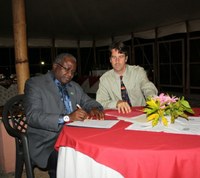
    <content:encoded xmlns:content="http://purl.org/rss/1.0/modules/content/"><![CDATA[<p class="NoSpacing"><img src="http://lta.iwlearn.org/LTALogo_JPEGFormat.jpg/@@images/b5553f78-1709-4245-bf0a-740742ca665a.jpeg" style="float: left; " title="LTA Logo" class="image-inline" alt="LTA Logo" /><img src="http://lta.iwlearn.org/TNCLogo.bmp/@@images/fd81bedc-7750-4a72-910d-debe4bc2d810.jpeg" style="float: left; " title="TNC Logo" class="image-inline" alt="TNC Logo" />On Tuesday, 19th June, 2012, a new partneship has been initied by the Lake Tanganyika Authority (LTA) and the The Nature Conservancy<b> </b>(TNC). The LTA reprensented by the Executive Director, Dr. Henry MWIMA and the TNC represented by the Senior Freshwater Conservation Adviser, Mr. Colin Apse, signed a Memorandum of Understanding (MoU) related to a collaboration to ensure Fisheries Management and Environmental Conservation on Lake Tanganyika.</p>
<p class="NoSpacing"><img src="http://lta.iwlearn.org/IMG_0395.jpg/@@images/59273df8-1071-4a5d-b899-d1b159a09068.jpeg" style="float: right; " title="LTA&amp;TNC MoU" class="image-inline" alt="LTA&amp;TNC MoU" />The MoU is extended to a period of  <b>three (3) years</b> and may be renewed to last for another mutually agreed term.  </p>
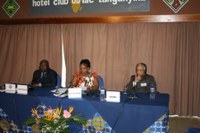
<p class="NoSpacing">According to Dr. Henry MWIMA, ED of LTA, the collaboration<strong> </strong>area includes exploring opportunities to share resources on collaborative projects, in matters relating to fisheries management and environmental conservation through cooperative efforts: <b><i>Beach Management Unit Development; <b><i>Research, Monitoring, and Assessment; <b><i>Cross Sector Engagement</i></b> <b><i>and Development Objectives and <b><i>Joint Fundraising.</i></b></i></b></i></b></i></b></p>]]></content:encoded>
    <dc:publisher>No publisher</dc:publisher>
    <dc:creator>Alain Gashaka</dc:creator>
    <dc:rights></dc:rights>
    
      <dc:subject>LTA</dc:subject>
    
    
      <dc:subject>Lake</dc:subject>
    
    
      <dc:subject>Tanganyika</dc:subject>
    
    
      <dc:subject>The Nature Conservancy</dc:subject>
    
    <dc:date>2012-06-20T16:55:00Z</dc:date>
    <dc:type>News Item</dc:type>
  </item>


  <item rdf:about="http://lta.iwlearn.org/the-7th-great-lakes-of-the-world-glow-is-being-co-hosted-by-lta-and-aehms-at-bujumbura">
    <title>The 7th Great Lakes of the World (GLOW) is being co-hosted by LTA and AEHMS at Bujumbura</title>
    <link>http://lta.iwlearn.org/the-7th-great-lakes-of-the-world-glow-is-being-co-hosted-by-lta-and-aehms-at-bujumbura</link>
    <description>The Lake Tanganyika Authority (LTA) and the Aquatic Ecosystem Health  and Management Society (AEHMS) of Canada co-hosted the 7th Great Lakes of the World (GLOW) Conference that is being held from 17th – 20th  June, 2012 in Bujumbura, Burundi. The opening ceremonies were lead by Honorable Odette Kayitesi, Minister of Agriculture and Livestock of the Republic of Burundi. 
</description>
    <content:encoded xmlns:content="http://purl.org/rss/1.0/modules/content/"><![CDATA[<p><img src="http://lta.iwlearn.org/OpeningCeremoniesDay11.jpg/@@images/19a40378-8e5f-4fe9-bb55-4e24548d877f.jpeg" style="float: left; " title="GLOW VII 1" class="image-inline" alt="GLOW VII 1" />The Lake Tanganyika Authority (LTA) and the Aquatic Ecosystem Health  and Management Society (AEHMS) of Canada co-hosted the 7<sup>th</sup> Great Lakes of the World (GLOW) Conference that is being held from 17<sup>th </sup>– 20<sup>th</sup>  June, 2012 in Bujumbura, Burundi. The opening ceremonies were lead by Honorable Odette Kayitesi, Minister of Agriculture and Livestock of the Republic of Burundi. " I apperciate that this 7th Conference which is part of the continuing series of international symposia aimed at promoting interaction and communication between the Great Lakes Scientists and communities across the World, is being held here at Bujumbura", added Honorable Odette Kayitesi. She continued saying that the 7th GLOW Conference has really added value to the Lake Tanganyika profile.</p>
<p><img src="http://lta.iwlearn.org/OpeningCeremoniesDay12.jpg/@@images/cee4f193-c1e3-4406-8b77-db3d65557ca1.jpeg" style="float: right; " title="GLOW VII 2" class="image-inline" alt="GLOW VII 2" />LTA Executive Director, Dr. Henry Mwimwa, in his welcome remarks, he mentioned that this particularyIinternational Conference is not only focused on the African Great Lakes, but on other lakes and ecosystems as well of the world at large. He took a time to thank Pr. Mohiuddin Munawar and the AEHMS team for having accepted to co-host this important International conference. He extended thanks  to the LTA Secretariat host Governement: the Government of the Republic of Burundi, the governments of other Lake Tanganyika riparian countries (Democratic Republic of Congo, Tanzania and Zambia) and the African Development Bank for the continued support to the efforts made in ensuring a sustainable management of the Lake Tanganyika. He congratulated the Conference Secretariat, the Scientific and Local Organizing Committees for having reviewed the manuscripts in a timely manner. </p>
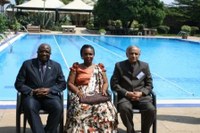
<p>" It is my hope that you will all take advantage of this occasion to not only share information but begin to explore ways in wich you can work together" wished Pr Munawar to the partcipants.</p>
<p><img src="http://lta.iwlearn.org/OpeningCeremoniesDay13.jpg/@@images/b6a4ea2d-2e63-416f-83d9-d8748769236d.jpeg" style="float: left; " title="GLOW VII 3" class="image-inline" alt="GLOW VII 3" />The Great Lakes of the World (GLOW) Working Group was established by the Aquatic Ecosystem Health &amp; Management Society in 1996 when the first GLOW symposium was organized at Victoria Falls, Zimbabwe. Since then the AEHMS has launched a continuing series of international symposia in order to promote interaction and communication amongst various great lakes/large lakes researchers across the world. The purpose of GLOW is to establish a global platform where ecosystem-based studies of structure, function and performance of large/great lake ecosystems is promoted, organized and synthesized. In addition, GLOW attempts to promote ecosystem, science-based management of these extensive natural resources in an integrated, multi-trophic and multi-disciplinary fashion. A majority of the great lakes/large lakes researchers, students and managers are aware of the GLOW series of symposia as well as the resulting peer reviewed publications. These publications include special issues of the journal AEHM and books of the Ecovision World Monograph Series.</p>
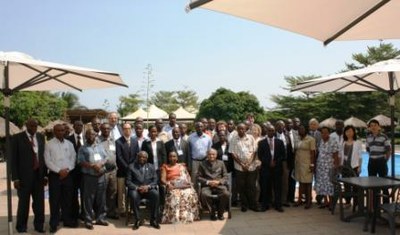
<p><img src="http://lta.iwlearn.org/OpeningCeremoniesDay14.jpg/@@images/b291277e-dca2-4415-bdb7-6423f3e48ef4.jpeg" style="float: right; " title="GLOW VII 4" class="image-inline" alt="GLOW VII 4" />Lake Tanganyika is well-known as a hotspot of aquatic biodiversity, harbouring hundreds of species. It is famous for its colourful fish, as well as snails, crabs, shrimps, sponges, and many other organisms that are found nowhere else in the world. As Africa’s oldest and deepest lake it contains almost 17% of the world’s available freshwater supply. Millions of people depend on the lake for water, food, and transportation including important transport routes between the riparian countries of Burundi, Democratic Republic of Congo (DRC), Tanzania and Zambia. Due to Tanganyika’s important ecosystem, the AEHMS decided to convene the seventh conference on the Great Lakes of the World (GLOW 7) on this amazing lake, with the help of the Lake Tanganyika Authority (LTA).</p>
<p> </p>]]></content:encoded>
    <dc:publisher>No publisher</dc:publisher>
    <dc:creator>Alain Gashaka</dc:creator>
    <dc:rights></dc:rights>
    
      <dc:subject>Bujumbura</dc:subject>
    
    
      <dc:subject>Burundi</dc:subject>
    
    
      <dc:subject>Conference</dc:subject>
    
    
      <dc:subject>GLOW VII</dc:subject>
    
    <dc:date>2012-06-18T15:00:00Z</dc:date>
    <dc:type>News Item</dc:type>
  </item>


  <item rdf:about="http://lta.iwlearn.org/the-fishing-pressure-is-an-increasing-threat-to-the-sustainability-of-fishery-resources-in-lake-tanganyika">
    <title>The fishing pressure is an increasing threat to the sustainability of fishery resources in Lake Tanganyika </title>
    <link>http://lta.iwlearn.org/the-fishing-pressure-is-an-increasing-threat-to-the-sustainability-of-fishery-resources-in-lake-tanganyika</link>
    <description>Interventions proposed for developing sustainable fisheries in this lake are such as reviewing and updating the national components of the Fisheries Management Frame Plan, developing and implementing fishing license process, improve the involvement of local communities in fisheries management, and promote sustainable fisheries alternative livelihoods.</description>
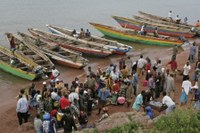
    <content:encoded xmlns:content="http://purl.org/rss/1.0/modules/content/"><![CDATA[<p><img src="http://lta.iwlearn.org/Fisheriesweb2.jpg/@@images/0e2b15c0-4166-4c15-82e2-b5baf4acce99.jpeg" style="float: right; " title="Fisheries web 2" class="image-inline" alt="Fisheries web 2" />The fishing pressure is an increasing threat to the sustainability of fishery resources in Lake Tanganyika, mentions M. Gaspard Ntakimazi in the “National Action Plan (NAP) for implementing the Strategic Action Programme (SAP) for protecting the biodiversity and sustainable management of natural resources in Lake Tanganyika basin”.</p>
<p>According to the same source, the main challenges identified in the SAP adopted by the Lake Tanganyika Authority Conference of Ministers in February, are such as an excessive fishing pressure in the pelagic area, an excessive fishing pressure in the littoral area and catches of ornamental fishes poorly controlled.</p>
<p><img src="http://lta.iwlearn.org/Fisheriesweb.jpg/@@images/184c160b-7adc-4b68-bf1e-b984c8fc852b.jpeg" style="float: left; " title="Fisheries in LT" class="image-inline" alt="Fisheries in LT" />Management of fisheries and activities affecting the lake basin should be done under the regional planning frame including activities on the basin and the lake resources, as fisheries are now characterized by a free access. Interventions proposed for developing sustainable fisheries in this lake are such as reviewing and updating the national components of the Fisheries Management Frame Plan, developing and implementing fishing license process, improve the involvement of local communities in fisheries management, and promote sustainable fisheries alternative livelihoods.</p>]]></content:encoded>
    <dc:publisher>No publisher</dc:publisher>
    <dc:creator>Alain Gashaka (Pictures:Saskia M.)</dc:creator>
    <dc:rights></dc:rights>
    
      <dc:subject>Fisheries</dc:subject>
    
    
      <dc:subject>Lake</dc:subject>
    
    
      <dc:subject>Tanganyika</dc:subject>
    
    <dc:date>2012-05-28T22:00:00Z</dc:date>
    <dc:type>News Item</dc:type>
  </item>


</rdf:RDF>